Beige Hallway Ideas: 18 Ways to Create a Warm and Welcoming Entryway
A hallway may not be the largest part of a home, but it has a strong influence on how the rest of the house feels. It connects rooms, welcomes guests, and is often the first area you see when you come home. With beige walls, natural materials, thoughtful lighting, and a few well-chosen decorative pieces, even a plain corridor can feel warm and considered.
The best beige hallway designs are not about filling every empty wall or using the same shade everywhere. Mixing soft neutrals with wood, woven textures, artwork, mirrors, and greenery can give the space depth while keeping its calm character.
Whether you have a wide entrance or a narrow passage, these ideas can help you create a hallway that feels inviting without becoming cluttered.
And if you love these ideas, make sure to follow us on Pinterest for daily home beige decor inspirations.
1. Go All-In on Beige Hallway Paint
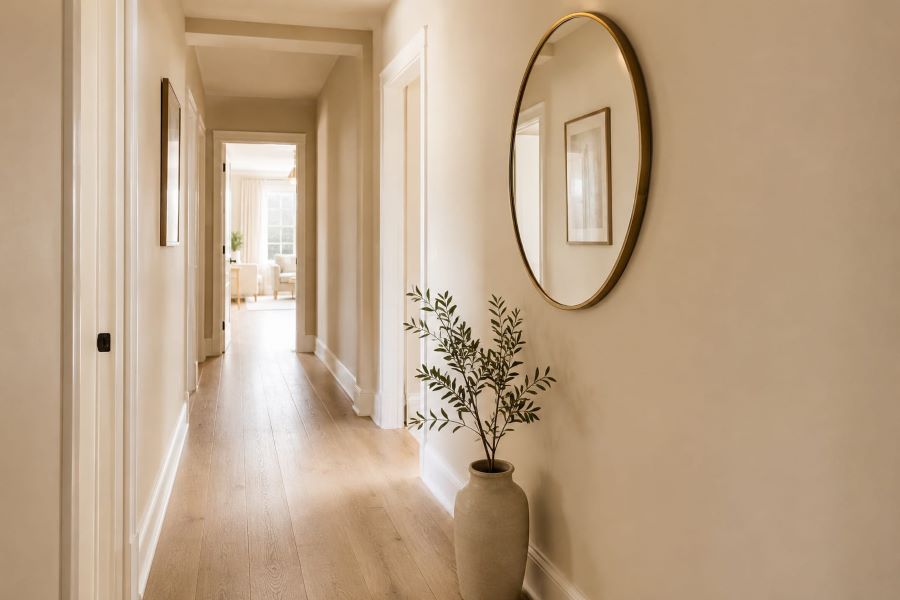
Painting the hallway in a warm beige can give the entire space a softer starting point. Because hallways often connect several rooms, a neutral wall color can also make the transition between spaces feel smoother instead of creating an abrupt change.
The exact beige you choose should work with the amount of natural light in the corridor. A warmer shade can make a dim hallway feel cozier, while a lighter beige can help an enclosed passage appear brighter.
Before painting the entire area, test your chosen shade on the actual wall. Beige can look noticeably different under morning daylight, evening lamps, and cooler artificial lighting.
2. Layer a Beige Hallway Runner for Instant Warmth
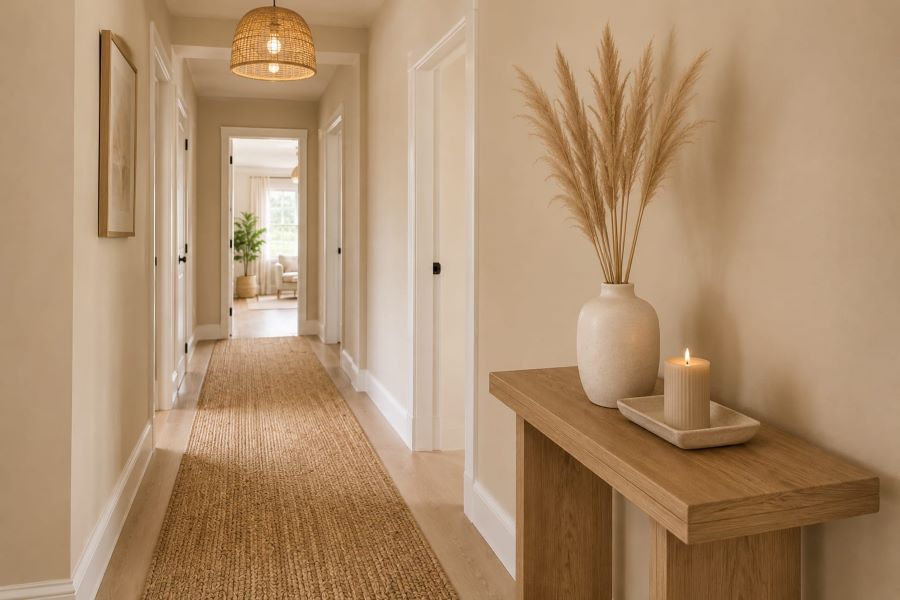
A hallway runner is one of the easiest ways to make a long passage feel less bare. It introduces softness underfoot and gives the eye a clear path through the space without requiring much furniture.
Natural materials such as jute or sisal can bring an earthy quality to a beige hallway, while a wool runner can make the space feel more polished. If you prefer a simpler look, a cream or oatmeal-colored runner can blend almost seamlessly with the rest of the palette.
Leave a little flooring visible along both sides rather than choosing a runner that fills the entire width. A non-slip pad underneath will also keep the rug secure during everyday use.
3. Add a Slim Console Table
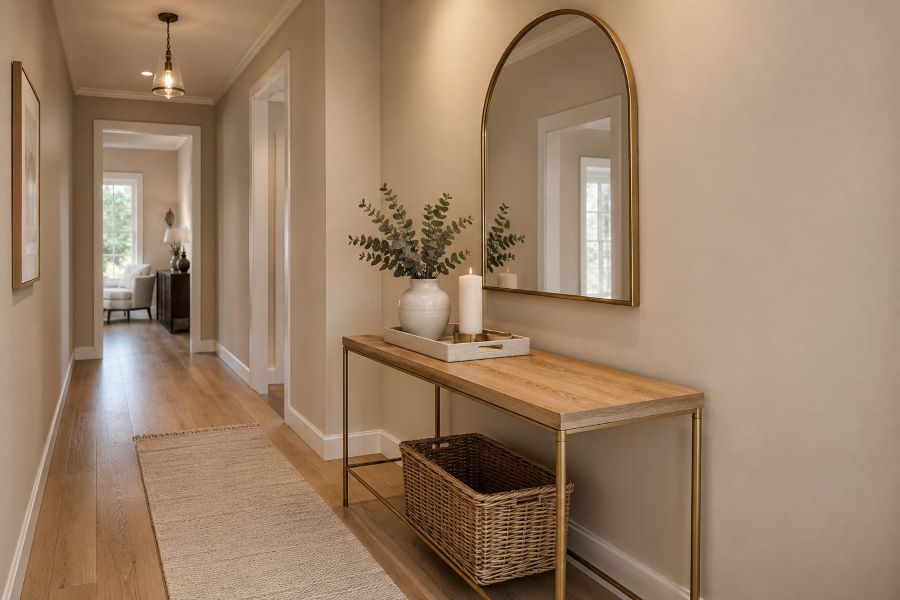
A narrow console can turn an otherwise unused hallway wall into a useful decorating area. It provides a place for a lamp, vase, tray, or a few personal objects while giving the hallway a stronger focal point.
For a tight corridor, look for a shallow design that does not interfere with the walking path. Wood, rattan, or a softly finished neutral console can work particularly well with beige walls.
The area above the console can be just as important. A mirror, artwork, or woven wall piece can complete the arrangement while keeping the overall styling visually balanced.
4. Hang a Statement Mirror in Beige Hallway
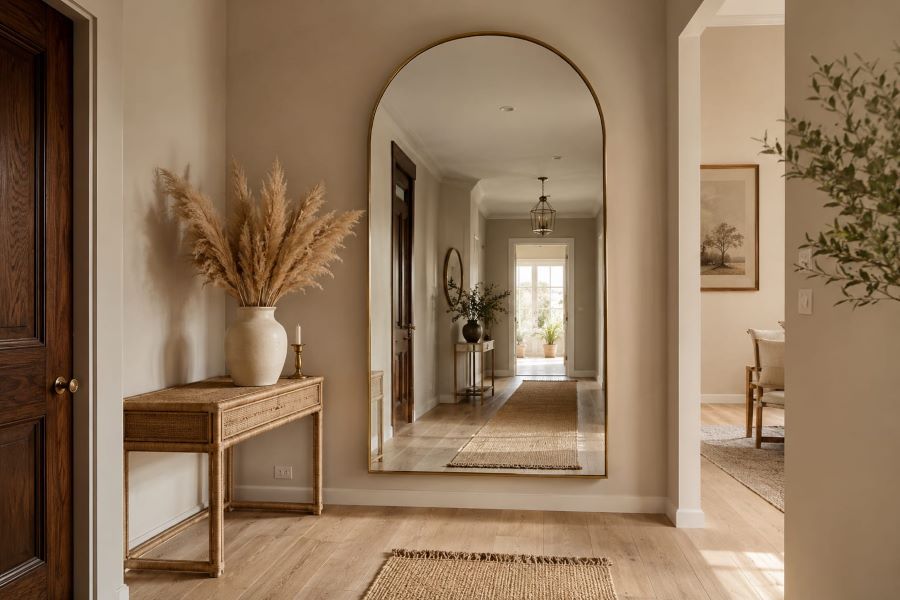
A mirror is especially useful in a hallway because it adds visual depth without taking up valuable floor space. It can reflect daylight from an adjoining room or bounce warm artificial light around a darker corridor.
The shape should relate to the architecture and furniture. An arched mirror can soften a space filled with straight lines, while a tall rectangular mirror can emphasize the height of a narrow hallway. A round design can work nicely above a console.
A large mirror can also become the main feature of a minimalist hallway. Rather than surrounding it with numerous decorations, let the mirror have enough empty wall space to make its shape noticeable.
5. Style with Warm Metallic Accents
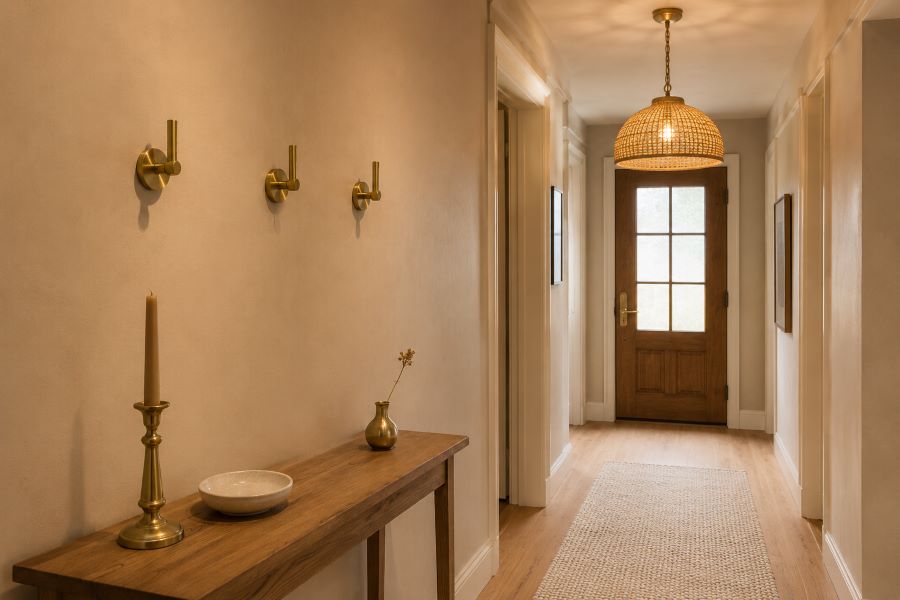
Beige and warm metals make a natural combination because small metallic details can add contrast without disturbing the neutral atmosphere. Brass, antique gold, and softly brushed finishes can bring a subtle glow to an otherwise understated hallway.
You do not need metallic pieces everywhere. A brass mirror frame, a pair of wall hooks, or small hardware details may be enough to give the space a more finished appearance.
Keeping the main metal finish consistent can make the hallway look more intentional. If the room already contains brass, for instance, repeating that finish in one or two smaller details can create continuity.
6. Create a Gallery Wall in Neutral Frames
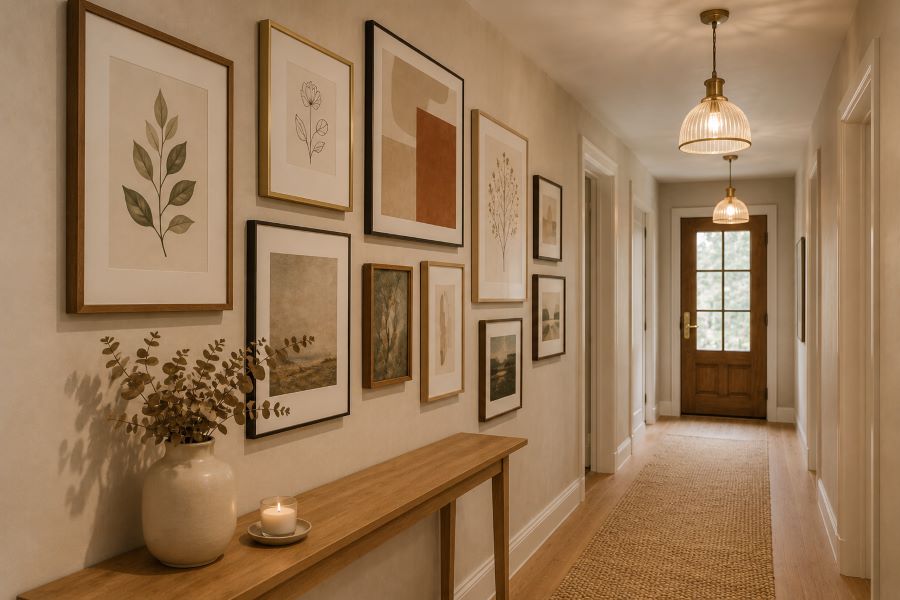
A gallery wall can give a beige hallway personality without requiring bright colors. Neutral artwork, botanical prints, abstract pieces, family photographs, and simple line drawings can all work within the same arrangement.
A combination of light wood, cream, black, or muted metallic frames can create a collected appearance while still fitting the calm color scheme.
Before putting holes in the wall, arrange the artwork on the floor and experiment with the spacing. Keeping the gaps relatively consistent will make even an informal arrangement feel deliberate. For more wall decor inspirations, have a look at our Beige Accent Wall Ideas post.
7. Beige Hallway with Natural Textures
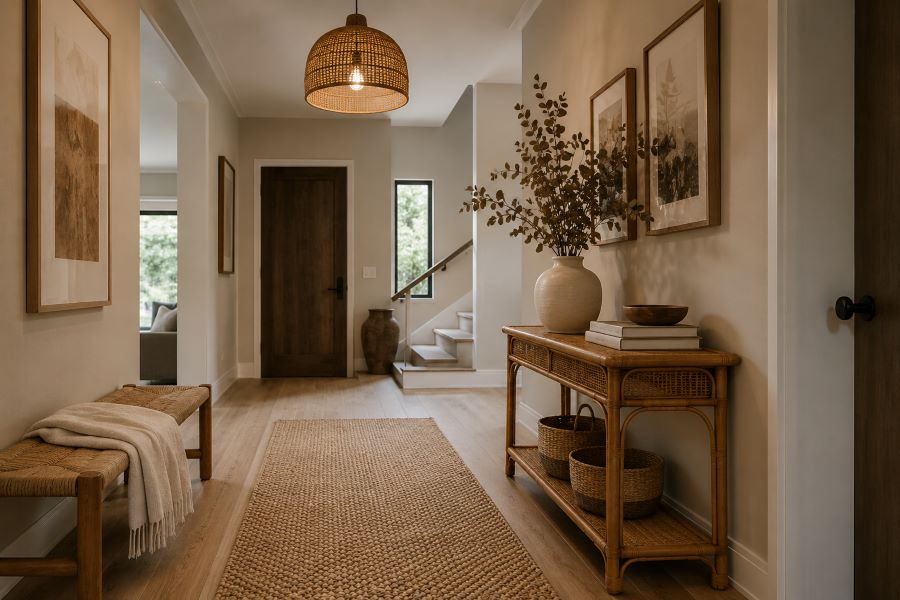
A beige hallway can sometimes feel flat when every surface has the same smooth finish. Natural textures solve this by introducing small differences that make the neutral palette more interesting.
Think about combining a woven runner with a wood console, rattan baskets, linen accents, or a stone decorative object. Each material catches light differently, giving the hallway more visual depth without needing additional colors.
Natural Materials That Work Well
- Jute or sisal for hallway runners
- Rattan or cane for furniture
- Linen for soft decorative accents
- Light wood for warmth
- Woven baskets for practical storage
The goal is not to use every material at once. Choose a few that complement one another and allow the beige backdrop to remain the quiet foundation.
8. Use Woven Wall Decor in Hallway
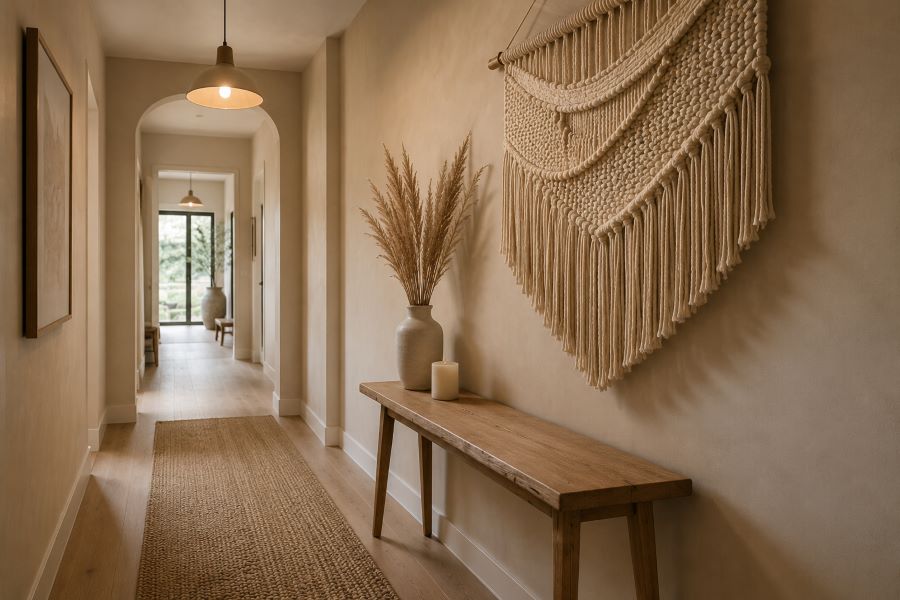
Woven wall decor can make a hallway feel softer and more handcrafted. Unlike a traditional framed print, woven pieces introduce physical texture that can be especially useful when the walls and furniture are otherwise simple.
A larger woven hanging can become the focal point above a console, while several smaller pieces can create a more relaxed composition. Natural cream, tan, and oatmeal shades blend easily into a beige interior.
Example: A Warm Textured Hallway
Imagine a narrow beige hallway with a simple oak console. Above it, one oversized woven wall piece adds texture without overwhelming the passage. A small ceramic vase and a woven basket underneath the console repeat the natural materials, making the whole corner feel connected.
Keeping the rest of the wall relatively open allows the woven piece to remain the main feature rather than competing with too many accessories.
9. Add Greenery or Dried Stems
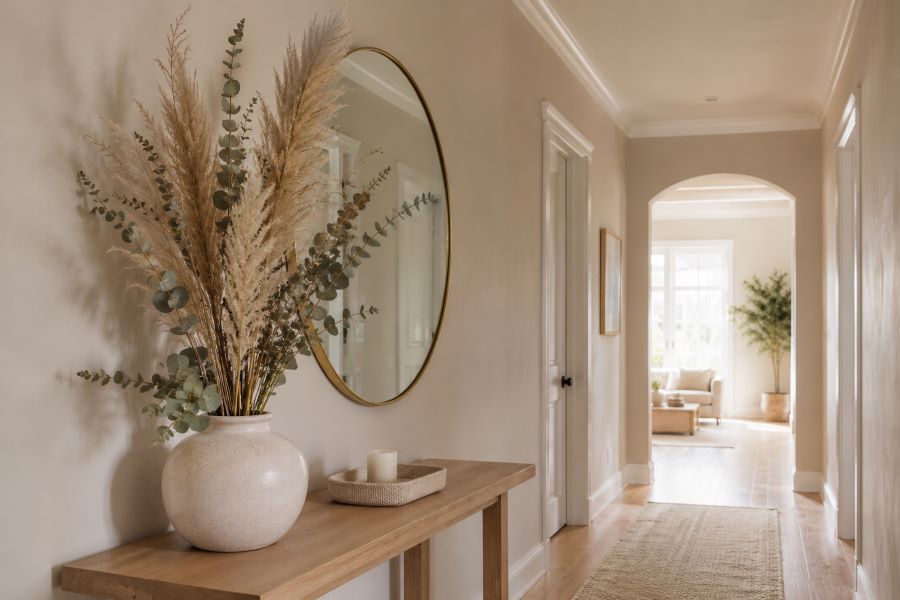
Plants and dried stems can bring life into a hallway that contains a lot of neutral surfaces. Their organic shapes create movement and soften the straight lines of walls, consoles, and doorways.
A tall vase filled with pampas grass or dried branches can work well on a console, particularly when the hallway has enough ceiling height to accommodate the arrangement. Smaller stems can be used where space is limited.
If the hallway receives little natural light, dried arrangements or low-maintenance plants may be easier to maintain. Use simple ceramic or stoneware vessels to keep the look grounded.
10. Install Warm Lighting in Beige Hallway
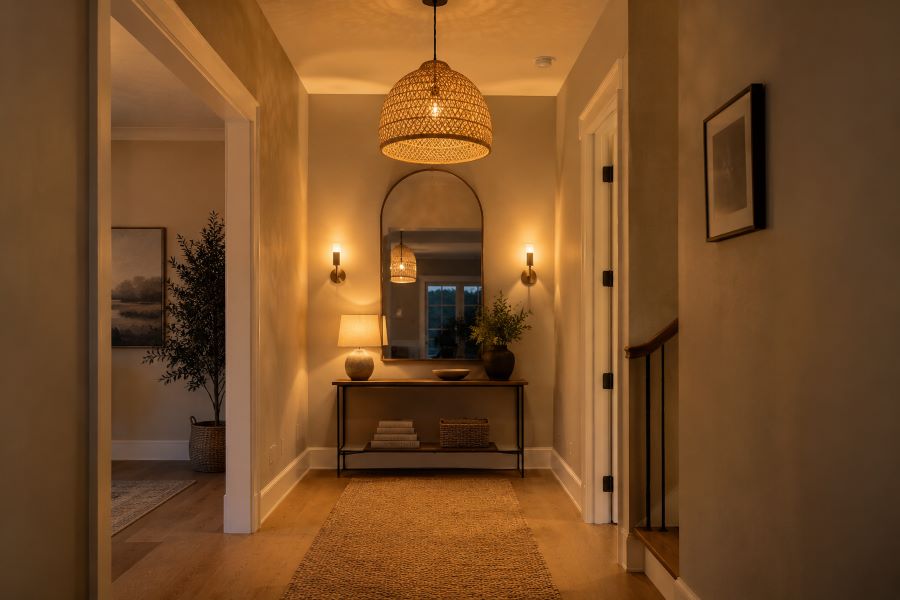
Lighting can completely change how beige appears. A warm bulb can bring out the creamier side of the wall color, while carefully positioned fixtures can make a long or dark hallway feel much more comfortable.
A pendant can work in a hallway with enough ceiling height, while wall sconces are useful when floor space is limited. A small lamp on a console can add another layer of light at a lower level.
Example: Layered Hallway Lighting
A long beige hallway could use a warm ceiling fixture as its main source, with a pair of wall sconces near the central mirror. If there is a console, a small table lamp can provide a softer glow in the evening.
Using several modest sources instead of one very bright light can make the hallway feel warmer and more atmospheric.
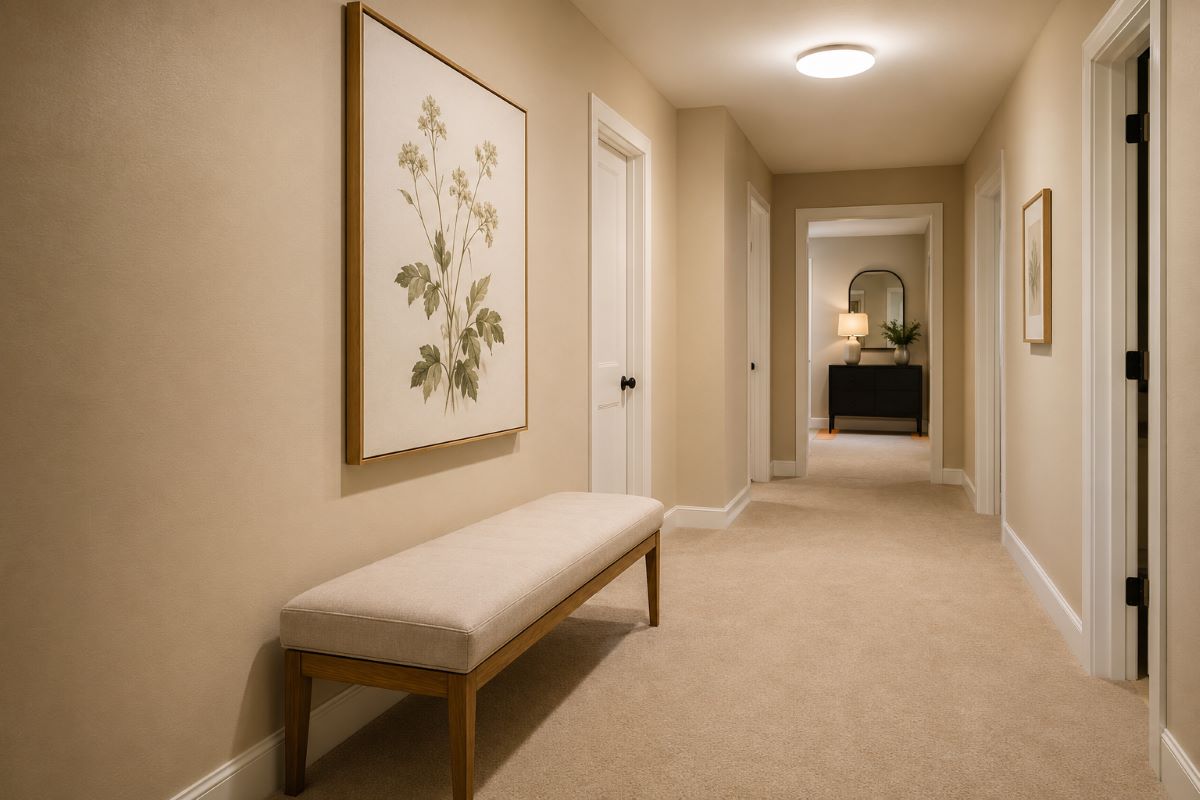
11. Try a Beige Carpet Hallway
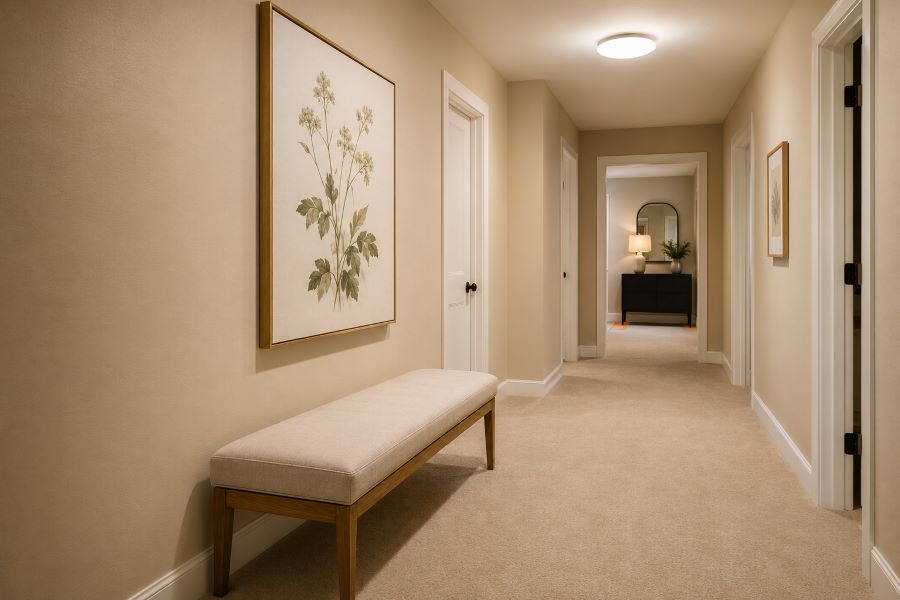
Carpet can make a hallway feel quieter, softer, and more comfortable underfoot. A beige carpet also creates a continuous visual surface, which can help a long corridor feel more cohesive.
A low-pile option is often easier to maintain and less likely to interfere with doors. Stain resistance is another useful consideration because hallways naturally receive plenty of daily traffic.
You can keep the rest of the decor simple when the flooring already provides softness and texture. A small bench, botanical artwork, or understated console may be enough to finish the space. If you love this look, you will enjoy our Beige Floor Ideas post too.
12. Small Entryway Bench Hallway
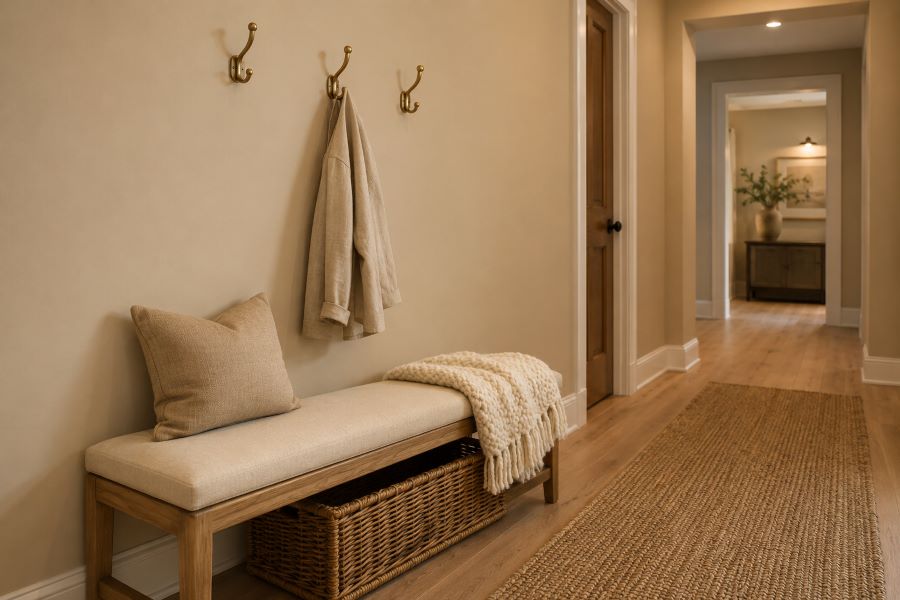
A small bench can give a hallway both function and character. It offers a convenient place to sit while putting on shoes and can also fill an otherwise empty section of wall without making the corridor feel crowded.
Look for a bench that fits comfortably within the available width. Linen upholstery can make the space feel softer, while wood or rattan gives it a more natural appearance.
If storage is needed, choose a design with a lower shelf or space underneath for baskets. Keeping the storage contained prevents shoes, bags, and everyday items from spreading across the hallway floor.
13. Go Minimal with One Large Art Piece
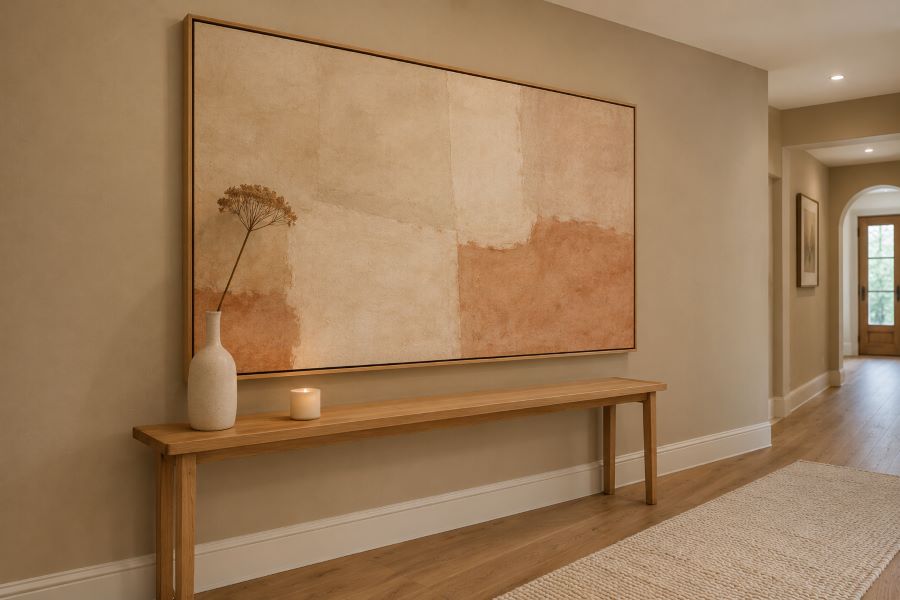
A hallway does not always need a gallery wall to feel decorated. One large artwork can create a strong focal point while allowing the surrounding space to remain quiet.
An oversized abstract, botanical, or landscape piece can work particularly well against beige walls. Choose colors that complement the existing palette rather than introducing too many competing tones.
Example: One Statement Artwork
A long beige hallway with a slim console can be kept almost completely minimal, with one large neutral abstract painting above the console. A single ceramic vase and a small lamp can sit below it.
The generous amount of empty wall around the artwork gives it room to stand out. This approach is especially effective when you prefer a quiet luxury look over a heavily decorated hallway.
14. Use Vertical Space with Shelving
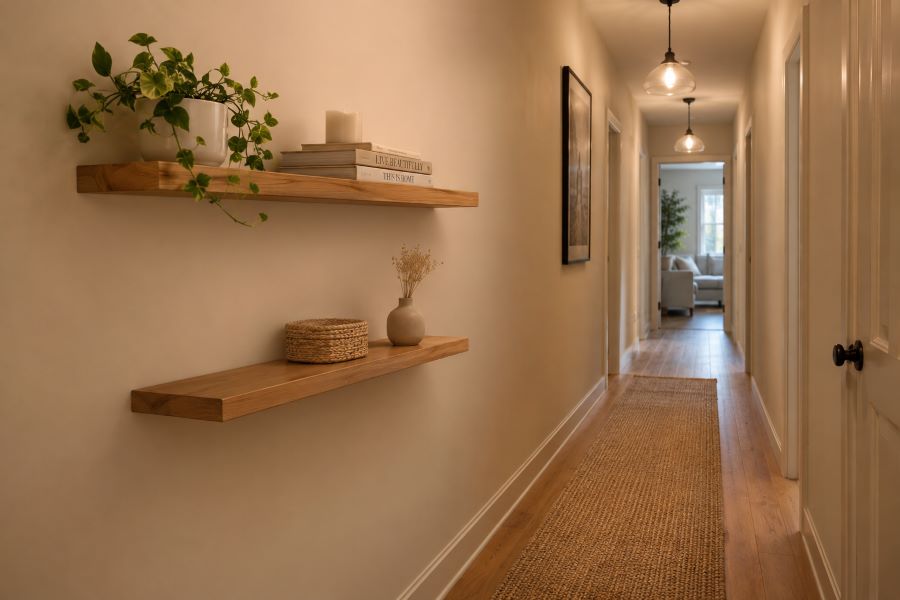
Wall-mounted shelves can add useful storage without taking away from the walking area. This is particularly valuable in narrow hallways where a traditional cabinet or deep console may feel intrusive.
Shallow wooden shelves can hold small ceramics, framed photographs, books, or decorative objects. A few baskets can also provide discreet storage for lightweight everyday items.
Avoid filling every shelf completely. Leaving empty sections between objects gives the arrangement a lighter appearance and keeps the hallway from feeling visually crowded.
15. Style a Narrow Hallway with Mirrors and Light
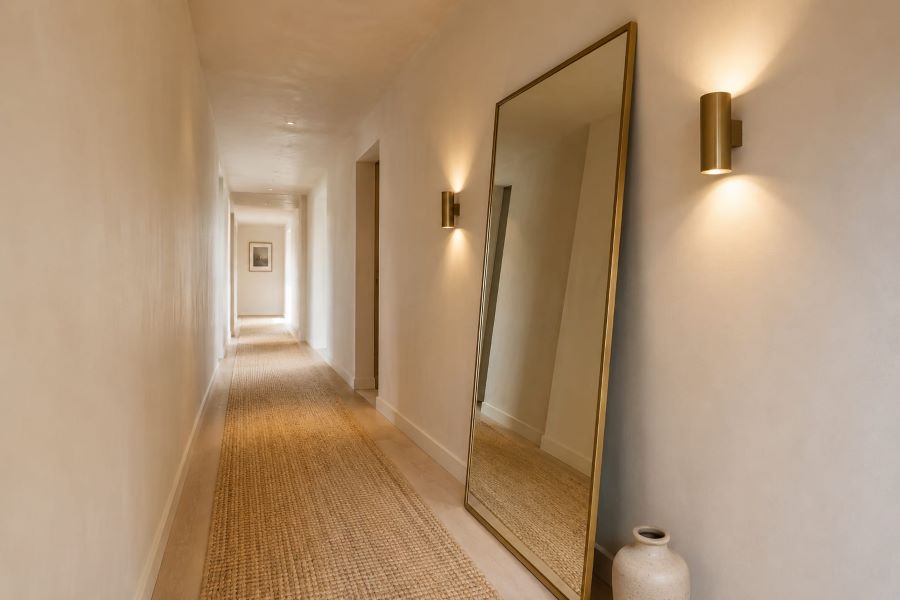
Narrow hallways benefit from design choices that emphasize openness rather than adding bulky furniture. Mirrors can reflect light and create the impression of additional visual space, while wall-mounted lighting keeps the floor clear.
A long runner can guide the eye through the corridor, and a full-length mirror can make the passage feel less enclosed. Keeping furniture to one side can also preserve a wider walking route.
Ways to Open Up a Narrow Hallway
- Use a tall mirror to reflect light
- Keep the walls in a light beige
- Add warm wall sconces
- Choose a slim hallway runner
- Avoid deep furniture pieces
- Keep the floor visually open
The aim is to make the hallway easier to move through while still giving it enough decorative detail to feel finished.
16. Add Hooks or a Coat Rack That Looks Intentional
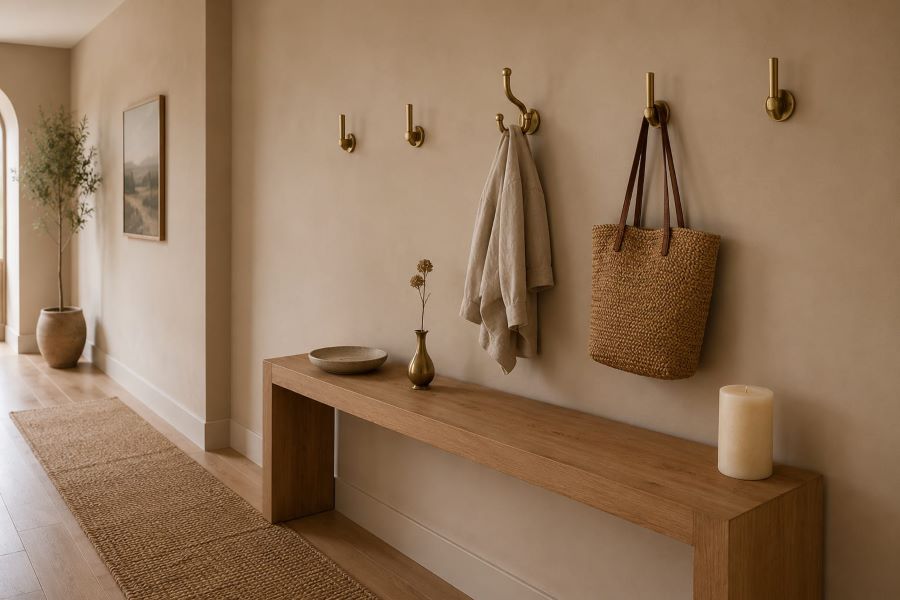
Hooks are practical, but they do not have to look purely functional. A carefully arranged row can become part of the hallway design while giving coats, bags, and hats a designated place.
Brass hooks can complement warm beige interiors, while black hooks can provide a stronger contrast. Wood pegs can create a softer, more Scandinavian-inspired appearance.
Install them at a comfortable height and leave enough space between each one. Overloading the hooks can quickly make even a beautifully decorated hallway look messy.
17. Use Wallpaper as a Feature Wall
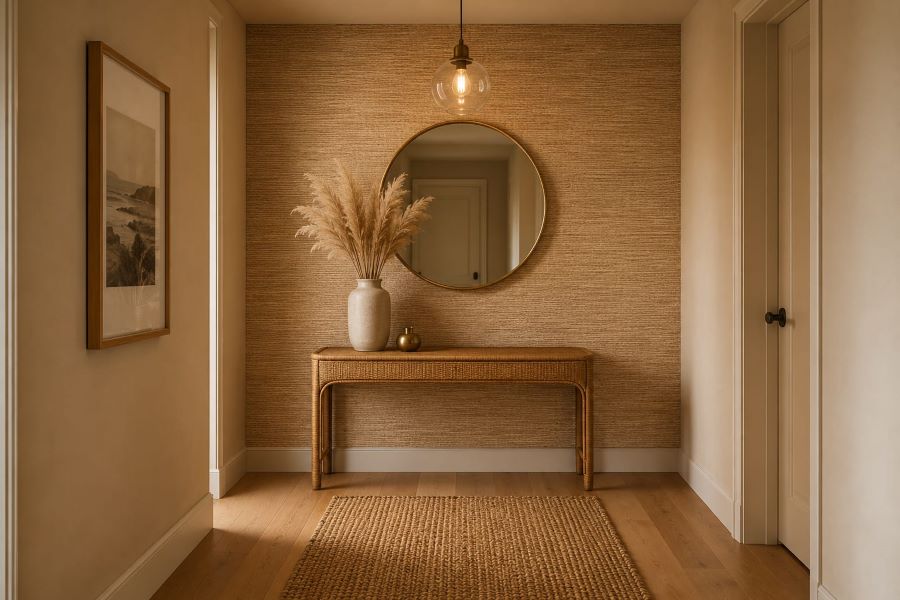
Wallpaper can add pattern and texture to a beige hallway without requiring a complete change to the color scheme. A subtle grasscloth effect, soft botanical design, or quiet geometric pattern can make one wall more visually interesting.
Using wallpaper on the end wall can be particularly effective in a long corridor because it gives the eye a destination. The remaining walls can stay painted in a simple beige to prevent the space from becoming too busy.
For a practical hallway, consider a finish that can handle everyday marks and cleaning. Keeping the surrounding accessories restrained allows the wallpaper to remain the main feature.
18. Keep It Cohesive with Accessories
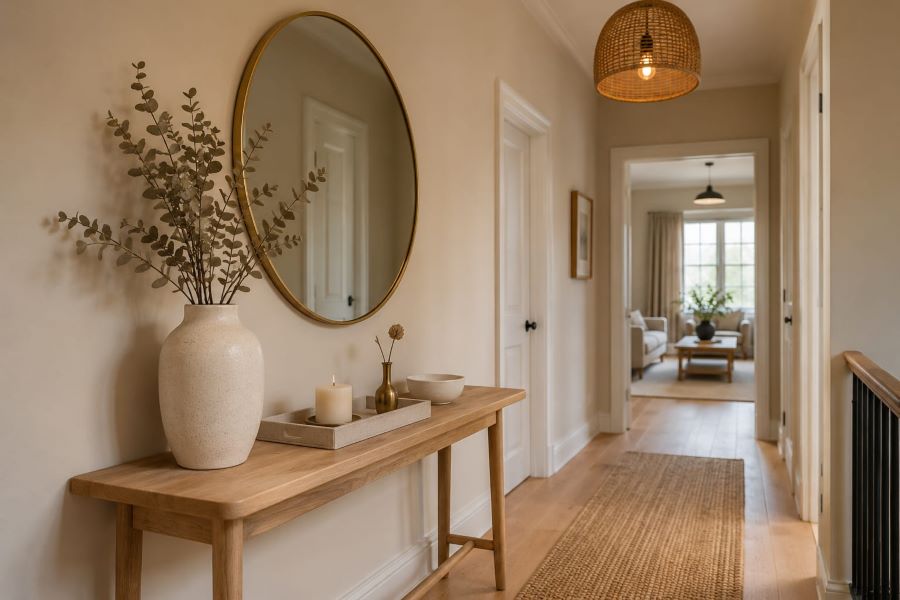
Accessories are what tie the individual design choices together. A beige hallway usually looks more polished when a small number of pieces are chosen carefully instead of covering every available surface.
A console can hold a tray, vase, lamp, or small decorative object, while artwork or a mirror can complete the wall above it. Repeating materials such as wood, ceramic, linen, or brass helps create continuity.
Things to Keep in Mind
- Keep hallway accessories limited and purposeful.
- Repeat one or two materials throughout the space.
- Vary the heights of objects on a console.
- Leave some empty surface for visual breathing room.
- Stay within related beige and neutral tones.
- Keep walkways completely clear.
- Choose decor that suits the hallway’s actual size.
- Edit accessories when the space begins to feel crowded.
Frequently Asked Questions About Beige Hallway Ideas
How do I keep a beige hallway from feeling too plain?
The secret is layering different textures rather than adding more colors. Combine materials like wood, linen, rattan, jute, and ceramics to create depth while maintaining a calm neutral palette.
What flooring works best in a beige hallway?
Light oak, natural wood, stone-look tiles, and warm-toned carpets all pair beautifully with beige walls. Choose flooring that adds contrast without overpowering the soft, neutral aesthetic.
Should hallway walls and trim be the same beige color?
Not necessarily. For a more classic look, use warm white trim against beige walls. However, color-drenching walls and trim in the same beige shade can create a modern, seamless effect.
How can I add personality to a beige hallway?
Personal touches such as family photos, meaningful artwork, vintage finds, or handmade decor can make a beige hallway feel unique while preserving its warm and cohesive appearance.
What is the biggest mistake to avoid when decorating a beige hallway?
Using only one shade of beige throughout the space can make it feel flat. Instead, layer different beige, cream, taupe, and natural wood tones to create a richer and more visually interesting design.
A beige hallway does not need to be complicated to make an impression. The right combination of paint, texture, lighting, artwork, and practical furniture can turn a forgotten passage into a natural extension of the rest of your home.
The most important thing is balance. Give each element enough room to be appreciated, keep the walking path clear, and use different textures to prevent the neutral palette from feeling flat. With a few thoughtful choices, even a narrow beige hallway can feel warm, welcoming, and beautifully finished.