8 Beige Bedroom Decor Ideas for a Warm and Relaxing Space
A beige bedroom can feel calm and inviting without looking flat or overly neutral. The difference often comes from how you layer the shade through bedding, furniture, flooring, lighting, and smaller details rather than relying on one beige tone throughout the room.
Natural wood can add warmth, linen can soften the space, and carefully chosen lighting can make beige surfaces feel richer in the evening. From clean minimalist rooms to layered boho spaces and more refined quiet luxury bedrooms, beige can adapt to many decorating styles.
These ideas focus on practical ways to create a bedroom that feels comfortable, balanced, and easy to live in.
1.Beige Minimalist Bedroom
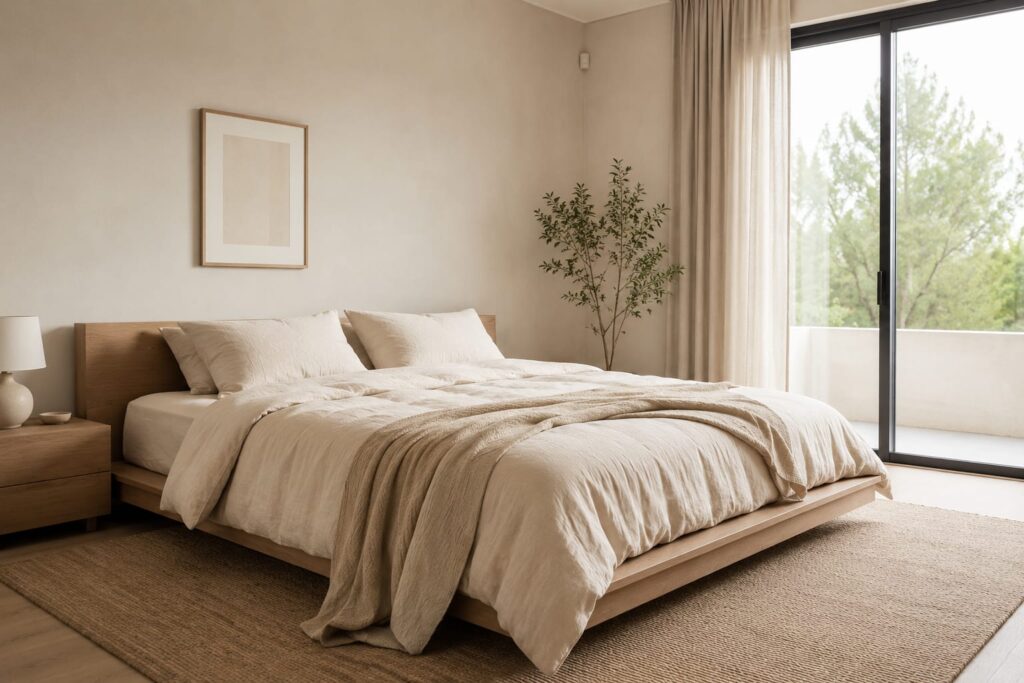
A beige minimalist bedroom works best when every major piece has a clear purpose. Start with a simple bed frame in warm wood, light oak, or softly upholstered beige. Instead of filling the bed with many cushions, use a few layers of linen bedding in closely related shades such as beige, cream, and oatmeal.
Keep the nightstands visually quiet with only useful pieces, such as a warm bedside lamp and a book. A neutral rug can soften the floor, while lightweight linen curtains allow natural light to enter without making the room feel bare.
The goal is not to remove everything from the bedroom. It is to create enough open space around the furniture that the materials, proportions, and natural light become part of the design.
What Makes This Look Work
- Choose furniture with simple, uncomplicated silhouettes
- Layer beige bedding in slightly different tones
- Keep bedside surfaces useful rather than crowded
- Use natural wood to add subtle warmth
- Add one or two meaningful decorative pieces
A minimalist beige bedroom feels most successful when it is comfortable as well as visually clean. Soft textures prevent the simplicity from becoming cold, while restrained decoration keeps the room peaceful.
2. Beige Quiet Luxury Bedroom
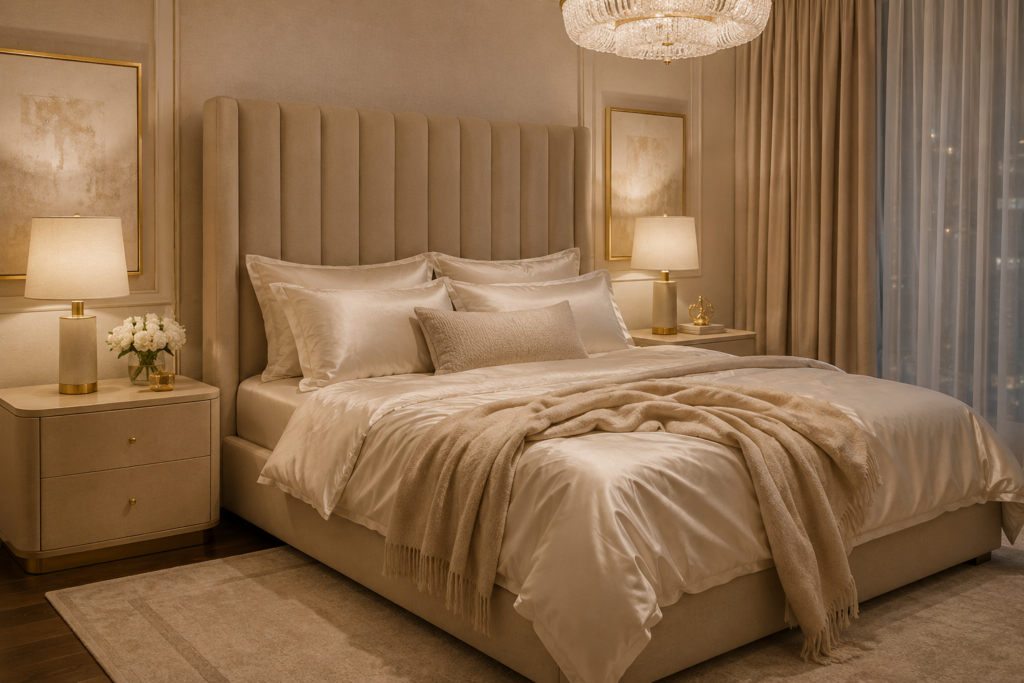
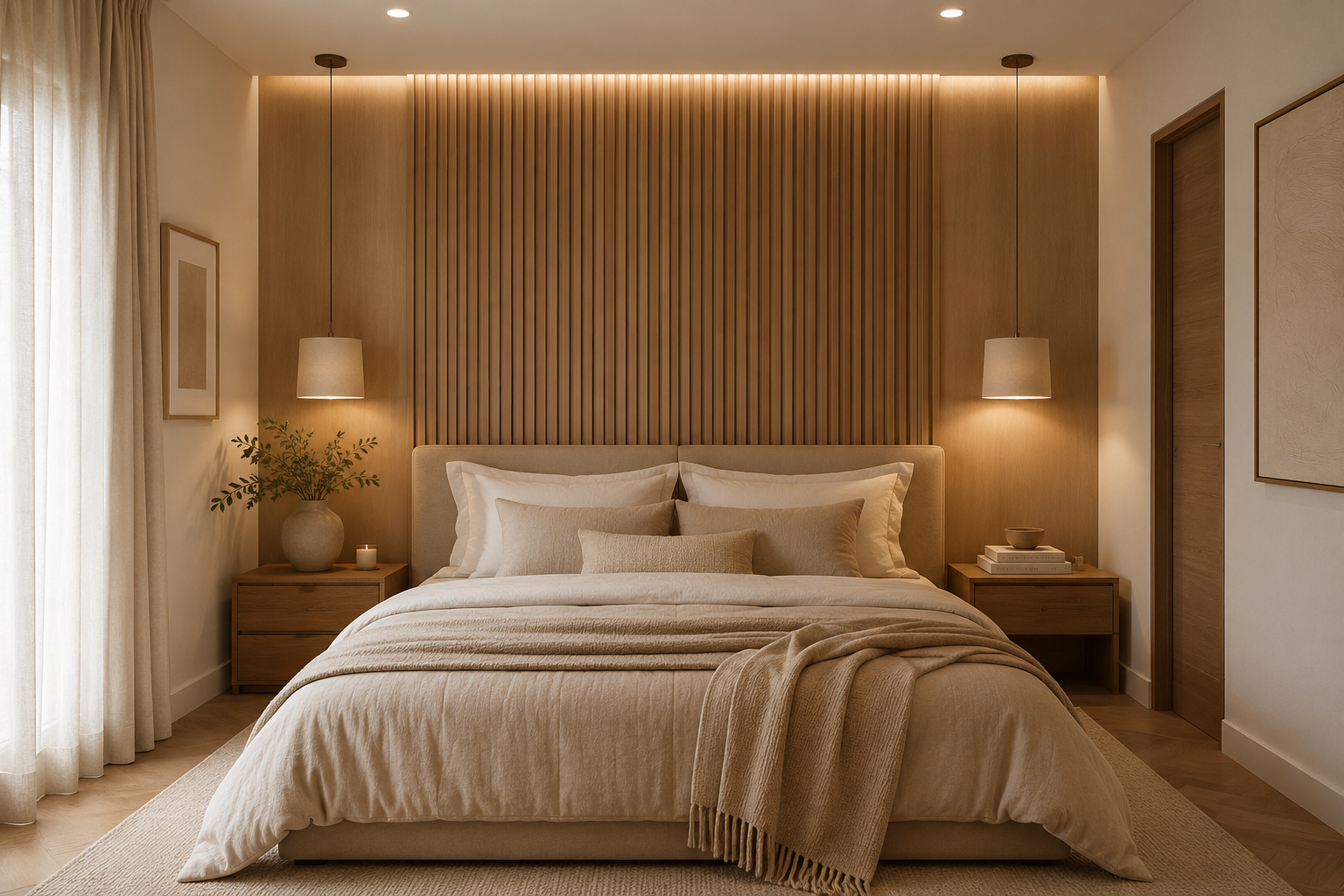
Quiet luxury in a bedroom is less about expensive-looking decoration and more about creating a sense of quality through materials, proportion, and restraint. A tall upholstered headboard in warm beige can immediately give the bed a more substantial presence, especially when paired with smooth linen or cotton bedding in ivory and cream.
Choose matching or coordinated bedside tables with simple silhouettes, then use warm lamps to create a softer atmosphere after dark. A large area rug can visually connect the furniture while adding comfort underfoot. Instead of using many decorative objects, select a few pieces with beautiful finishes.
Fresh flowers, a ceramic vase, or a neatly folded throw can add life without disrupting the calm palette. Keeping the colors close together allows texture and material quality to do most of the visual work.
Example: Beige Quiet Luxury Bedroom
Picture a warm beige bedroom centered around a tall upholstered headboard, ivory bedding, and a soft oatmeal throw. Matching wood nightstands sit on either side of the bed with understated table lamps. A large textured rug extends beneath the bed, while a simple ceramic vase and a small arrangement of fresh greenery finish the room. The result feels refined because the palette is controlled and the furniture is well balanced rather than heavily decorated.
3.Beige Organic Modern Bedroom
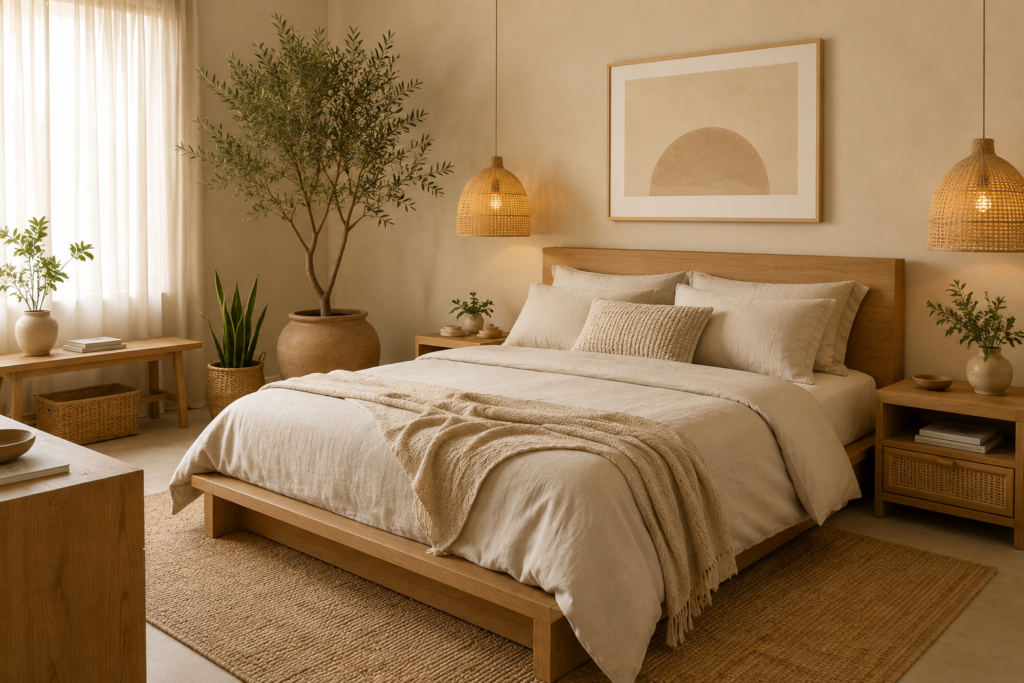
Organic modern design combines contemporary shapes with materials that feel natural and tactile. Beige provides an easy foundation for this approach because it allows wood, linen, jute, stone, and greenery to stand out without introducing a busy color scheme.
A natural wood bed frame can become the main anchor, while oatmeal or warm beige linen bedding keeps the bed relaxed. Layer in a textured throw and cushions rather than relying on patterns. A jute rug can bring another natural texture to the floor and help define the sleeping area.
Plants can add freshness, but they do not need to fill every corner. One larger plant near a window or a smaller plant on a nightstand may be enough. Ceramic, stone, or rattan lamp bases can reinforce the organic feel while keeping the overall look contemporary.
4. Beige Japandi Bedroom
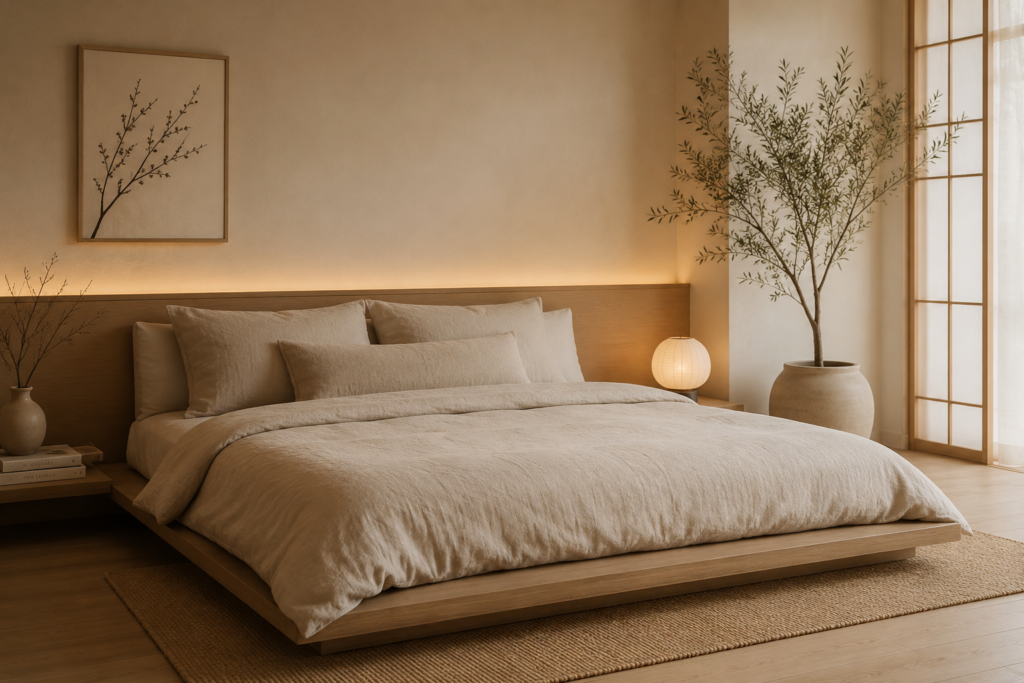
Japandi bedrooms combine Japanese simplicity with Scandinavian warmth, making beige a natural choice for the palette. The style depends on thoughtful proportions, uncluttered surfaces, natural materials, and a strong sense of calm.
Choose a low-profile wooden bed with clean lines and pair it with simple beige, cream, or oatmeal bedding. Furniture should feel useful rather than decorative, with enough open space around each piece to keep the room visually relaxed.
Lighting should also remain understated. A paper-style pendant, simple wall light, or warm bedside lamp can create a gentle glow without becoming a statement piece. A single branch arrangement or carefully selected artwork can add personality while maintaining the quiet character of the room.
The key is balance. Japandi does not require an empty bedroom; it requires each item to feel intentional and connected to the rest of the space.
5. Beige Boho Bedroom
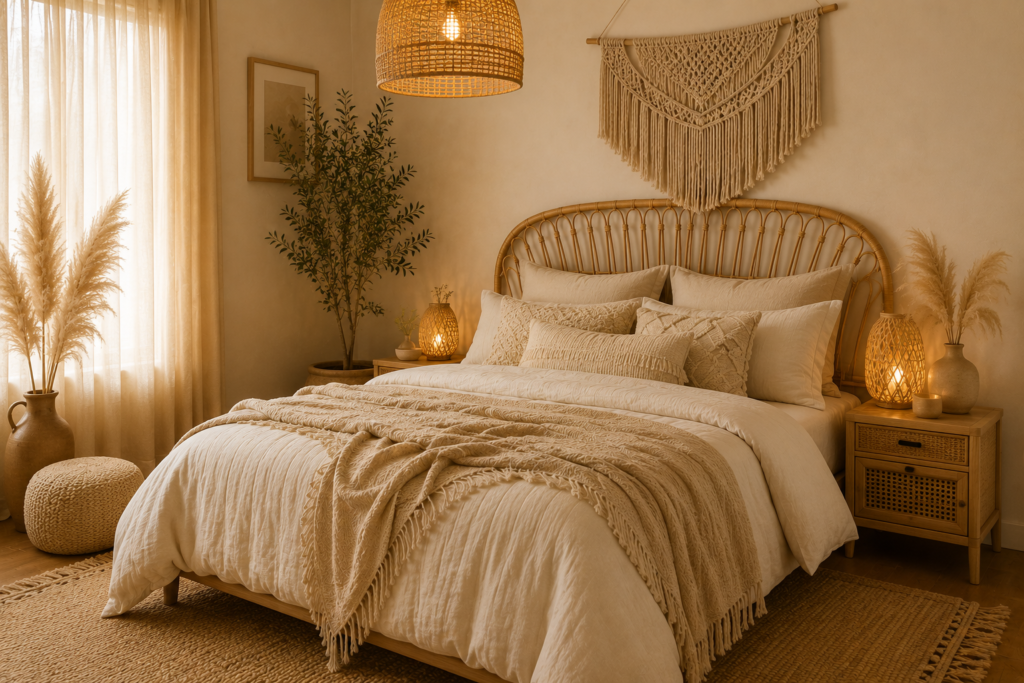
A beige boho bedroom can feel relaxed and collected when natural textures are layered thoughtfully. Rattan, woven materials, macramé, linen, wood, and pampas grass all work naturally with warm beige tones.
Start with a rattan or softly textured headboard and build the bed with cream and beige bedding in different fabrics. A woven blanket, textured cushions, and a soft rug can create depth without depending on bright colors. If you use pampas grass, place it in a simple vase so it complements the room rather than competing with the bed.
Wall decor can include macrame, woven artwork, or a small collection of neutral pieces. Plants can also work well, but vary their heights and keep enough open space around them so the room still feels comfortable.
Warm pendant lighting or a softly shaded bedside lamp can complete the look. The best boho bedrooms feel layered and personal rather than perfectly matched.
6. Beige Cozy Bedroom
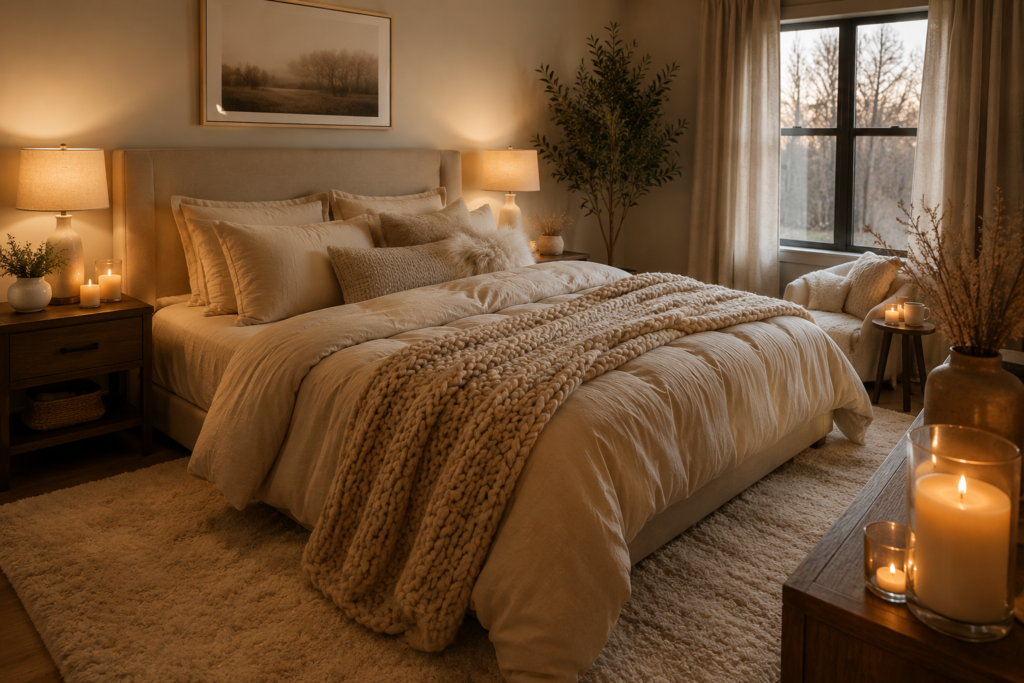
A cozy beige bedroom should make comfort noticeable from the moment you walk in. Soft bedding, plush textures, warm lighting, and a comfortable rug can all contribute to that feeling without making the room visually heavy.
Use cream, oatmeal, caramel, and warm beige across the bedding to create gentle contrast. A chunky knit throw at the foot of the bed can add texture, while a soft rug beside or underneath the bed makes the first step in the morning more comfortable.
Lighting plays a major role here. Choose bedside lamps with warm bulbs instead of relying only on bright overhead lighting. If there is enough space, add a small reading chair and floor lamp to create a separate relaxing corner.
Curtains should also contribute to the softness. Heavier beige or linen-blend panels can frame the windows while helping the bedroom feel more enclosed and restful at night.
7. Beige Maximalist Bedroom
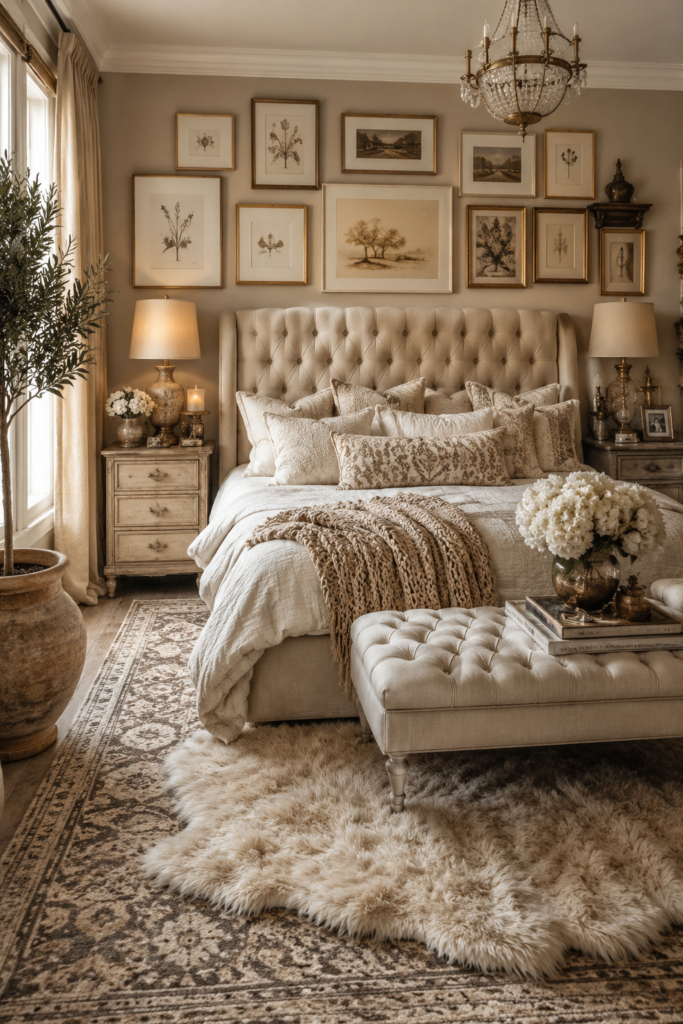
Beige maximalism proves that a neutral bedroom can still have plenty of personality. Instead of using one beige shade everywhere, combine cream, sand, tan, caramel, and deeper taupe to create layers.
Patterns can also work when they share a connected color palette. A striped rug, patterned cushions, textured bedding, and neutral artwork can create visual interest without making the room feel chaotic. A tall upholstered headboard can act as a strong focal point while a gallery wall adds personality above or around it.
Layering is important, but so is editing. Choose a few areas where you want more detail and keep the remaining surfaces quieter. Books, vases, candles, artwork, and mirrors can add character when they are grouped intentionally rather than scattered randomly.
Example: Layered Beige Maximalist Bedroom
Imagine a bedroom with a tall tufted beige headboard, cream bedding, and a patterned neutral throw. A textured rug sits beneath the bed, while a gallery wall combines different beige and taupe artworks with simple frames. On the dresser, a ceramic vase, stacked books, and a small lamp create a styled arrangement. The variety comes from texture, pattern, and tone rather than bright colors, so the room still feels cohesive.
8. Beige Accent Wall Bedroom
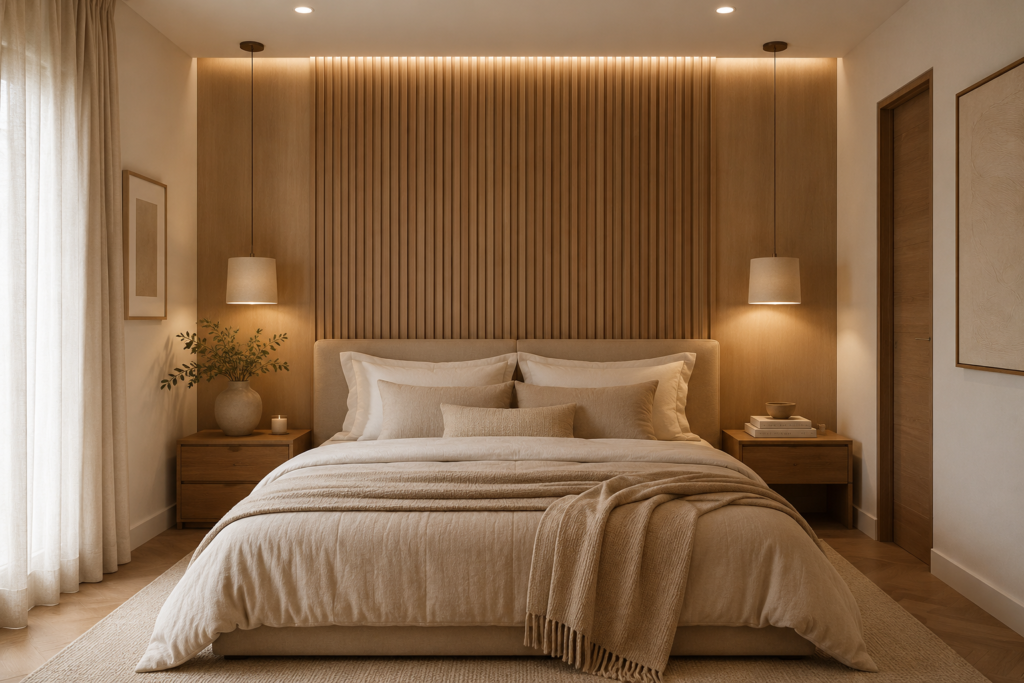
A beige accent wall can give the bedroom a focal point without introducing a strong color. The wall behind the bed is usually the most effective location because it naturally draws attention toward the main piece of furniture.
You can create the accent through a slightly deeper beige, warm taupe, limewash, wood slats, panel molding, or textured wallpaper. Each finish creates a different effect: wood adds warmth, limewash creates movement, while panel molding gives the wall a more architectural appearance.
Keep the bedding and surrounding furniture relatively simple if the wall has strong texture. A large mirror can work in some bedrooms, especially when it reflects natural light, but it should not compete with an already detailed wall.
The remaining walls can stay in a lighter beige or warm off-white so the accent wall remains the visual anchor. Finish the room with a textured rug, soft curtains, and warm lighting that connects the different beige tones.
How to Create a Warm and Balanced Beige Bedroom
Start With the Main Furniture
Choose the bed, wardrobe, and larger furniture pieces before adding accessories. Their wood tone, upholstery, and proportions will influence which beige shades and textures work best throughout the room.
Layer Beige Instead of Matching Everything
Using exactly the same beige everywhere can make a bedroom feel flat. Combine warm beige with cream, oatmeal, sand, taupe, or light brown to create subtle variation while keeping the palette connected.
Add Texture Through Fabric
Linen bedding, knitted throws, upholstered furniture, woven rugs, and soft curtains can make a neutral bedroom feel much richer. Texture is especially important when you are working with a limited color palette.
Use Lighting to Change the Mood
Warm bedside lamps, wall lights, floor lamps, and soft overhead lighting can make beige feel noticeably different throughout the day. Avoid depending on one harsh light source if you want a relaxed bedroom atmosphere.
Keep the Bed as the Focal Point
The bed is naturally the largest visual element in most bedrooms. Let the headboard, bedding, wall behind it, or lighting arrangement give this area the most attention, then keep supporting furniture more restrained.
Leave Space Around the Furniture
A comfortable bedroom needs room to move. Do not fill every empty corner simply because there is space available. A little breathing room can make beige interiors feel more sophisticated and relaxing.
Frequently Asked Questions
Is beige a good color for a bedroom?
Yes. Beige is versatile, calming, and easy to combine with natural materials and other neutral shades. It can create anything from a minimalist bedroom to a warmer layered or quiet luxury look.
What colors go well with a beige bedroom?
Cream, ivory, white, taupe, caramel, warm brown, muted green, soft black, and natural wood all work well with beige. The best combination depends on whether you want the room to feel warmer, lighter, or more dramatic.
How can I make a beige bedroom feel less boring?
Use different textures and slightly varied beige shades. Linen, wood, woven materials, rugs, paneling, plants, artwork, and warm lighting can add depth without needing bright colors.
Is beige suitable for a small bedroom?
Yes. Lighter beige shades can help a small bedroom feel softer and more open. Keeping furniture streamlined and using a large mirror or light curtains can also help maintain a sense of space.
How do I create a luxury beige bedroom?
Focus on quality-looking materials, balanced furniture, layered lighting, and a limited color palette. Upholstered headboards, textured rugs, linen bedding, warm wood, and understated metal details can create a refined look without excessive decoration.
What type of lighting works best in a beige bedroom?
A combination of warm bedside lamps, soft overhead lighting, and optional wall or floor lamps usually works better than a single bright fixture. Layered lighting lets you change the mood depending on the time of day.
A beige bedroom can be much more than a room filled with neutral furniture. The most successful spaces use beige as a foundation and build depth through texture, material, lighting, and carefully chosen details. Minimalist bedrooms can keep the palette clean, while quiet luxury spaces can emphasize refined materials and balanced proportions.
Organic modern, Japandi, boho, cozy, maximalist, and accent-wall designs each show a different way to work with the same versatile color family. Start with how you want the bedroom to feel, then choose furniture, fabrics, lighting, and accessories that support that mood.
With thoughtful layering, beige can create a bedroom that feels warm, personal, and timeless. For more inspirations explore our Beige Curtain Ideas and Beige Kids Bedroom Furniture Ideas for cozy and elegant interior.