Beige Decor Ideas for Awkward Empty Corners
Every home has an awkward empty corner that seems difficult to decorate. It might be the narrow space beside a bed, an unused corner near the sofa, or an empty area at the end of a hallway. These spaces can be challenging because a regular piece of furniture may feel too bulky, while leaving the corner completely empty can make the room look unfinished.
The solution is to choose something that suits the size and purpose of the space. A slim floor lamp can brighten a dark corner, floating shelves can provide extra storage, and a comfortable chair can turn an unused nook into a relaxing retreat. In a beige interior, natural wood, textured fabrics, stone surfaces, and warm lighting help these additions feel connected to the rest of the room.
Here are 16 beige corner decor ideas that combine practical use with a warm, understated look. Whether you are decorating a bedroom, living room, or entryway, these ideas can help you make better use of the space without overcrowding it.
Disclosure: This post contains affiliate links. If you purchase through these links, I may earn a commission at no additional cost to you.
Note: Click on Images to Shop These Featured Products
1. Corner Desk with Built-In Bookshelf
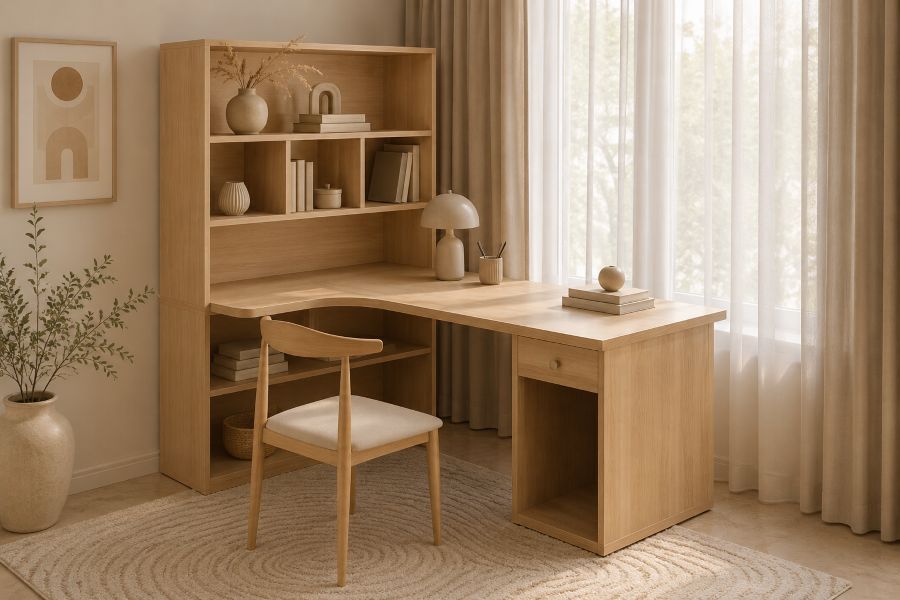
An empty bedroom corner can become a practical workspace with an L-shaped beige desk and a built-in bookshelf. This arrangement uses two adjoining walls, making it particularly useful when there is not enough room for a separate office setup.
Choose a desk with a warm oak finish, beige cabinetry, and enough surface space for a laptop and everyday essentials. The shelves above or beside the desk can hold books, storage boxes, and a few decorative objects without taking up additional floor space.
Keep the desktop relatively clear so it remains comfortable to work at. A small desk lamp, a ceramic pencil holder, and one plant are enough to make the workspace feel inviting. Before purchasing, measure the corner carefully and check that the chair can be pulled out without hitting the bed or wardrobe.
Best for: small bedrooms. Space needed: about 120 cm by 120 cm.
2. Marble-Top Pedestal Table for Tight Corners
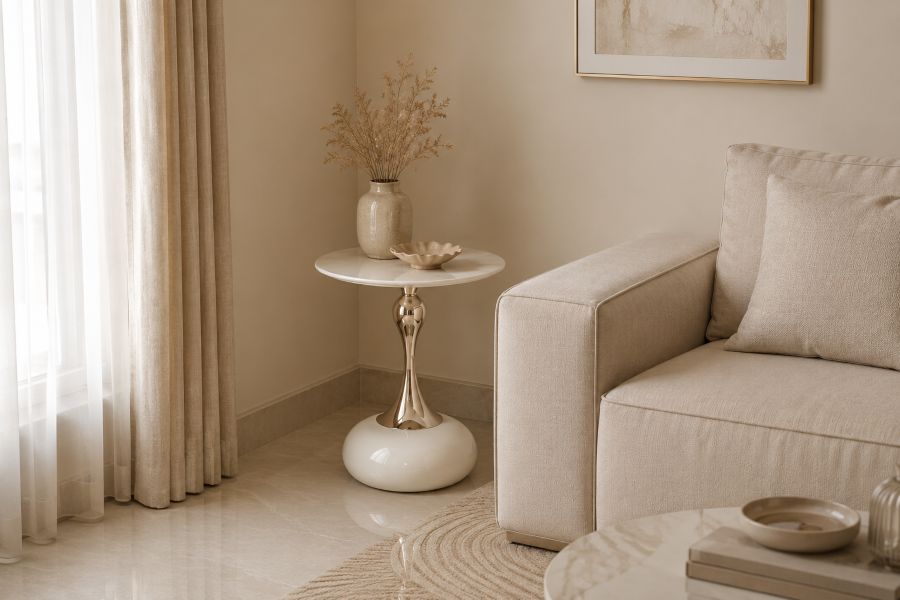
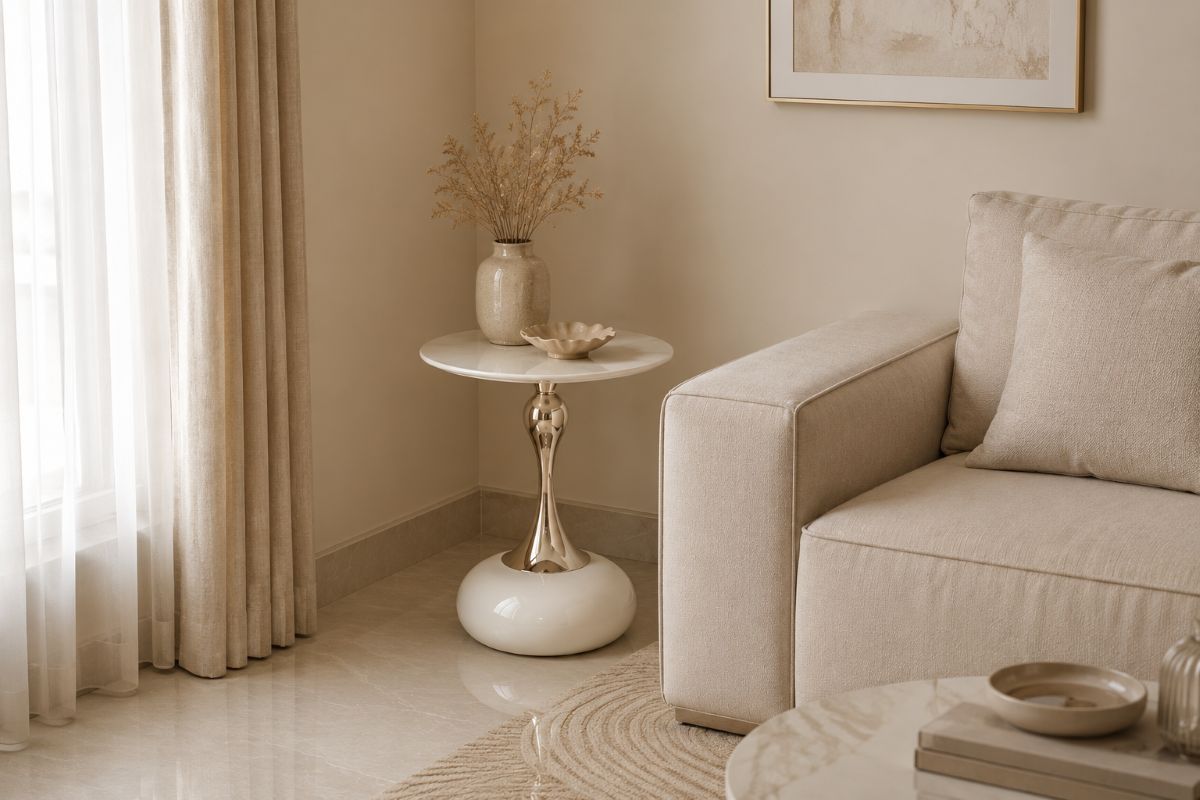
A small marble-top pedestal table can make a narrow corner feel intentional without introducing bulky furniture. Its compact base takes up little floor space, while the stone surface adds a subtle contrast to beige walls and warm wood finishes.
This idea works well beside a sofa, near a bedroom window, or in a small sitting area where a full-size console would be impractical. Choose a round tabletop if the surrounding furniture has strong straight lines, as the curved shape can soften the arrangement.
A small ceramic vase, a compact lamp, or a single sculptural object is usually enough to style the table. Avoid stacking too many accessories on such a small surface, especially if you need the table to hold everyday items.
Check the table’s stability and dimensions before buying. A narrow pedestal can be attractive, but it should still provide a secure surface for anything you plan to place on it.
3. Floating Corner Shelves for an Empty Corner
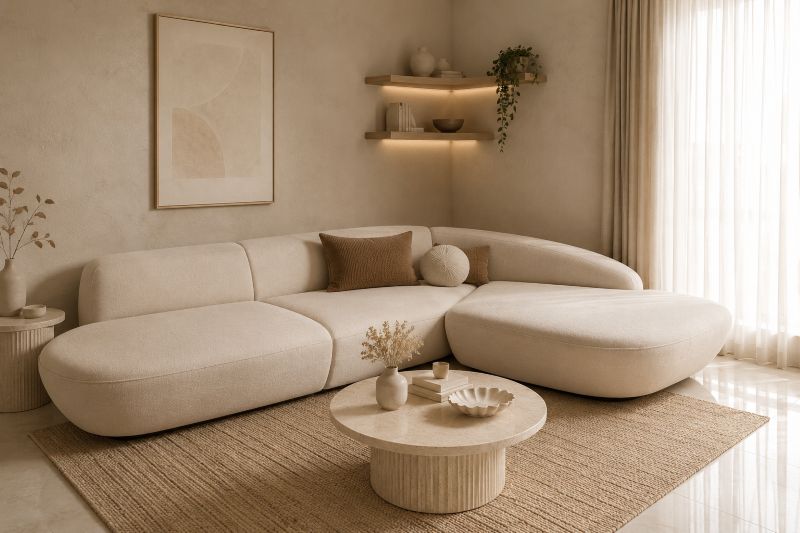
Floating corner shelves are a useful solution when you want to decorate an empty corner without losing floor space. They use the wall vertically and can accommodate small decorative objects, books, and lightweight storage pieces.
For a warm beige interior, consider shelves in natural oak or a matching beige finish. Arrange them at different heights if you want a more relaxed display, or use evenly spaced shelves for a cleaner, more structured look.
Warm lighting can make the arrangement more noticeable in the evening. If you add LED strips, position them so the light highlights the objects without creating harsh glare. Make sure the shelves and lighting are installed according to the manufacturer’s instructions, with suitable wall fixings and safe cable management.
Style the shelves with a small selection of beige ceramics, neutral books, and a trailing plant. Leave some space between objects to prevent the corner from looking overcrowded.
For more ways to decorate vertical wall space, explore these beige floating shelves ideas.
4. Cozy Reading Chair for an Empty Corner
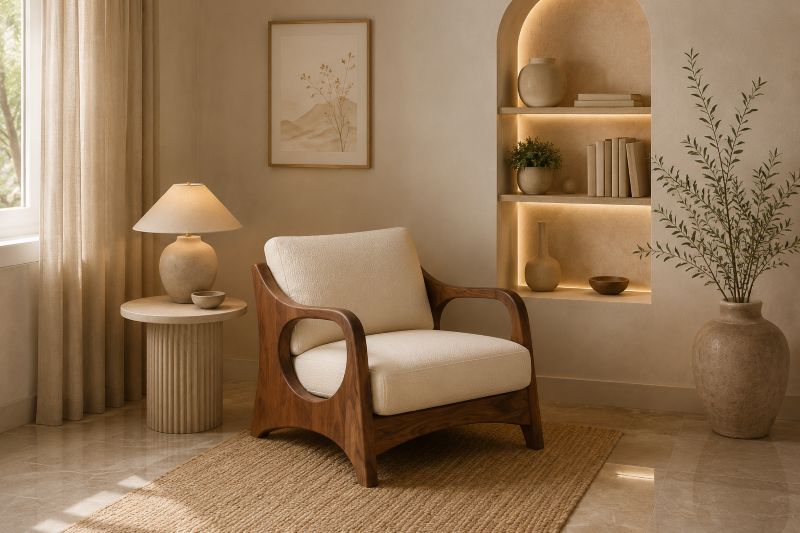
An arched wall niche or an unused corner beside a window can become a comfortable reading spot with a beige accent chair. A curved silhouette works particularly well with an arched opening because the furniture echoes the shape of the architecture.
Choose a chair with soft boucle upholstery or a textured neutral fabric. If the nook is small, look for a compact design with a relatively narrow frame rather than a large lounge chair with wide arms.
A slim floor lamp can provide reading light, while a small side table offers space for a book or cup of tea. A round rug can help define the seating area, provided it does not interfere with the surrounding walking path.
Keep the decorative elements simple. The chair should be comfortable enough to use regularly, not just attractive in photographs. If the corner receives natural light, position the chair to make the most of it while avoiding direct glare.
5. Boucle Rocking Chair Softening a Sharp Angle
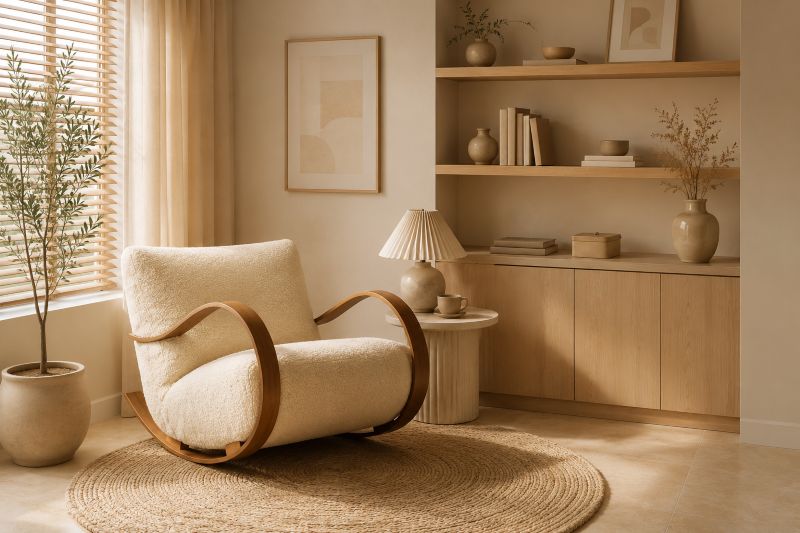
A boucle rocking chair can soften a sharp architectural corner and create a quiet place to relax. The combination of textured upholstery and a natural wood frame brings warmth to a beige room without requiring additional colors or elaborate decoration.
This arrangement is especially suitable for a bedroom, nursery, or peaceful living room corner. Place the chair at a slight angle rather than pushing it tightly into the corner, allowing enough room for the rocking motion.
A small round rug can visually anchor the chair, while a compact side table provides a convenient surface for a book or drink. A nearby plant can introduce a natural accent if the lighting conditions are suitable.
Before choosing the chair, check how much clearance it needs when rocking. A chair that fits the corner when stationary may become inconvenient if its movement is restricted by a wall, table, or nearby furniture.
6. Tall Corner Shelf Unit for Bedroom

Bedrooms often have limited floor space because the bed, nightstands, and wardrobe already occupy much of the room. A tall, narrow corner shelf can provide additional storage without requiring a wide piece of furniture.
Choose a unit with a slim frame in warm wood or beige. Its vertical design draws attention upward and makes use of wall height that might otherwise remain unused.
Use the lower shelves for practical items such as storage baskets or books, and reserve the upper shelves for lightweight decorative pieces. A few beige ceramics, small plants, and neutral accessories can create a coordinated display without filling every shelf.
If the unit is tall, secure it according to the manufacturer’s instructions to reduce the risk of tipping. Also check that the shelves are deep enough for the items you intend to store.
Best for: narrow bedroom corners. Space needed: about 40 cm wide.
7. Pleated Floor Lamp for a Cozy Corner
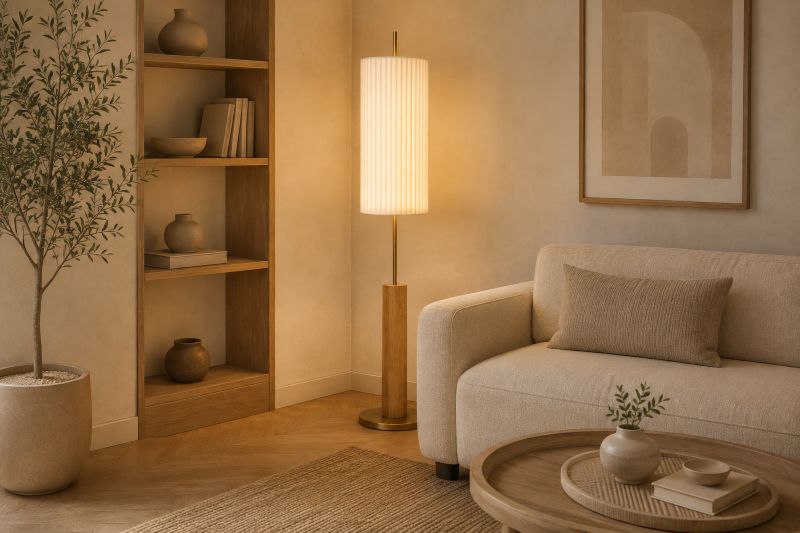
Sometimes an empty corner does not need another piece of furniture. It simply needs better lighting. A pleated floor lamp can introduce height, a soft fabric texture, and a warm glow without taking up much space.
A beige or natural linen shade works beautifully with warm neutral interiors. Choose a slim base in wood, brushed brass, or a restrained dark finish that complements the room’s existing hardware.
Position the lamp beside a sofa, behind an accent chair, or near a console where additional light would be useful. A diffused shade helps create a comfortable atmosphere in the evening, while a suitable bulb can provide enough light for reading or relaxing.
Check the lamp’s height and base dimensions before purchasing. In a tight corner, a wide tripod base may be less practical than a narrow, stable design. Keep cords away from walking paths and follow the manufacturer’s electrical safety instructions.
8. Sculptural Console for an Entryway Corner

An awkward entryway corner can become a decorative focal point with a sculptural floating console. Because it is mounted on the wall, the floor beneath remains open, which can help a narrow hallway feel less crowded.
Choose a slim console with a beige finish, rounded edges, or an interesting curved support. The design should provide enough surface space for everyday essentials without projecting too far into the walkway.
A small tray can keep keys organized, while a ceramic vase adds a decorative touch. Above the console, a mirror can reflect light and make the entrance feel more open. Alternatively, a piece of artwork can introduce personality without adding more furniture.
Before installation, check the wall construction and use appropriate fixings for the console’s weight. The wall must be able to support both the furniture and the items placed on it.
This arrangement is especially useful when you want a finished-looking entrance but do not have room for a traditional console table.
9. Fluted Pillar Console Anchoring a Corner
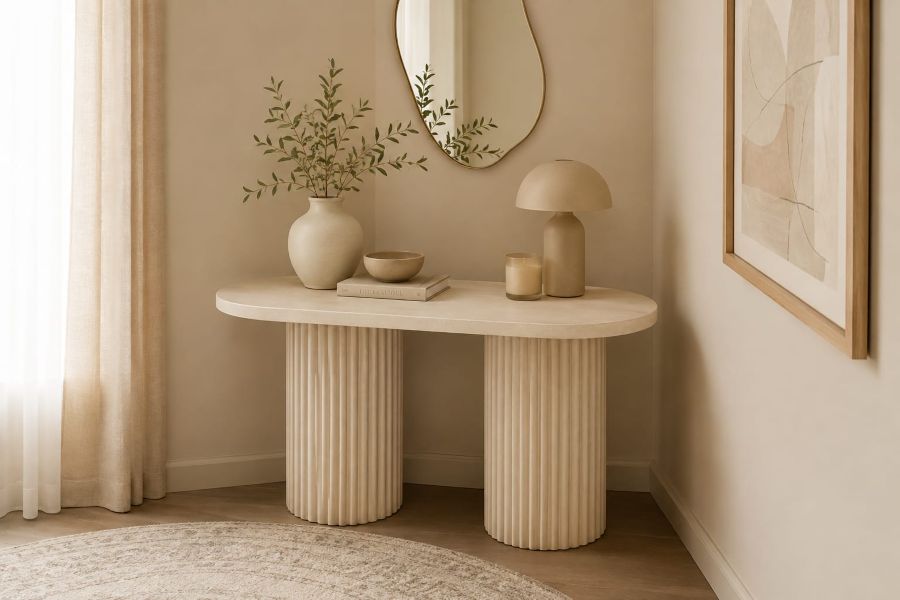
A fluted pillar console can give a larger empty corner a more architectural appearance. Its textured base creates subtle shadows, while a rounded tabletop softens the strong vertical lines.
This design works well in a spacious hallway, living room, or the corner of a formal sitting area. A beige or warm stone finish keeps the console connected to the neutral palette, while a rounded mirror above it adds height and reflects light.
Because the furniture already has distinctive detailing, the accessories should remain simple. A sculptural ceramic vase, a small bowl, or a single decorative object can be enough to finish the surface.
Pay attention to scale when choosing the mirror. A very small mirror above a substantial console may look disconnected, while an oversized one can dominate a narrow wall. Aim for proportions that relate comfortably to the width of the furniture.
Best for: wide hallways and large living rooms. Space needed: about 80 cm wide.
10. Round Fluted Table Softening a Bare Corner
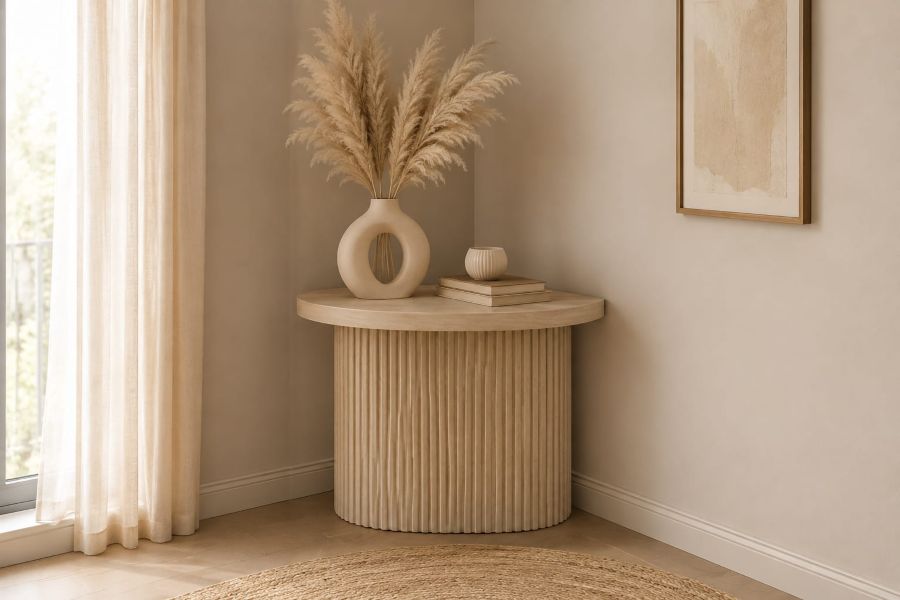
A round fluted table is an easy way to give a bare corner some visual interest without introducing a large storage unit. Its curved top softens the surrounding architecture, while the fluted base adds texture close to the floor.
This idea is particularly useful in a living room corner where the main furniture is already in place but the area still feels unfinished.
Instead of filling the tabletop with several small accessories, choose one oversized vase as the focal point. A beige ceramic vase with an organic silhouette can complement the table, while branches or dried stems add height without introducing a strong color contrast.
Check the height of the vase in relation to nearby furniture. It should add interest without blocking a window, interfering with a walkway, or making the corner feel top-heavy.
If the space is very narrow, choose a compact table with a stable base. The aim is to create a deliberate decorative moment without making the corner difficult to move around.
11. Fluted Pedestal Trio for a Decorative Corner
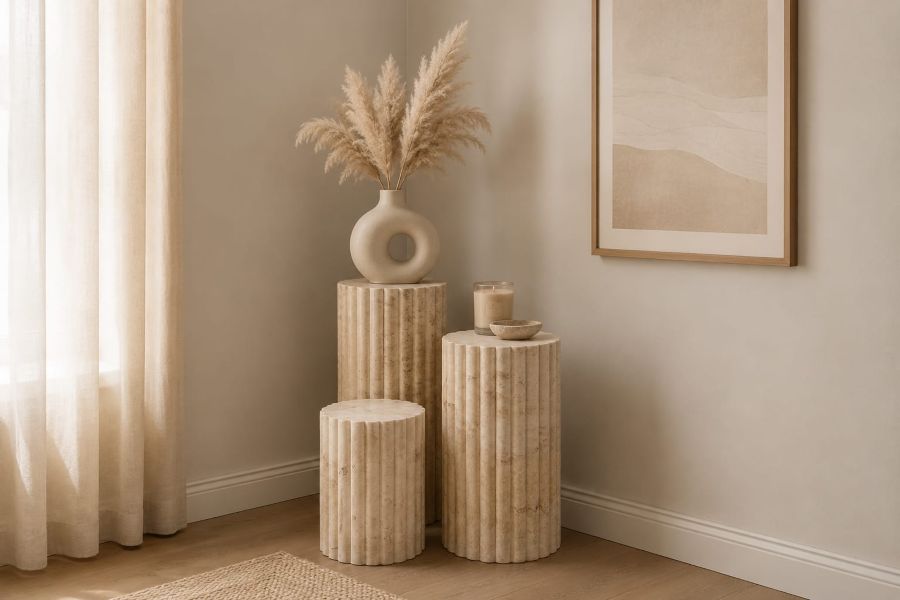
A group of three fluted pedestals can turn an empty corner into a flexible decorative display. Using different heights creates a sense of movement, while matching finishes help the pieces feel connected.
This arrangement works particularly well in a spacious living room, beside a large window, or in an unused corner near a feature wall. Beige, warm stone, and natural wood finishes keep the grouping understated.
You can place a small ceramic vase on one pedestal, a sculptural object on another, and leave the third empty. The difference in height creates visual interest without requiring lots of accessories.
The main consideration is spacing. If the pedestals are placed too close together, they can look like a single bulky piece. Leaving small gaps between them makes the arrangement feel lighter.
This option also offers flexibility: you can rearrange the pieces or move one to another room when you want a different look. Make sure each pedestal has a stable base and is suitable for the objects displayed on it.
12. Modular Shelving Unit for an Awkward Wall Corner
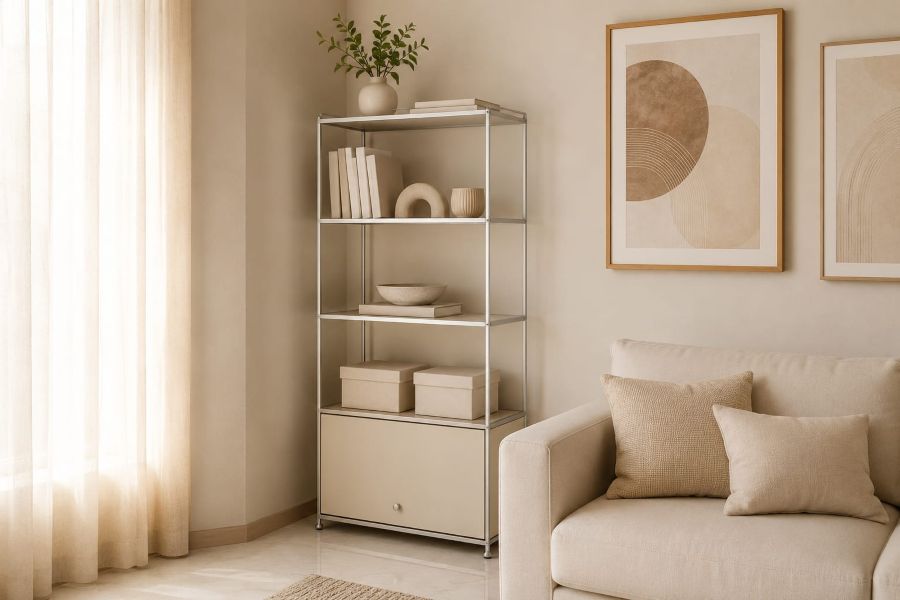
A modular shelving unit can turn an unused corner beside a sofa or along a short wall into practical storage. Unlike a purely decorative table, it provides room for books, baskets, accessories, and everyday belongings.
Look for a design that combines open shelves with closed compartments. The open sections can display a few carefully selected objects, while the closed storage keeps items such as cables, paperwork, and miscellaneous accessories out of sight.
A beige and taupe palette with warm wood accents helps the shelving blend into a neutral living room. Adjustable shelves can be useful if your storage needs change over time.
Before choosing the unit, measure the corner and consider how it will relate to the sofa or other nearby furniture. A unit that is too deep can make the seating area feel cramped, even if it fits against the wall.
Arrange objects by size and leave some shelf space empty. This makes the unit easier to use and prevents a functional storage solution from becoming a cluttered display.
13. Cushioned Shoe Bench for Entryway Corner
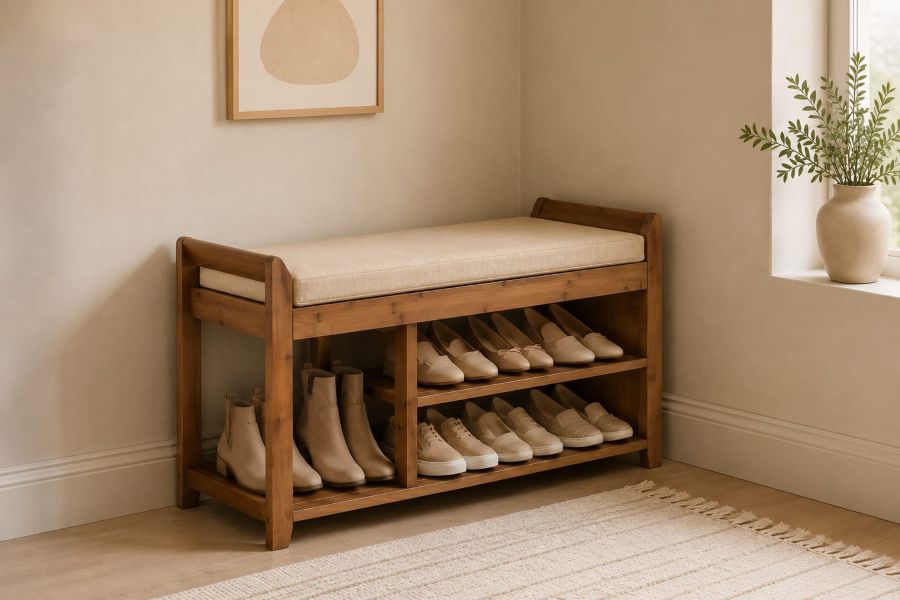
A cushioned shoe bench can make an unused entryway corner more functional by combining seating with shoe storage. It gives you a convenient place to sit while putting on footwear and helps keep shoes from spreading across the floor.
Choose a compact bench with a beige upholstered seat, a warm wood frame, and an open lower shelf or suitable storage compartments. The size should allow enough room for sitting without obstructing the front door or the main walking path.
A small cushion can add comfort, while a nearby wall mirror makes the arrangement feel complete. If you need extra organization, a basket beneath the bench can hold slippers or other small items, provided there is enough clearance.
Consider the material of the seat carefully. In a frequently used entrance, a fabric that is easy to clean may be more practical than a delicate upholstery finish.
Best for: small entryways. Space needed: about 80 cm wide and 35 cm deep.
14. Woven Storage Basket for a Bare Corner
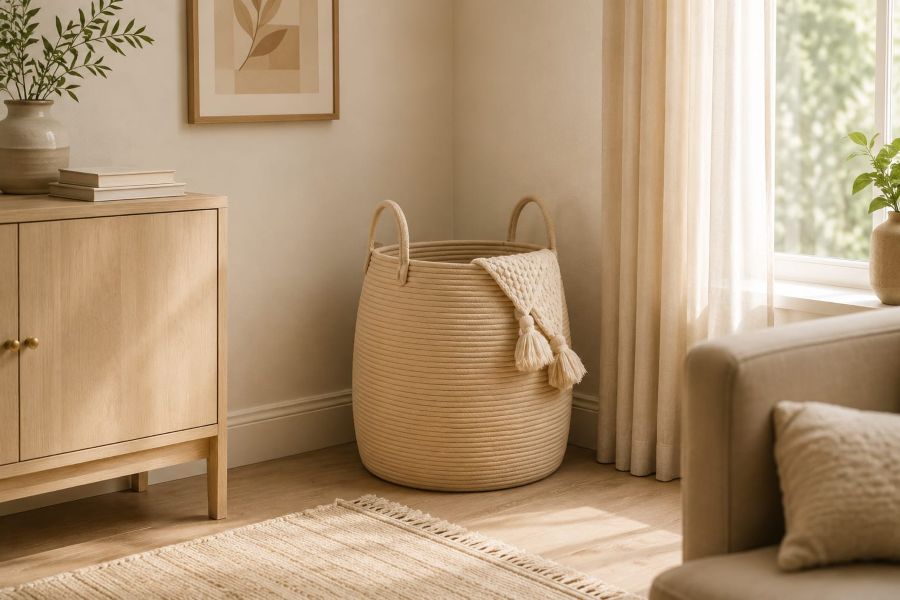
When a corner is too small for furniture, a woven storage basket can be a simple and useful alternative. It introduces natural texture and provides a place to keep extra blankets, cushions, or other household items.
Choose a basket in a warm natural shade that complements the beige palette. A larger basket can fill an empty space beside a sofa, while a smaller one may work better in a bedroom or reading nook.
For a living room, folded throws can make the basket look inviting while keeping them easy to reach. In a bedroom, it can hold spare bedding or extra cushions. The basket should be sized according to what you intend to store rather than chosen purely for decoration.
Woven baskets are also easy to move when you need to clean or rearrange the room. If you plan to store heavier objects, check that the material and handles are suitable for the weight.
Best for: tiny corners beside a sofa or bed. Space needed: about 35 cm wide.
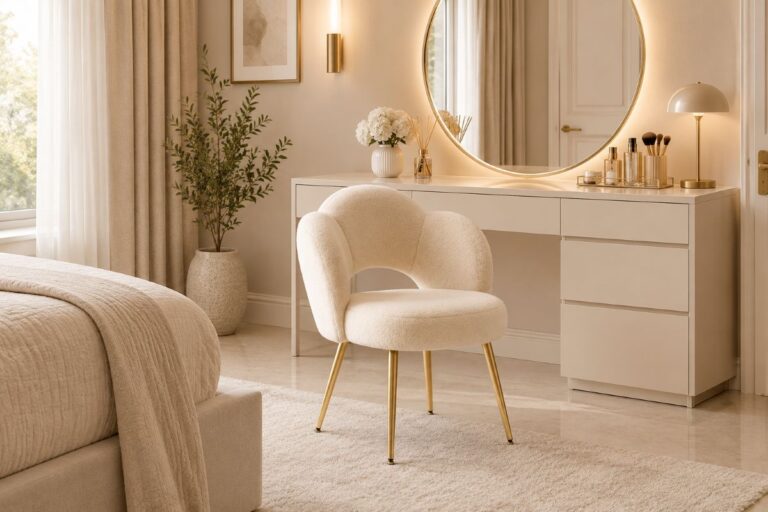
15. Corner Vanity with Built-In Storage Cabinet
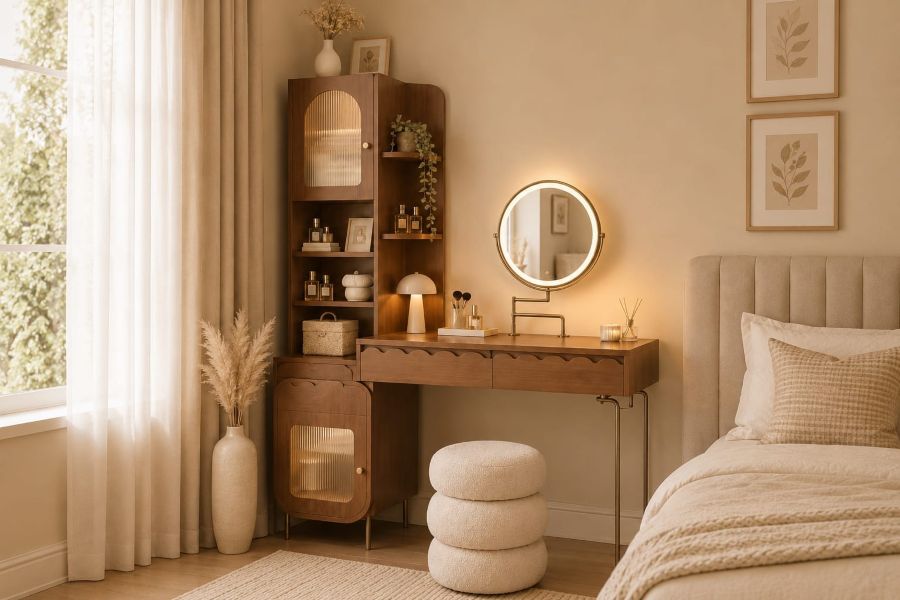
An unused bedroom corner can become a practical beauty station with a compact beige vanity and a tall storage cabinet. This arrangement keeps makeup, skincare products, and accessories in one place instead of spreading them across the nightstand or dresser.
Choose a vanity with drawers for smaller items and a countertop large enough for the products you use regularly. A round mirror can soften the arrangement, while a beige upholstered stool adds comfort without introducing a contrasting color.
The tall cabinet is useful for storing less frequently used products, extra toiletries, and accessories. However, make sure the cabinet does not make the corner feel enclosed or interfere with access to the vanity seat.
Lighting is particularly important here. Position the mirror where you can use natural light when possible, and add suitable task lighting if the corner is dim.
Keep the countertop organized with a small tray for everyday essentials. This makes the vanity easier to clean and leaves enough working space for your daily routine.
16. Rounded Shoe Cabinet for a Snug Corner
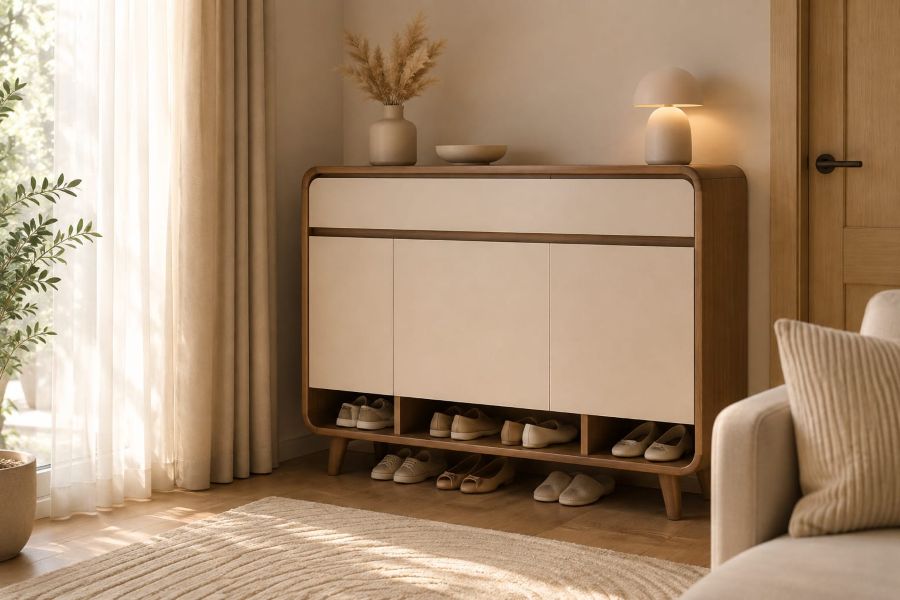
A rounded beige shoe cabinet can provide concealed storage in a narrow entryway without the heavy appearance of a large rectangular unit. Its softened edges make the design feel more organic, while closed doors keep footwear out of sight.
Look for a cabinet with a compact depth and an internal layout that suits the types of shoes you own. Some slim shoe cabinets use angled or flip-down compartments, so check the actual storage capacity before purchasing.
A lower open shelf can provide easy access to frequently worn shoes, while the enclosed section keeps the rest organized. If you prefer a completely streamlined appearance, choose a model with concealed handles and a finish that coordinates with the wall.
The top can hold a small ceramic bowl, a compact lamp, or a vase, but avoid placing too many objects there. In a narrow hallway, keeping the surrounding area clear is more important than adding extra decoration.
Measure the available space carefully and make sure the cabinet does not obstruct the door, drawers, or normal movement through the entrance.
Which Idea Fits Your Corner? Quick Size Guide
Very narrow corner (under 40 cm): floor lamp, tall slim shelf, woven basket, or floating corner shelves.
Small corner (40 to 80 cm): pedestal table, rounded shoe cabinet, shoe bench, or a wall-mounted console.
Medium corner (80 to 120 cm): accent chair with a lamp, modular shelving, or a round fluted table.
Large corner (120 cm or more): corner desk, vanity, rocking chair, or a fluted pillar console.
How to Decorate an Awkward Corner Without Making It Feel Cluttered
The most useful corner decor is not necessarily the most elaborate. Before buying anything, consider what the space is missing. If the corner is dark, lighting may be enough. If the room needs storage, a narrow shelf or cabinet may be more useful than a decorative table. If you want a place to relax, a comfortable chair can give the corner a clear purpose.
Scale matters just as much as style. Measure the available floor space and leave a comfortable path around furniture, particularly near doors and hallways. A tall shelf can be a better choice than a wide console in a narrow area, while a deeper corner may have enough room for a chair and side table.
For a cohesive beige interior, combine a few complementary materials instead of using the same finish everywhere. Warm wood, textured upholstery, stone, woven baskets, and ceramic accessories can all work together without making the room feel repetitive.
Finally, resist the urge to fill every empty surface. One well-chosen piece with enough space around it often looks more intentional than several smaller decorations competing for attention.
FAQs About Decorating Awkward Empty Corners
What is the best way to decorate an awkward empty corner?
Start by considering the size and purpose of the corner. A narrow space may benefit from a floor lamp, floating shelves, or a slim cabinet, while a larger corner can accommodate a reading chair, console, or compact desk. Choose one main feature and add only the accessories needed to make it useful.
How can I decorate a small corner without making the room feel crowded?
Use vertical space where possible and choose furniture with a small footprint. Floating shelves, tall narrow storage, and wall-mounted consoles can provide function without taking up much floor area. Measure the furniture before purchasing and keep the walking path clear.
Which colors work well with beige corner decor?
Warm beige pairs naturally with oak, walnut, taupe, muted sage green, and earthy brown. Brass or dark metal can add contrast when used in small details. Try to keep the undertones of your finishes compatible, as a very yellow beige beside a pinkish beige may look less cohesive.
Can I decorate an empty corner without buying furniture?
Yes. A woven basket, a floor lamp, wall-mounted shelves, or a large plant suited to the available light can make a corner feel more complete. You can also rearrange an existing chair or side table from another part of the room before buying something new.
How do I make an empty bedroom corner useful?
Consider whether you need extra storage, a workspace, or a place to relax. A compact desk can create a small work area, a tall shelf can hold books and accessories, and a corner vanity can organize beauty products. Choose the option that supports your daily routine and leaves enough room to move around the bedroom comfortably.
Should corner decor match the rest of the room?
It does not need to match exactly, but it should feel connected to the surrounding space. Repeating one or two materials, such as beige upholstery and warm wood, can create continuity. A contrasting piece can also work when its shape, scale, and finish complement the rest of the room.
Awkward empty corners can become some of the most useful and inviting areas of a home when their design reflects the way you live. A compact desk can create a workspace, floating shelves can add storage, a reading chair can provide a quiet retreat, and a woven basket can bring warmth to a space that does not need more furniture.
In a beige interior, the goal is to balance function, texture, and open space. Choose pieces that suit the dimensions of the corner, coordinate their finishes with the rest of the room, and avoid adding accessories simply to fill an empty surface.
If you’re looking for more inspiration to style your home, explore our beige indoor plant corner ideas to bring greenery and natural warmth into unused spaces. You can also discover our beige home decor accents styling ideas for practical ways to add texture, personality, and carefully chosen decorative details to your neutral interior.