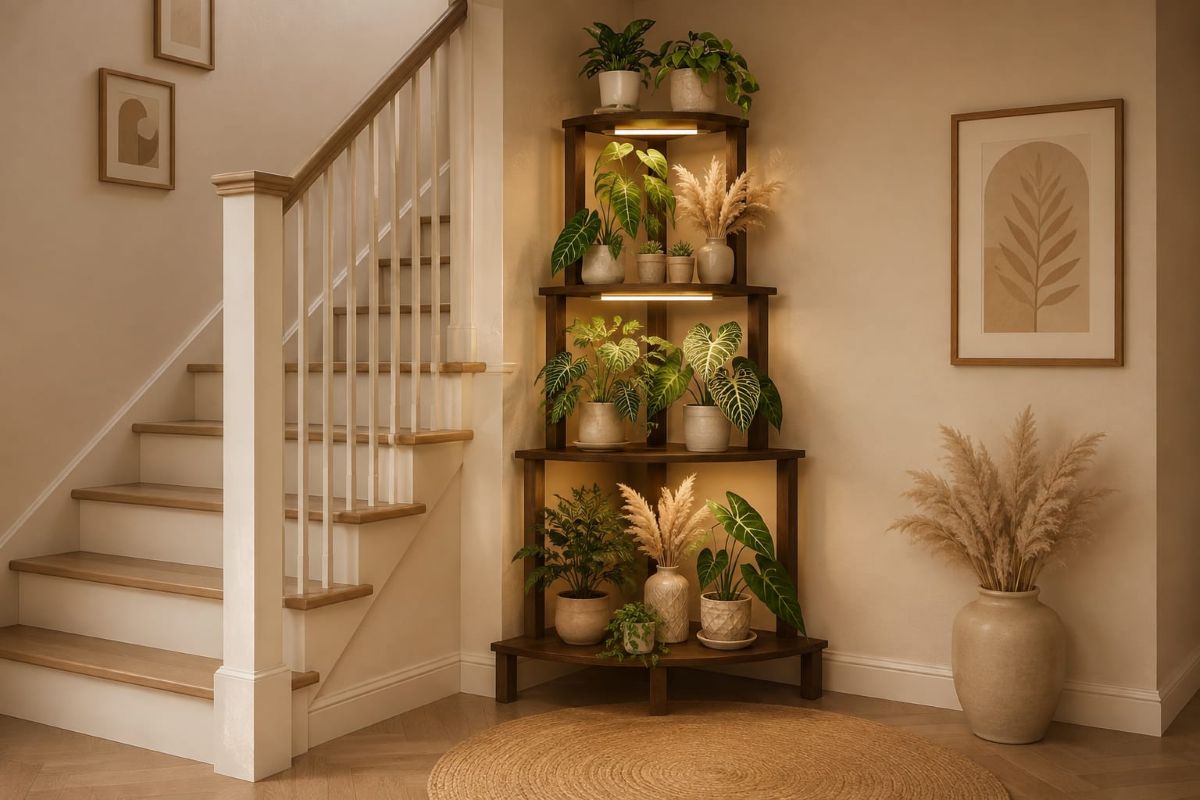
Beige Plant Corner Ideas to Make Your Home Feel Fresh & Cozy
An empty corner can be more useful than it first appears. With the right combination of greenery, natural materials, and warm neutral accessories, an overlooked part of a room can become a small but noticeable feature. Beige plant corner decor works particularly well because the neutral background allows green leaves, wooden furniture, and natural textures to stand out without making the space feel busy.
You do not need a large indoor garden to achieve this look. A single statement plant can fill a tall corner, while a tiered stand can accommodate several smaller pots in a compact area. The important thing is to choose plants that suit the available light and arrange them in a way that works with the room.
Here are 16 beige plant corner ideas for living rooms, hallways, balconies, and other spaces around the home.
If warm neutral interiors are your style, you can find more beige room ideas and home styling inspiration on our Pinterest page.
Some products featured in this article are linked through Amazon affiliate links. If you choose to shop through one of the linked images, I may receive a small commission at no additional cost to you.
Click on the images to shop the featured products.
1. Beige Corner Plant Grouping with Textured Ceramic Planters
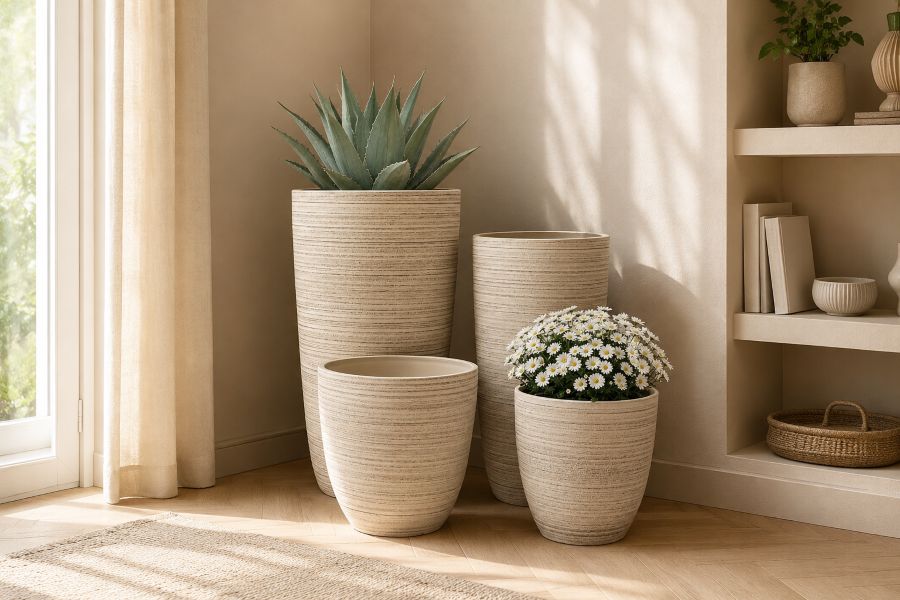
A collection of ceramic planters can make an empty corner feel intentional without requiring a large piece of furniture. Choose pots in slightly different shades of beige, sand, and taupe, then vary their shapes and heights to create a more natural arrangement.
Place the tallest plant toward the back and arrange smaller pots around it. This creates depth while keeping the display visually balanced. Ridged or matte ceramic finishes add texture even when the pots share a similar color.
This arrangement works well beside a living room window or in a bright corner near a console. Before choosing your plants, check how much direct or indirect sunlight the location receives.
2. Layered Living Room Plant Corner with Fluted Beige Planters
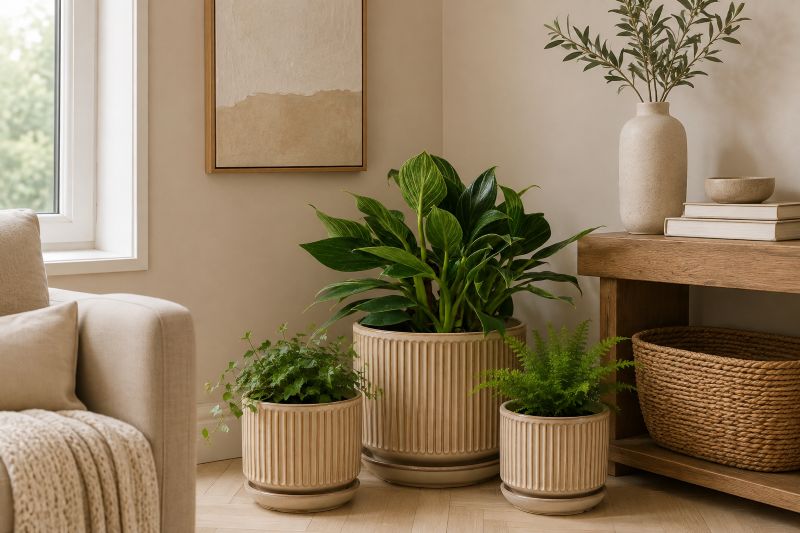
Fluted beige planters are a simple way to introduce texture into a neutral living room. Their vertical grooves complement wooden furniture and add detail without relying on decorative patterns or contrasting colors.
For a layered display, combine one tall floor plant with two smaller plants on low stands. A console table behind the arrangement can help connect it with the rest of the room, particularly when the corner sits beside a sofa.
Avoid lining every pot up at exactly the same height. A little variation in leaf shape and plant size creates a more relaxed arrangement. Use saucers or suitable waterproof trays to protect the floor and furniture from excess water.
3. Fiddle Leaf Fig Corner in White Planter
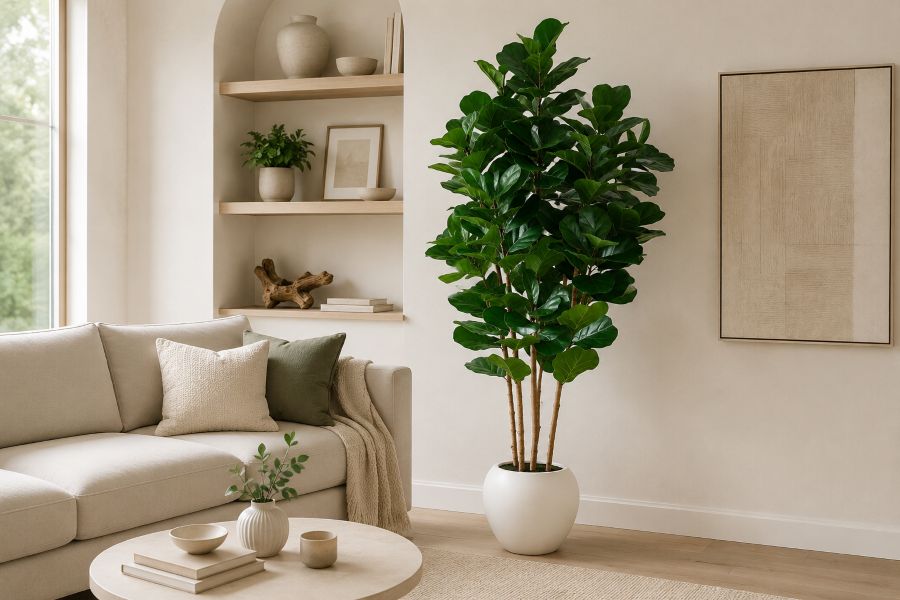
A fiddle leaf fig makes a strong visual statement because of its broad leaves and upright growth. Against beige walls, its deep green foliage creates contrast without changing the room’s warm, neutral palette.
Choose a substantial planter in a simple shape so the plant remains the main feature. A white or light beige pot can keep the arrangement visually light, while a sandy ceramic finish creates a more earthy look.
Fiddle leaf figs generally need bright, indirect light and can be sensitive to sudden changes in their environment. Place yours where it receives suitable light without obstructing a doorway or a main walking route.
4. Plant Corner with Olive Tree by Beige Fireplace
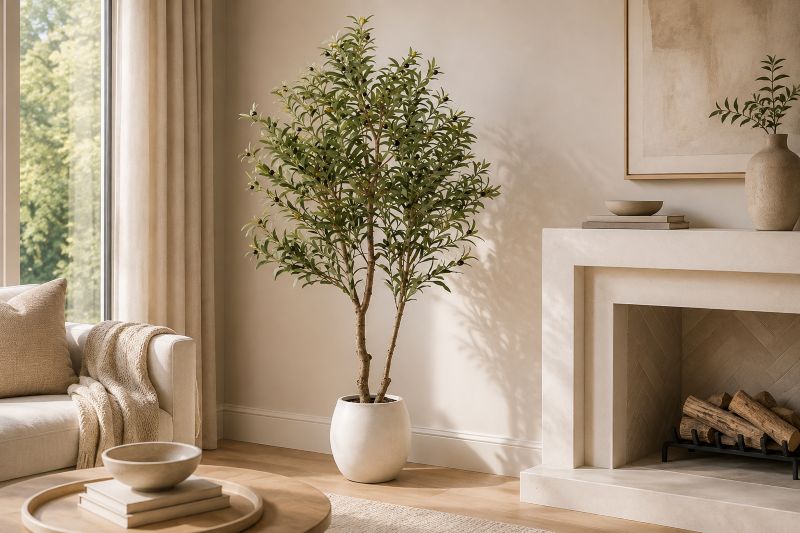
An olive tree brings a softer, more organic shape to a living room. Its slender branches and small leaves contrast nicely with the straight lines of a fireplace, built-in shelving, or a stone feature wall.
Place the tree slightly to one side of the fireplace rather than directly in front of it. This keeps the fireplace visible while allowing the branches to soften the surrounding architecture.
A matte beige or warm white planter works well with plaster finishes, natural wood, and neutral upholstery. If you use a real olive tree indoors, make sure its light requirements can be met. A realistic artificial tree is another option for a location that does not receive enough sunlight.
5. Tiered Wooden Plant Stand Corner Display
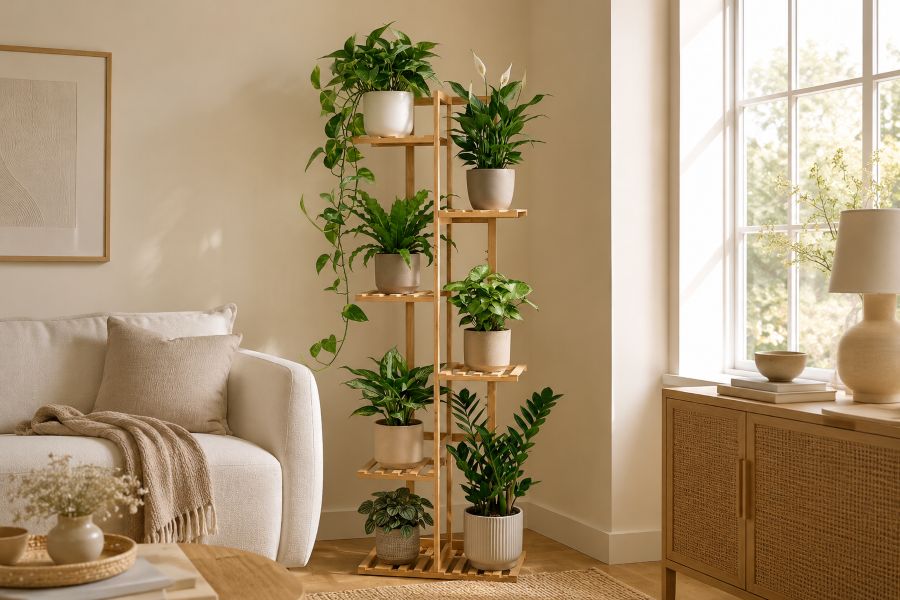
When floor space is limited, a tiered wooden plant stand allows you to display several plants vertically rather than spreading them across the room.
The natural wood adds warmth, while beige and sand-colored pots keep the arrangement connected to the rest of the decor. Use the upper shelves for smaller plants and trailing varieties, and place heavier pots on the lower levels according to the stand’s weight limits.
This setup is useful in apartments, beside a reading chair, or near a bright window. Leave a little space between pots so the leaves have room to grow and the display does not become overcrowded.
6. Peace Lily in Woven Basket Plant Stand
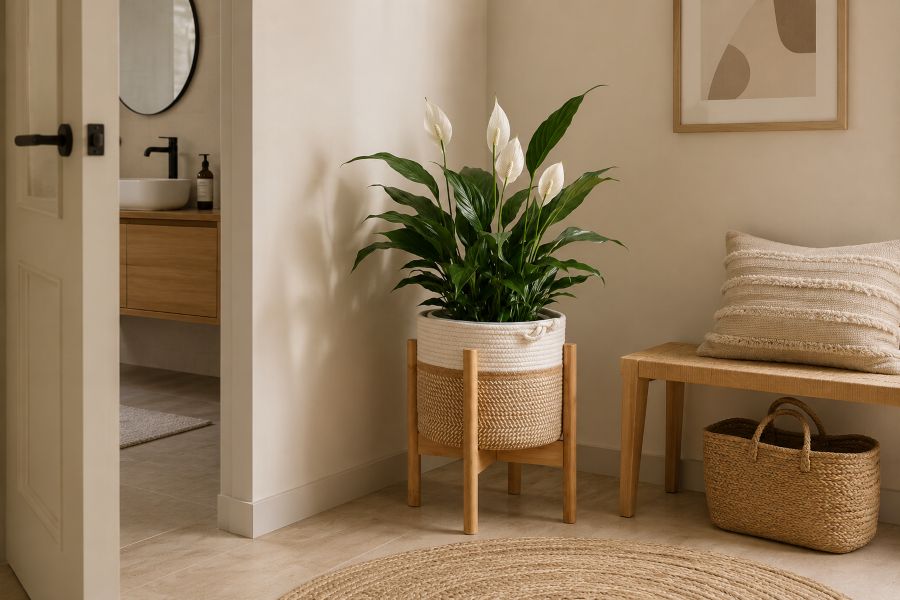
A peace lily and a woven basket create a softer alternative to a collection of matching ceramic pots. The broad green leaves and white flowers complement beige interiors, while the woven texture adds warmth.
Place the plant in a suitable nursery pot inside a decorative basket, using a waterproof liner or tray to protect the basket from moisture. Remove the inner pot when watering if necessary, and allow excess water to drain before returning it.
This arrangement can work well in a bright hallway or living room corner with indirect light. Keep in mind that peace lilies are toxic if chewed or swallowed, so choose a location that is inaccessible to children and pets.
7. Beige Plant Corner Ideas with Hanging Planters on Balcony Corner
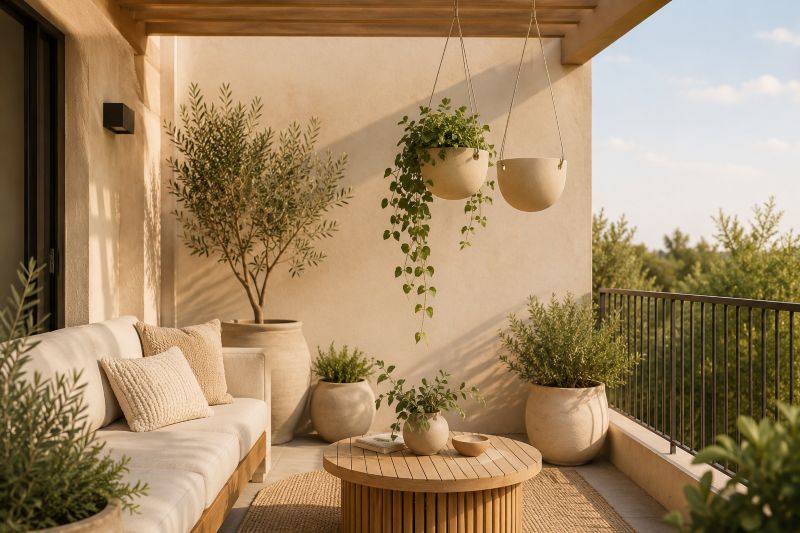
Hanging planters are useful when a balcony has limited floor space. They introduce greenery at different heights while leaving more room for seating, a small table, or movement.
Choose beige, sand, or textured neutral planters that complement the balcony’s existing materials. You can pair hanging greenery with a few floor-level pots to create a layered effect without filling every available surface.
Before installing hanging planters, make sure the overhead structure and hooks can safely support their weight, including the weight of wet soil. Select plants according to the balcony’s sunlight, wind, and temperature conditions.
8. Grow-Light Plant Shelving Corner Display
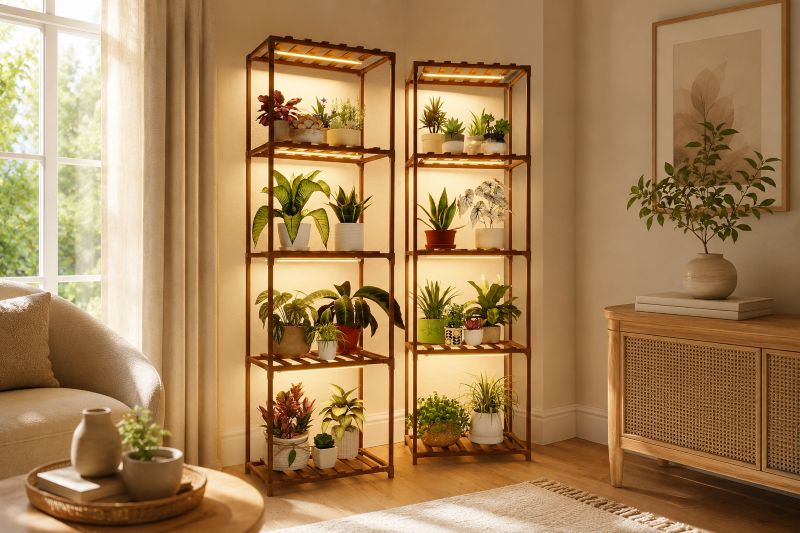
Some corners look ideal for a plant display but receive very little natural light. In this situation, a shelving unit fitted with suitable grow lights can make it possible to keep plants in a location that would otherwise be unsuitable.
A wooden shelf with beige pots can become both a practical growing area and a decorative feature. Group plants with similar light and watering requirements together, and choose lights appropriate for the plant varieties you want to grow.
Keep the shelves organized rather than filling every level with pots. Make sure electrical equipment is positioned safely away from water, and follow the lighting manufacturer’s instructions for placement and use.
9. Palm Plant Corner Ideas with Wood Riser Stand
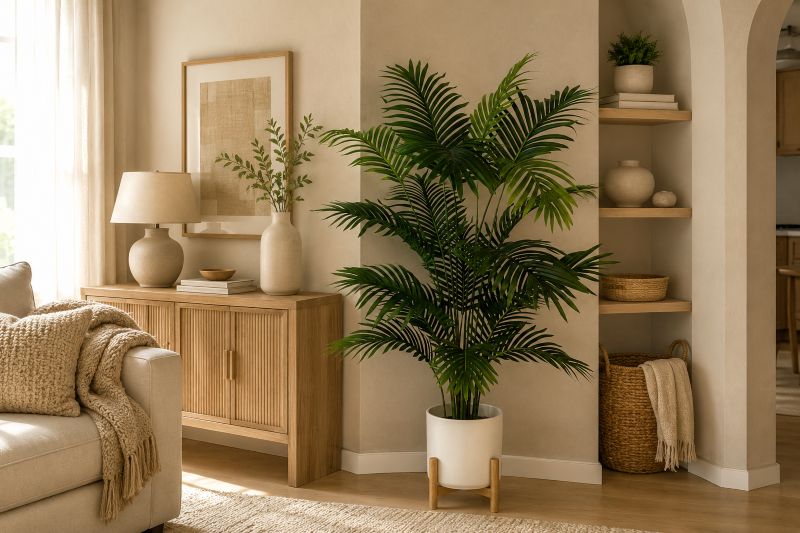
A palm can fill a tall corner with broad, arching leaves, making it a useful choice for spaces that feel empty above furniture height. A wooden riser gives the planter a little extra presence and introduces another natural material into the room.
Choose a palm variety that suits the light and humidity available in your home. Place it beside a wooden sideboard or console where its foliage can extend into the open space without blocking drawers or walkways.
A simple beige or warm white planter is usually enough. Since the leaves provide plenty of visual interest, additional decorative objects are optional.
10. Staircase Plant Shelf with Small Green Plants

The space beside a staircase can be difficult to decorate because of the changing ceiling height and angled walls. A narrow plant shelf can make use of this area without requiring a bulky cabinet.
Arrange compact leafy plants at different heights, using simple beige pots and a warm wooden shelf to complement the surrounding decor. Choose plants according to the light available near the staircase, and leave enough space between pots for healthy growth.
Measure the available width before selecting a shelf. Keep stairs and walking routes clear, and secure tall or narrow furniture properly.
11. Oversized Pampas Grass Vase on Console Table
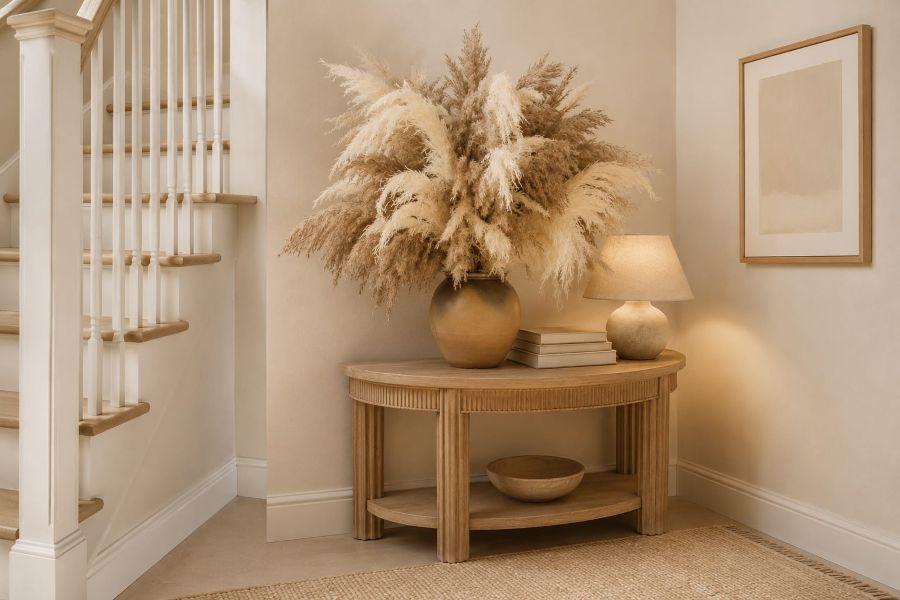
An oversized vase filled with pampas grass can create a soft focal point in a beige entryway or living room. The tall stems add height, while the wooden console grounds the arrangement and connects it with the room’s natural textures.
Choose a vase that leaves enough space for other console essentials without making the surface feel crowded. A small table lamp or shallow decorative bowl can provide balance, but avoid adding several competing accessories.
This arrangement suits corners where natural light is limited and maintaining living plants would be difficult. Dried pampas grass may shed, so place it away from busy walkways and dust it gently when needed.
12. Sculptural Floor Vase with Decorative Branches
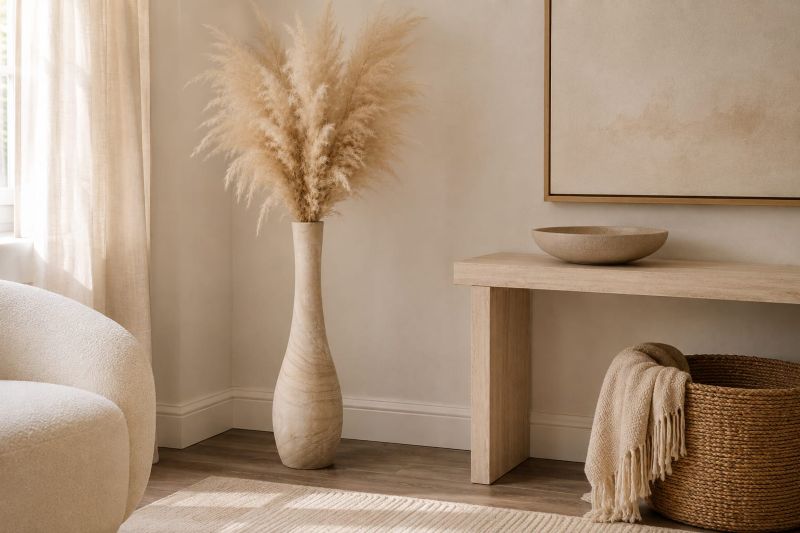
A sculptural floor vase can add shape and height to an otherwise empty beige corner. Instead of using pampas grass, try a restrained arrangement of decorative branches that complements the clean lines of a minimalist interior.
Choose a vase with a stable base and a finish that suits the room, such as matte ivory, warm beige, or textured stone. Place it beside a sofa or in a spacious hallway, leaving enough open floor around it so the arrangement remains a feature rather than an obstacle.
This is a decorative arrangement rather than a living plant display, making it suitable for spaces where you want natural-looking texture without regular watering. Check that the branches and vase are stable, particularly in homes with children or pets.
13. Beige Plant Corner with Rounded Ceramic Planter
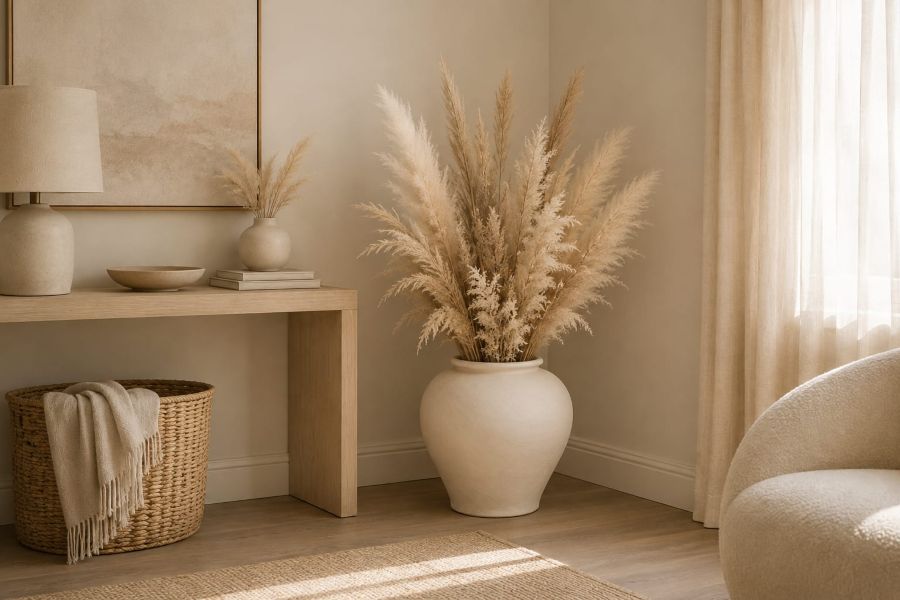
A rounded ceramic planter adds a soft, elegant touch to a beige plant corner, while the greenery brings freshness and contrast to the neutral surroundings. The curved shape of the planter works beautifully with warm beige walls, natural wood, and simple decorative accents.
To recreate this look, position the planter where the greenery remains clearly visible without overcrowding nearby furniture. Keep the surrounding accessories minimal so the plant remains the main focus. Choose a location with suitable natural light for the plant and use a waterproof tray to protect the floor or furniture from excess water.
14. Tree-Branch Plant Stand in Beige Hallway Corner
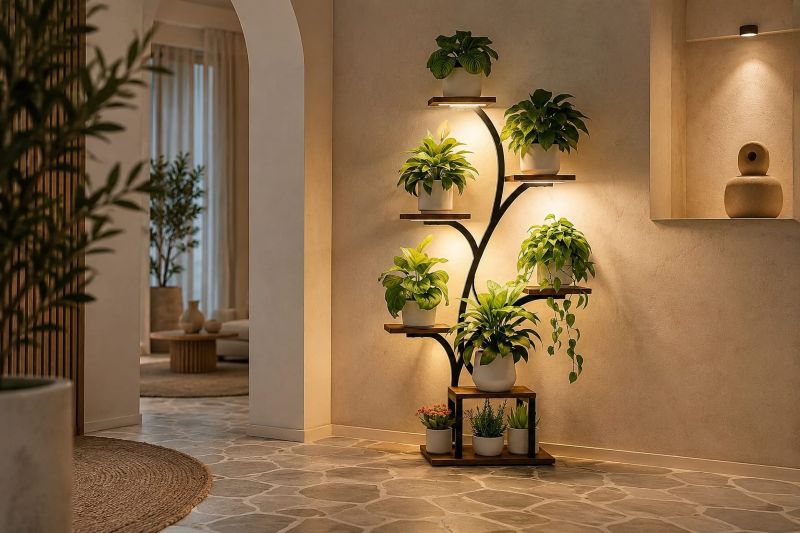
A tree-branch-style plant stand introduces an unusual shape into a hallway corner. Its multiple levels provide room for small pots, allowing the greenery to spread vertically instead of occupying a large area of floor space.
For a balanced display, mix compact upright plants with a trailing variety or two. Keep heavier pots on lower shelves and leave enough space between plants so each one receives suitable light.
If your hallway is naturally dark, choose plants that tolerate the available conditions or use appropriate grow lights. Built-in lighting can add atmosphere, but it should not replace the light plants need to grow.
15. Trailing Pothos on Round Wood Plant Table
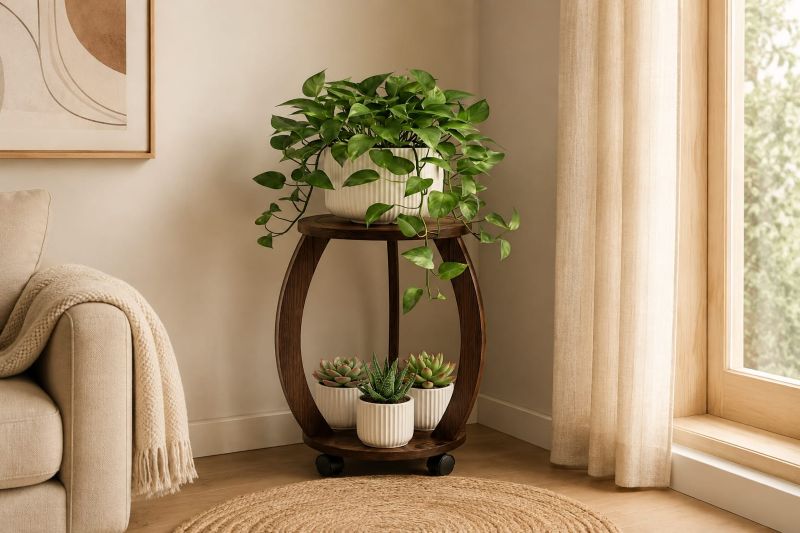
A round plant table can soften a corner filled with rectangular furniture. Place a pothos on the top shelf and allow its vines to trail naturally over the sides, using the lower shelf for a small number of additional pots if space allows.
The warm wood pairs easily with beige upholstery, woven baskets, and neutral rugs. This makes the arrangement particularly suitable beside a sofa or armchair.
Pothos generally grows well in bright, indirect light and can tolerate some lower-light conditions, although growth may be slower. Keep the trailing stems out of reach of children and pets because pothos is toxic if chewed or swallowed.
16. Staggered Tiered Plant Stand Corner with Grow Lights
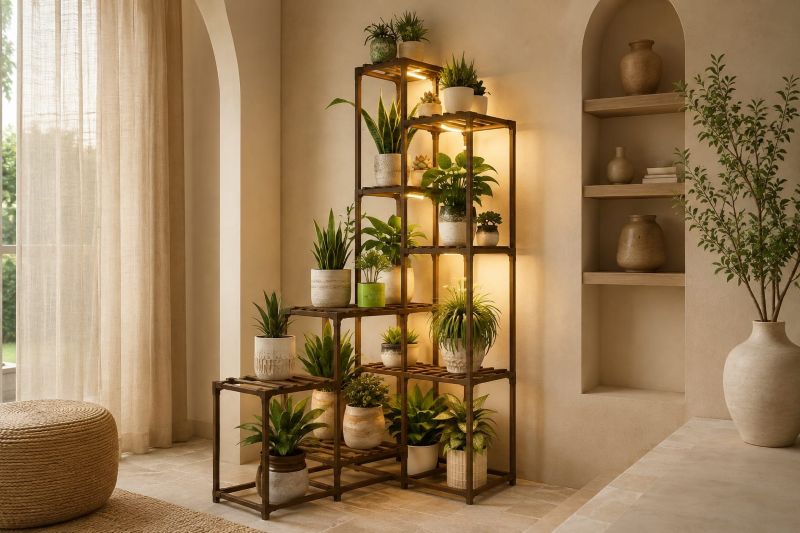
If you have a larger plant collection, a staggered shelving unit can turn an entire corner into a small indoor garden. Shelves at different heights create visual variation and provide room for plants of different sizes.
Use a consistent palette of beige pots, natural wood, and green foliage to keep the display connected to a warm neutral interior. Arrange plants according to their light needs rather than choosing positions based only on appearance.
Leave some open shelf space so the display does not feel crowded. Before adding more plants, consider how much time you can realistically spend watering, pruning, and checking their condition.
How to Choose the Right Plants for Your Corner
The best plant for a corner is not necessarily the largest or most decorative one. Its light requirements, mature size, watering needs, and suitability for your household matter just as much as its appearance.
Before buying a plant or stand, measure the corner’s available floor space and check the plant’s expected mature height and width. Leave enough clearance for nearby doors, curtains, drawers, and walking routes. If you plan to place several pots together, allow room for watering and routine care rather than arranging them so tightly that they become difficult to reach.
Consider These Points Before Choosing a Plant:
- Check how much direct or indirect sunlight reaches the corner throughout the day.
- Look up the plant’s mature height and spread so it does not overwhelm the space.
- Choose pots with drainage and use suitable trays to protect floors.
- Group plants with similar care requirements when possible.
- Check whether a plant is toxic to pets or children before bringing it into your home.
If you want the look of a leafy corner without ongoing plant care, a good-quality artificial plant or a dried arrangement may be more practical.
How to Style a Beige Plant Corner Without Cluttering It
A plant corner looks more intentional when the materials relate to the rest of the room. Beige ceramic, natural wood, woven fibers, and green foliage provide enough variety without requiring a large number of accessories.
Try combining one dominant element with one or two supporting pieces. For example, a tall plant might need only a simple planter, while a group of smaller plants may look better on a wooden stand.
Pay attention to the negative space around the arrangement. Leaving part of the wall and floor visible helps each plant stand out and prevents the corner from becoming visually heavy.
Frequently Asked Questions About Beige Plant Corner Ideas
Which plants look good against beige walls?
Plants with deep green foliage, such as suitable palm varieties, fiddle leaf figs, and pothos, create contrast against beige walls. The right choice depends on the light, space, and care requirements of your room.
Can I create a plant corner in a room with little natural light?
Yes, but you need to choose plants that can tolerate the available conditions or provide suitable grow lighting. No plant should be assumed to thrive in a completely dark corner without an appropriate light source.
How many plants should I place in one corner?
There is no fixed number. One large plant can be enough for a small corner, while three or four smaller plants can create a layered display. Base the number on the available space and the care each plant requires.
Are artificial plants suitable for beige plant corner decor?
Yes. Artificial plants can be useful in locations where natural light is insufficient or where regular plant care is difficult. Choose realistic foliage and a planter that complements the room’s materials.
How can I protect the floor under indoor plants?
Use pots with drainage, suitable saucers or waterproof trays, and a plant stand that can handle the pot’s weight. Check underneath the pots regularly for standing water or moisture that could damage the flooring.
Final Thoughts
A beige plant corner can bring greenery, texture, and a sense of balance into almost any room. Whether you prefer a single statement tree, a tiered collection of ceramic planters, or a simple vase of pampas grass, the arrangement should suit both the space and the level of maintenance you want.
Start by identifying the corner’s light and available floor area. Then choose a plant or display that fits comfortably, add a few related natural materials, and leave enough room around it. A thoughtful arrangement can make an overlooked corner feel like a natural part of your home’s design.
Looking for more ways to bring greenery into your home or style an unused corner? Explore our guides to Beige Indoor Plant Corner Ideas and Beige Decor Ideas for Awkward Empty Space for more inspiration.