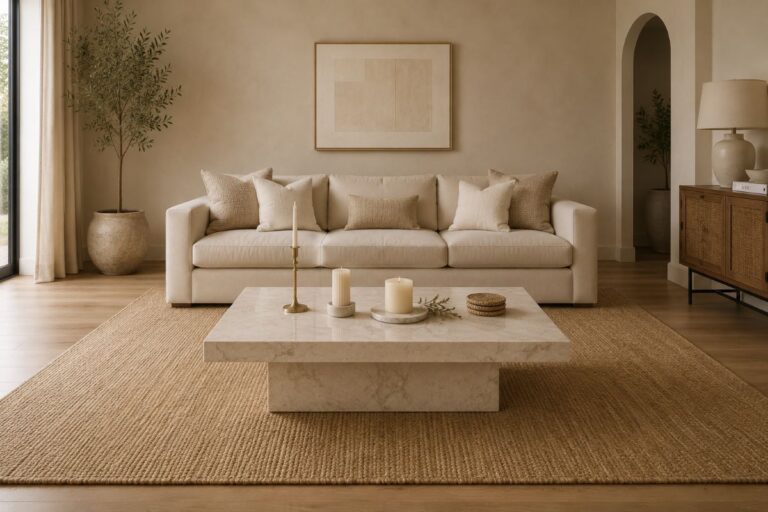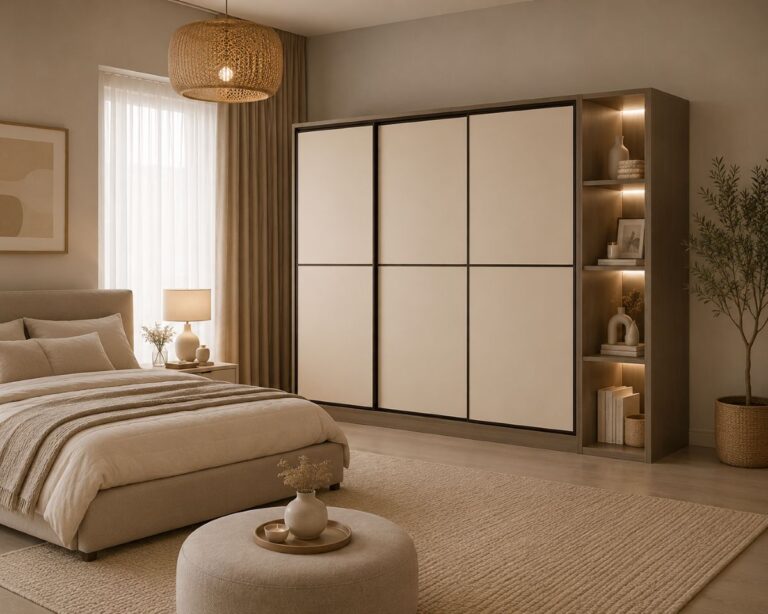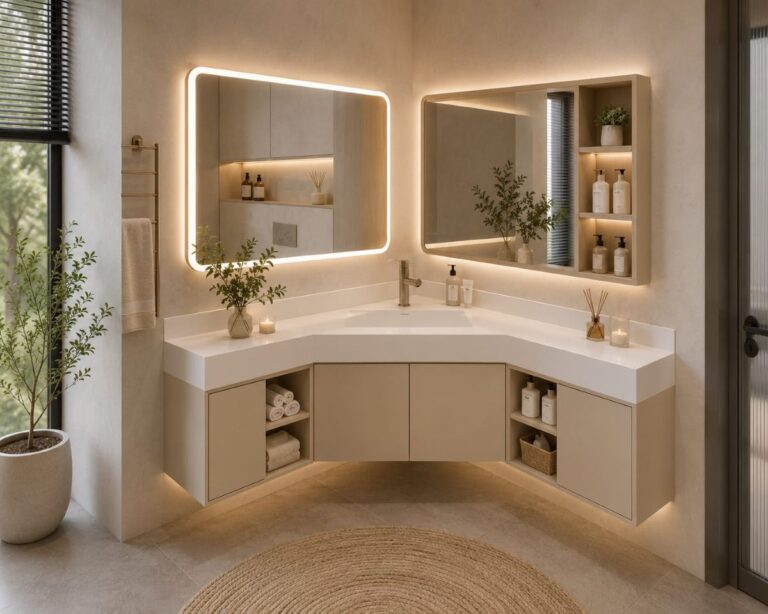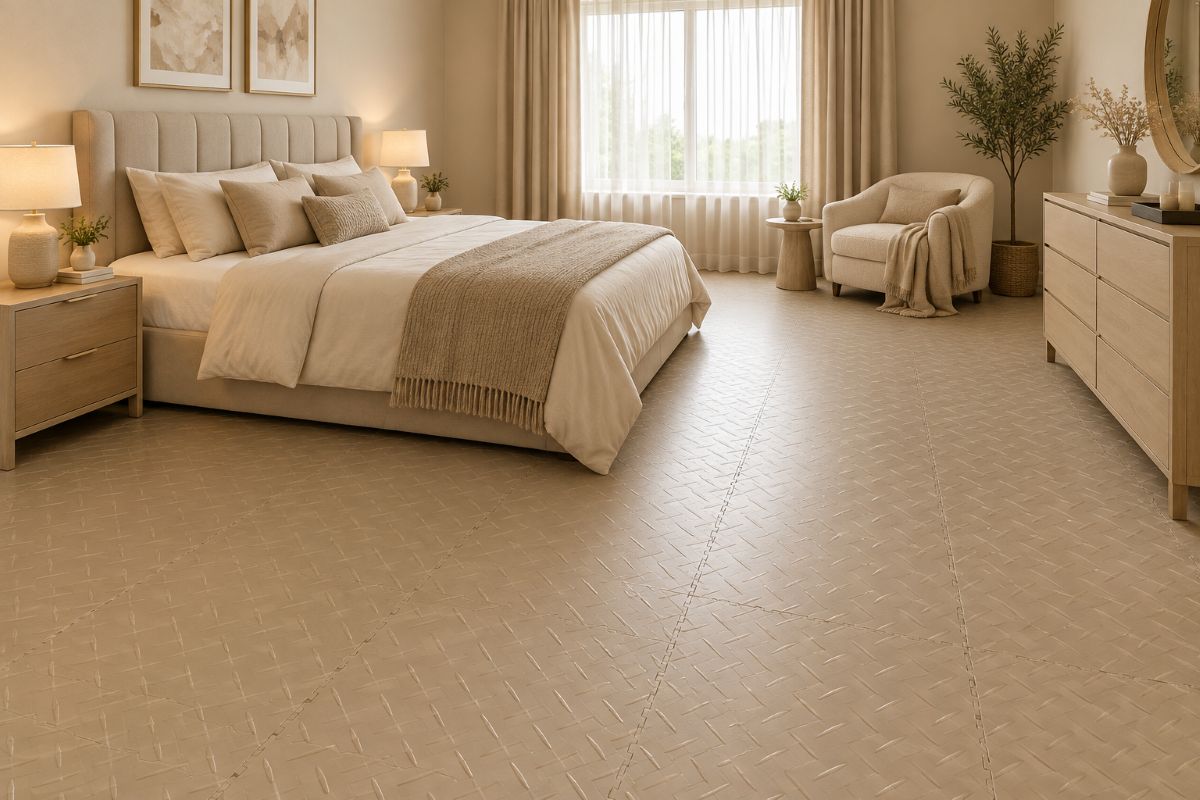
15 Beige Flooring Ideas for a Warm, Timeless Home
Flooring can quietly determine how a room looks and feels. Because it covers such a large area, even a small change in color, pattern, or texture can affect the overall balance of the space. Beige flooring is particularly versatile because it can add warmth without competing with furniture, wall colors, or decorative pieces.
The right choice depends on more than appearance. A bedroom may benefit from a softer surface, while a kitchen needs flooring that can handle everyday activity. In a hallway, pattern and durability may matter more, whereas a living room gives you more freedom to use flooring as part of the room’s visual design.
Here are 15 beige flooring ideas covering tiles, wood, rugs, and practical floor coverings for different areas of the home.
If warm neutral interiors are your style, you can find more beige room ideas and home styling inspiration on our Pinterest page.
Some products featured in this article are linked through Amazon affiliate links. If you choose to shop through one of the linked images, I may receive a small commission at no additional cost to you.
1. Herringbone Textured Beige Flooring Tiles
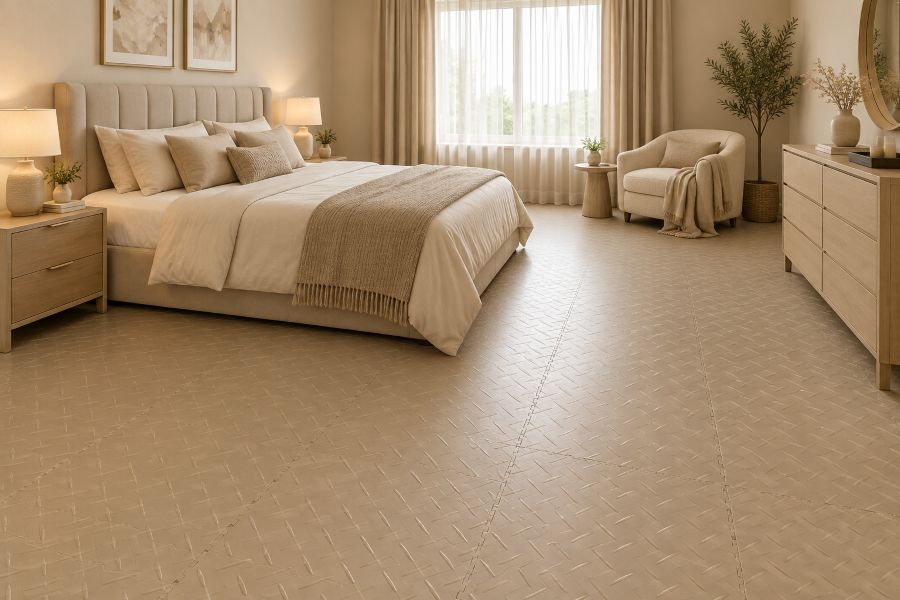
A herringbone pattern can give a bedroom more character without introducing a strong color contrast. Beige textured tiles keep the overall palette soft while the angled layout adds movement across the floor.
This approach works particularly well when the rest of the bedroom is fairly simple. Pair the floor with warm wood furniture, neutral bedding, and a few textured fabrics so the pattern remains noticeable without taking over the room.
For a calmer result, choose a beige shade that works with the undertones already present in your walls and furniture.
2. Glossy Hexagon Marble Floor Tiles
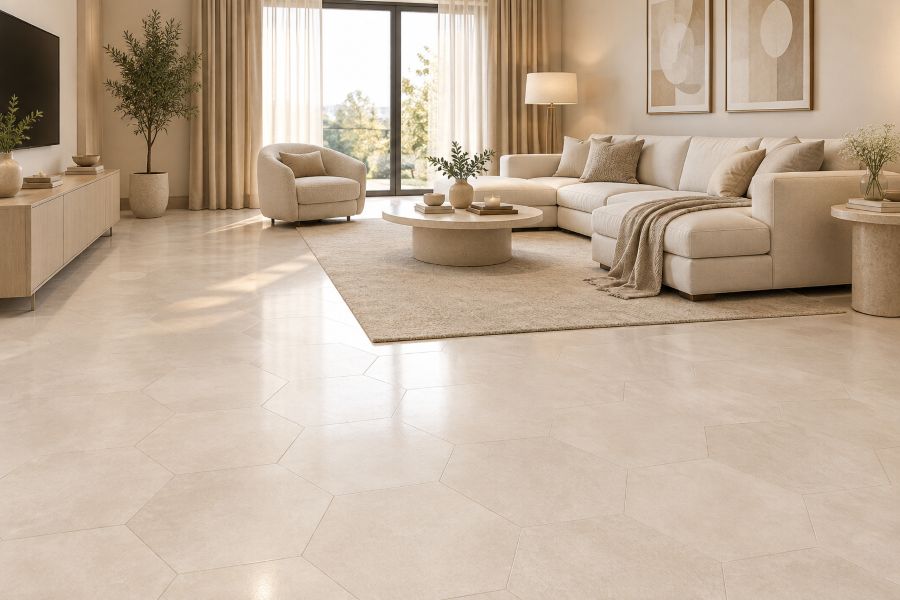
Hexagon flooring offers a different look from the familiar square tile layout. A beige or marble-effect finish can make the floor feel decorative while keeping the color palette restrained.
The reflective surface can also interact nicely with natural light, although glossy flooring may require more frequent cleaning because marks and footprints can be easier to notice.
For an open living room, keep the furniture layout fairly simple. A neutral sectional, wooden coffee table, and understated accessories can balance the geometric floor.
Before Choosing Glossy Tiles
Check the manufacturer’s slip-resistance information and confirm that the tiles are suitable for the room where you plan to install them. A glossy finish may work well in a dry living area, but bathrooms and other wet spaces need flooring selected with slip safety in mind. Also consider how easily the surface shows footprints, water marks, and everyday dirt.
3. Veined Marble Bathroom Beige Flooring Ideas

Marble-look beige flooring can bring warmth and an elegant finish to a bathroom. Subtle veining adds variation to the neutral surface, creating a more layered appearance.
Large-format tiles can create a cleaner visual effect because they usually require fewer grout lines. In smaller bathrooms, this can help the floor look more seamless and less visually busy. When choosing actual bathroom flooring, check the manufacturer’s specifications for water resistance and slip performance rather than assuming every marble-look tile has the same properties.
A simple vanity, warm metal fixtures, and soft beige towels can complete the look without competing with the floor.
4. Natural Oak Flooring Ideas for Organic Beige Interior

Natural oak is a useful choice when you want a beige room to feel warm rather than flat. The wood grain introduces natural variation while the light brown tone works comfortably with beige walls and upholstery.
Wide planks can give a room a more open appearance, while a matte or low-sheen finish creates a relaxed look.
Oak Flooring is Especially Easy to Style with:
- Beige sofas and upholstered chairs
- Woven baskets and natural-fiber rugs
- Wooden furniture in slightly deeper tones
- Green plants for a small amount of contrast
The combination works well in living rooms, bedrooms, and other spaces where you want a natural foundation.
5. Walnut Herringbone Wood Flooring for Beige TV Lounge
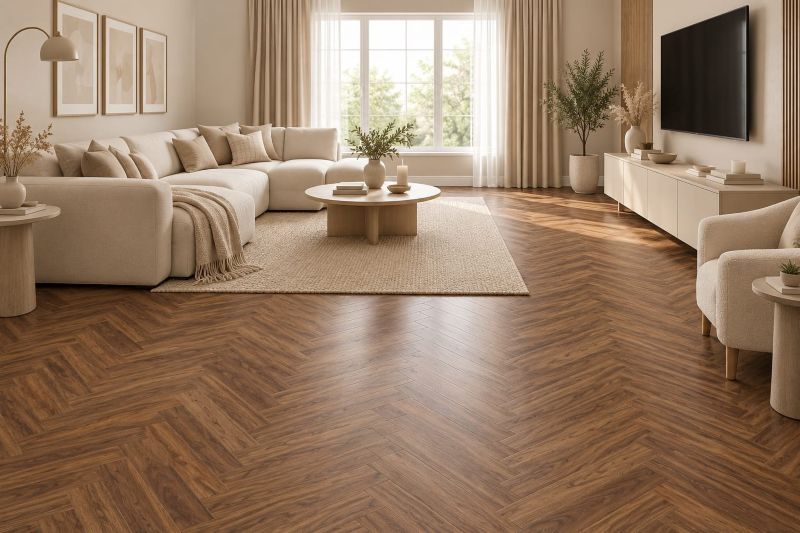
Not every beige interior needs a pale floor. Darker walnut tones can create useful contrast and prevent a warm neutral room from looking too uniform.
A herringbone arrangement adds another layer of detail, making the floor feel intentional even when the rest of the room is minimally decorated.
This combination works particularly well in a TV lounge with beige seating. Light curtains and upholstery can keep the room bright, while the darker wood gives the lower part of the space more visual weight.
If the room is small, use lighter walls and keep large furniture pieces in moderate neutral tones so the darker floor does not dominate.
6. Hallway Decor Ideas with Runner Rug
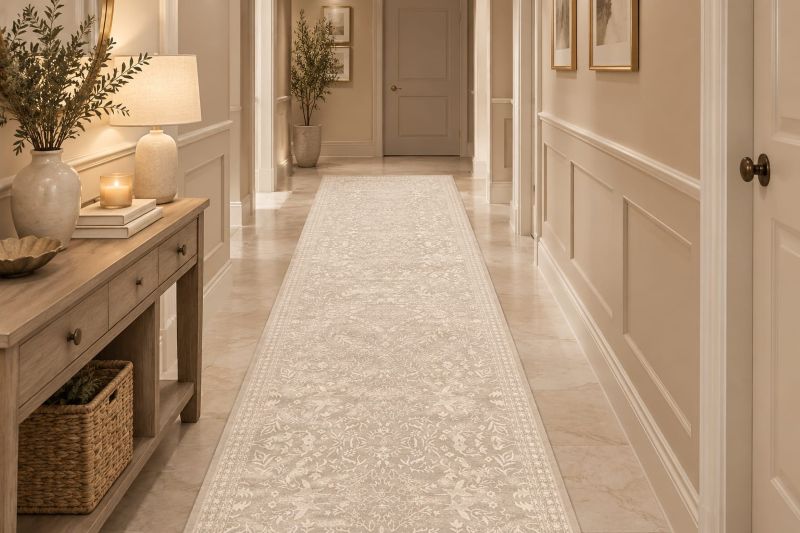
Changing a hallway floor does not always require a permanent renovation. A runner can completely alter the appearance of an existing floor while adding softness underfoot.
A muted floral runner in beige, taupe, or faded neutral shades can introduce pattern without making a narrow hallway feel overly colorful.
Before choosing one, measure the hallway carefully. Leave enough visible flooring along the sides to create a deliberate border, and check that doors can open freely without catching the rug.
A low-profile runner is generally easier to manage in a busy passage because it creates less interference around doorways.
7. Padded Nursery Play Mat for Elegant Look
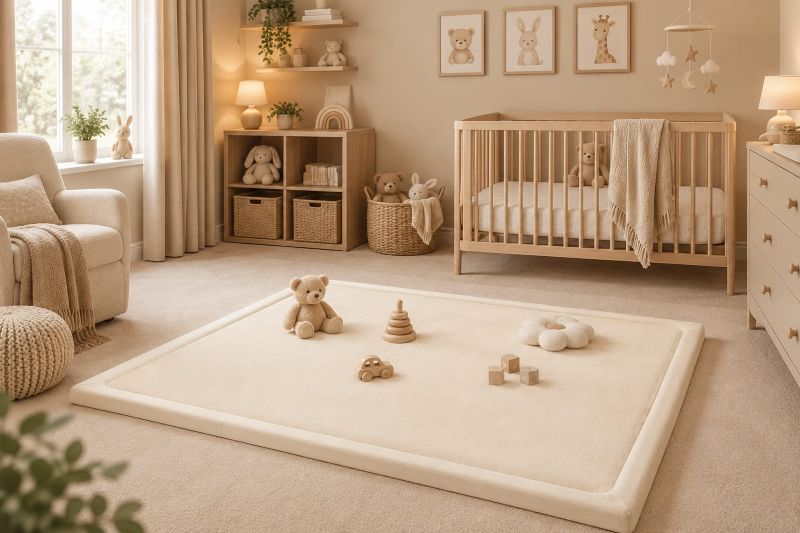
A nursery floor needs to work for everyday life, not just look good in photographs. A padded play mat creates a designated floor area for tummy time, toys, and play while keeping the room’s neutral palette intact.
The advantage of a mat is flexibility. Unlike permanent flooring, it can be moved or replaced as the room’s needs change.
When Choosing One for a Nursery, Consider:
- The thickness and comfort of the surface
- How easily it can be cleaned
- Whether the material is suitable for the intended use
- The available floor space
- Whether its edges sit securely on the existing floor
A beige mat can blend naturally with wooden furniture, woven baskets, and soft neutral textiles.
8. Gold Veined Luxury Marble Flooring for Beige Interior

For homeowners who want the floor to become a noticeable design feature, marble with stronger veining can provide more visual contrast.
A beige or ivory base with warm veining works particularly well with brass lighting, warm wood, and neutral upholstery. The key is to give the flooring enough visual space instead of surrounding it with too many competing patterns.
In a living room, for example, a simple rug and streamlined furniture can allow the marble pattern to remain visible.
This type of flooring can also work well in larger entryways and open-plan spaces where the pattern has enough room to breathe.
9. Beige Flooring with Woven Dining Room Rug
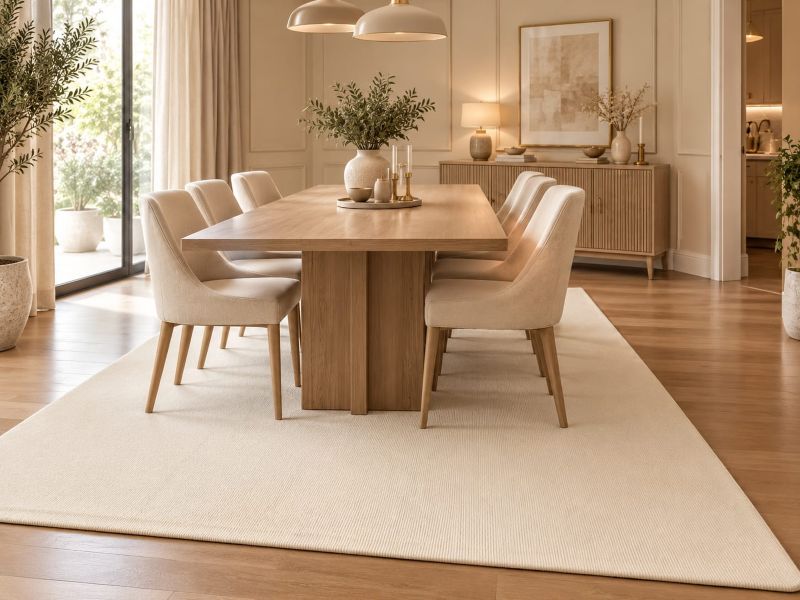
A dining room rug needs to look good while coping with practical daily use. Chairs move back and forth, crumbs fall, and occasional spills are unavoidable.
A flatwoven beige or ivory rug can provide a softer layer beneath the dining table without the deeper pile of a plush rug.
For the right proportions, the rug should extend far enough beyond the table that the dining chairs remain on the rug when pulled out. This small detail can make the entire dining area feel more balanced.
Pairing a woven rug with light oak, beige upholstery, or darker wood creates a warm neutral dining setting.
10. Wooden Geometric Pattern Flooring Ideas

An entryway is a good place to use flooring with a little more personality because it can establish the visual direction for the rest of the home.
Geometric wood patterns such as parquet or diamond layouts add detail without requiring a strong color palette. A warm wood tone can also connect naturally with a beige hallway or living area.
If you are using a detailed floor, keep the surrounding decor relatively restrained. A simple console, ceramic vase, mirror, and small runner may be enough to complete the entrance.
The result feels considered without making the first few steps into the home visually crowded.
11. Beige Flooring Ideas with Speckled Terrazzo Kitchen Flooring
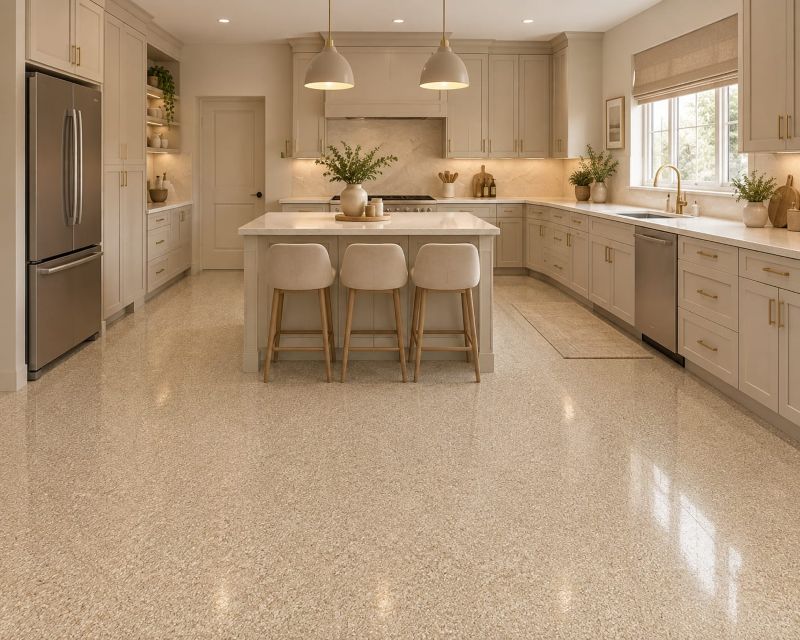
Kitchen flooring has to deal with more activity than many other areas of the home. A speckled terrazzo-style surface can be useful when you want some visual variation instead of a completely uniform floor.
Small flecks of beige, cream, taupe, or other neutral shades create texture across the surface and can help disguise minor everyday marks better than a perfectly plain floor.
Terrazzo Works Nicely with:
- Light beige cabinets
- Natural wood shelving
- Stone or marble countertops
- Brushed or warm metal hardware
- Simple neutral textiles
Always check the specific flooring’s cleaning and maintenance requirements before installation, since materials and finishes can vary.
12. Cream and Terracotta Checkered Balcony Tiles
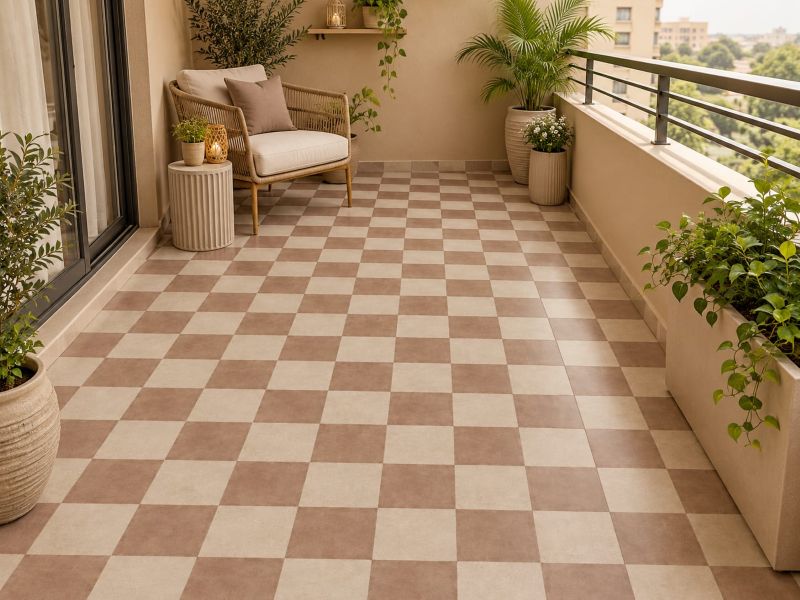
A balcony can feel much warmer with a patterned floor. Terracotta and cream checks introduce color while still working with a beige-based decorating scheme.
This combination is especially suitable for balconies where you want a relaxed Mediterranean or earthy feel. Add simple outdoor seating, neutral cushions, and a few potted plants rather than filling the space with too many decorative pieces.
For an outdoor installation, choose a product specifically rated for the conditions it will be exposed to. Outdoor flooring needs to be considered for moisture, temperature changes, sunlight, and slip resistance.
13. Woven Kids Bedroom Rug
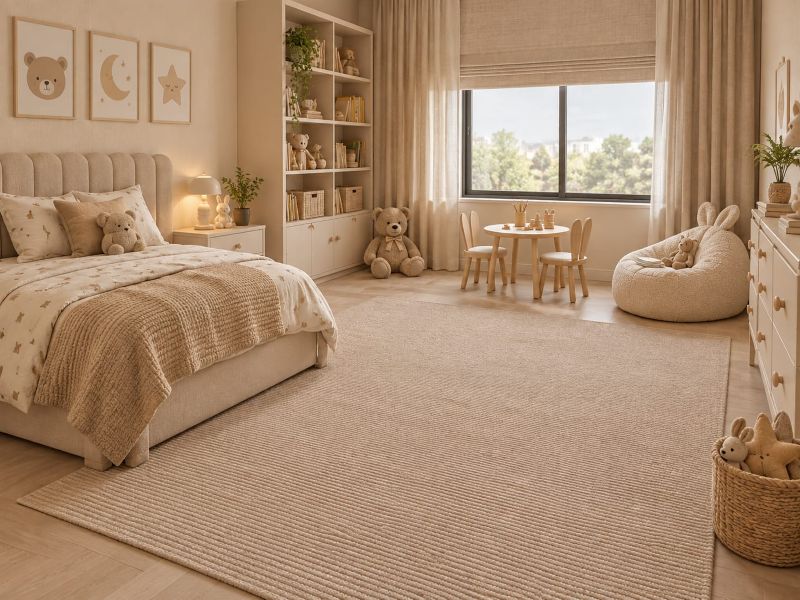
A neutral kids’ room does not have to feel plain. A woven beige rug can introduce texture and make the floor more comfortable while leaving plenty of room for colorful books, toys, and artwork.
Choose a size that connects the main areas of the room instead of placing a very small rug in the middle of an otherwise empty floor.
A neutral woven design also has an advantage as the room changes. It can continue working when the child’s furniture, bedding, and accessories are updated.
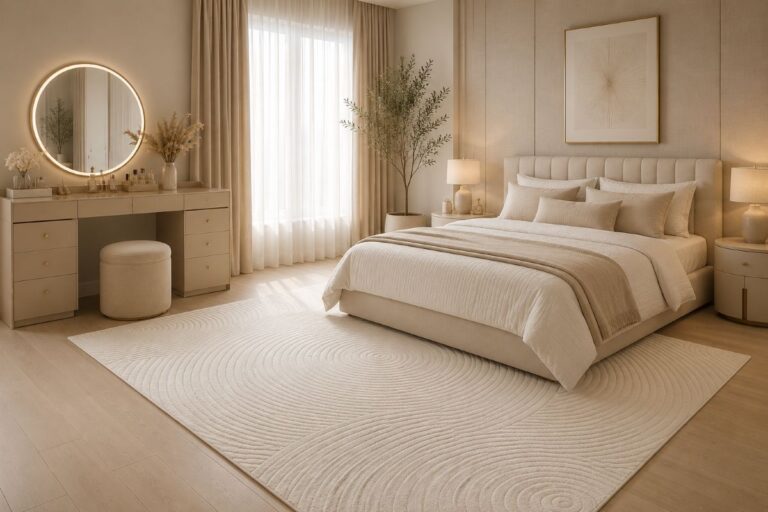
14. Carved Ivory Bedroom Rug
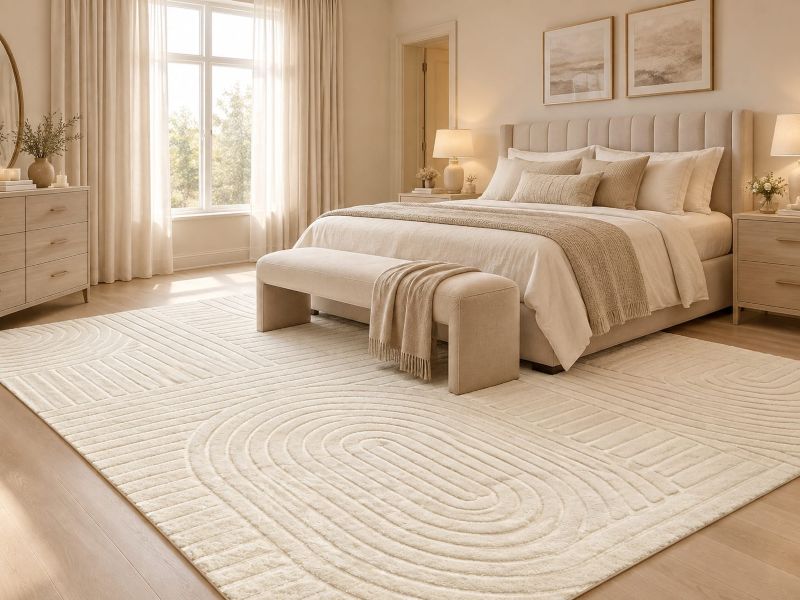
If the bedroom already has a simple beige color palette, texture can be more effective than adding another pattern.
A carved or high-low ivory rug creates subtle changes in depth across its surface. Light catches the raised and recessed sections differently, giving the floor a layered appearance without introducing another strong color.
Place a larger rug under the bed so that it extends visibly around the sides and foot. This helps connect the bed, nightstands, and surrounding furniture into one defined area.
Keep the rest of the room relatively simple so the rug’s texture remains noticeable.
15. Woven Outdoor Patio Rug

An outdoor rug can make a patio or balcony feel more connected to the rest of the home. A warm beige or taupe woven design provides a visual base for outdoor seating and helps define the area as a separate zone.
This is especially useful when an outdoor space contains several functions. A rug can visually group a pair of chairs and a coffee table together rather than leaving the furniture scattered across the floor.
Before purchasing an outdoor rug, check that the material and construction are intended for outdoor conditions. Easy cleaning is also worth considering if the space is exposed to dust, rain, or frequent use.
How to Choose Beige Flooring for Different Rooms
The same beige flooring does not necessarily work equally well throughout the house. Think about how each room is used before choosing a material or finish.
Bedroom
Bedrooms usually benefit from warmer colors and comfortable textures. Wood flooring, textured tile, or a large neutral rug can create a softer atmosphere.
Living Room
Living rooms give you more flexibility. Natural oak, marble-effect tile, patterned wood, or layered rugs can all work depending on the furniture and amount of natural light.
Kitchen
For kitchens, practicality should come before appearance. Consider cleaning, moisture, traffic, and the manufacturer’s maintenance instructions alongside the color and pattern.
Bathroom
Bathroom flooring needs careful attention to water and slip performance. Choose products specifically suited to bathroom use rather than selecting a material only because it looks attractive.
Hallway
Hallways experience frequent foot traffic, so a durable floor or low-profile runner is usually more practical. Pattern can also be useful for adding interest to a narrow passage.
How to Keep Beige Flooring From Looking Flat
A beige floor does not have to match every other beige surface in the room. In fact, using slightly different tones usually creates a more interesting result.
Try Combining:
- Light beige flooring with medium-toned wood furniture
- Warm beige with muted taupe textiles
- Pale flooring with darker brown accents
- Smooth flooring with woven or textured rugs
- Beige surfaces with small amounts of greenery
The goal is to create variation while keeping the overall palette connected.
Frequently Asked Questions About Beige Flooring Ideas
Is beige flooring suitable for a small room?
Yes. Light beige flooring can help a small room feel visually open, particularly when the floor has a simple pattern and works with the wall color. Large-format tiles can also reduce the number of visible grout lines.
Which beige flooring works well with wood furniture?
Natural oak, beige stone-look tiles, and warm neutral rugs can all complement wood furniture. The best combination usually comes from matching the undertones rather than trying to make every surface exactly the same color.
Can I use rugs instead of replacing my flooring?
Absolutely. A runner, bedroom rug, dining rug, or outdoor rug can change the appearance of a space without the cost and disruption of replacing permanent flooring.
How can I make beige flooring more interesting?
Use texture, pattern, or contrast. Herringbone layouts, terrazzo speckles, wood grain, marble veining, and woven rugs can all add visual interest while keeping the overall palette neutral.
What should I consider before buying beige flooring?
Think about the room’s traffic level, moisture exposure, cleaning requirements, natural light, furniture colors, and the amount of pattern you want. Most importantly, check the manufacturer’s specifications for the particular flooring rather than assuming all products with a similar appearance perform the same way.
Final Thoughts
Beige flooring can create a strong foundation for a warm and comfortable home, but the best choice depends on how the room is actually used. Natural wood can bring warmth to a living space, patterned tile can add character to a bathroom or entryway, and a well-sized rug can transform an existing floor without a renovation.
Instead of trying to make every room use the same flooring, choose finishes that suit each space while keeping the overall beige palette connected. Small differences in tone, texture, and pattern can make the home feel layered rather than overly matched.
If you are exploring more ways to style a neutral floor, take a look at our guides to Beige Rug Ideas and Beige Flooring Tiles Ideas for more practical inspiration.