17 Beige Indoor Plant Corner Ideas for a Calm & Organic Modern Home
An indoor plant corner can bring life, texture, and natural warmth into a beige home without disturbing its calm atmosphere. Greenery works especially well with beige because the natural color of plants adds contrast while keeping the overall space soft and organic.
The way you display the plants matters just as much as the plants themselves. Rattan shelves, ceramic pots, wooden stands, stone planters, and linen curtains can each create a completely different mood around the same greenery.
You also do not need a large room to create a beautiful plant corner. A sunny windowsill, an unused entryway corner, a narrow wall, or the space beside a reading chair can all become useful places for plants. The key is to consider available light, plant size, pot proportions, and the amount of maintenance you can realistically manage.
These beige indoor plant corner ideas show different ways to combine greenery with natural textures for a space that feels fresh, warm, and thoughtfully styled.
Follow us on Pinterest for daily Beige Home Decor Inspiration.
1. Layered Rattan Shelf Plant Corner
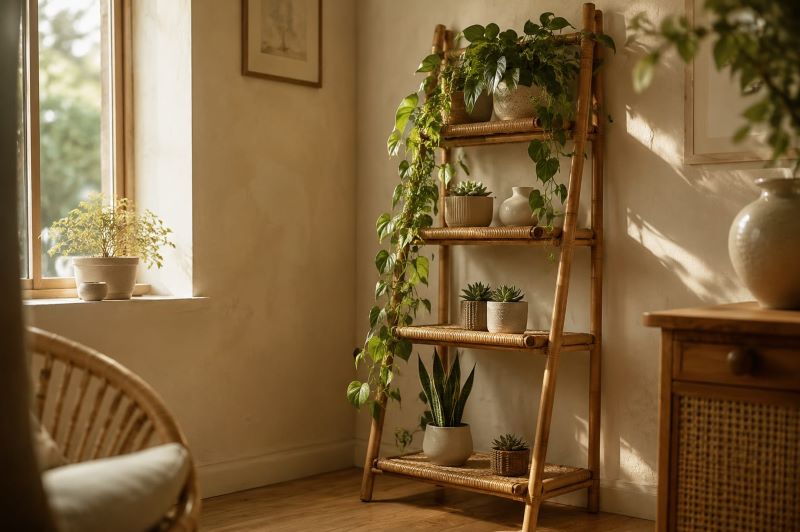
A rattan shelf creates an easy vertical display for plants while bringing natural texture into the room. Its woven finish works naturally with beige walls, linen, wood, and other organic materials, making it a strong choice for a relaxed interior.
Use plants with different growth patterns rather than placing identical pots across every shelf. Trailing greenery can soften the edges, while upright plants add height and structure. A few woven baskets can also provide useful storage without taking attention away from the plants.
How to Create This Design indoor plant corner
- Use 3–4 tier rattan shelves
- Mix tall and trailing plants
- Choose neutral ceramic pots
- Add woven storage baskets
- Layer rattan and terracotta textures
Leave some shelf space empty instead of filling every level. The open areas help the arrangement feel intentional and give each plant enough visual space.
2. Macrame Hanging Indoor Planters Corner
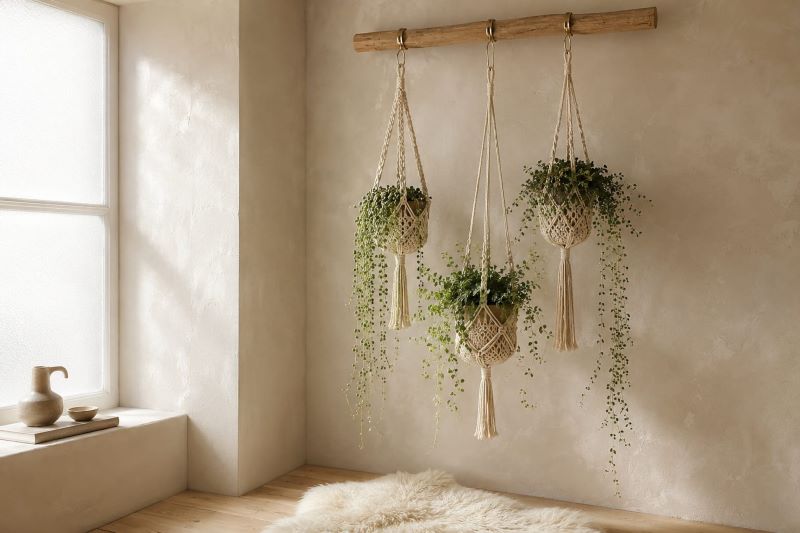
Hanging planters are useful when floor space is limited because they allow you to bring greenery into an otherwise empty vertical area. Macramé holders add a soft handmade texture that pairs particularly well with beige walls and natural materials.
Hang the planters at slightly different heights rather than creating a perfectly even row. Pothos, ivy, and other trailing plants can create movement as their foliage grows downward.
Make sure the hooks are properly secured and positioned where the plants can receive suitable light. Hanging greenery should also be easy to reach for watering and maintenance.
3. Beige Arched Nook with Trailing Vines
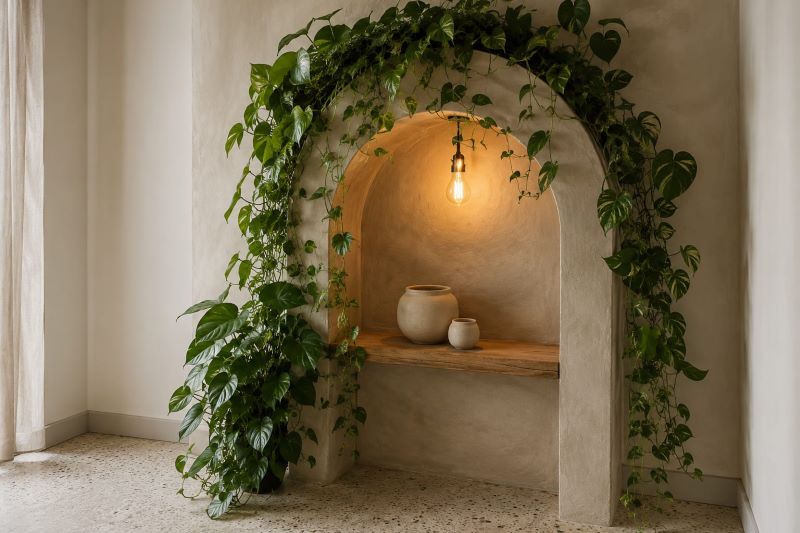
An arched nook gives a plant corner an architectural feature before any greenery is added. Painting the arch in a warm beige shade can make it feel integrated with the rest of the room, while trailing vines soften its clean curves.
A small wooden shelf inside the nook can hold compact plants and decorative objects, while a floor plant can fill the lower portion. Keep the surrounding area simple so the arch remains visible.
Example: Beige Arched Plant Nook
Imagine a shallow beige arch with a narrow oak shelf inside it, holding small ceramic pots filled with trailing pothos and ferns. A soft wall light positioned above the arch would highlight the curved shape in the evening without overpowering the greenery.
This arrangement works especially well in living rooms, hallways, and unused wall recesses where a small architectural feature can give the plant display more presence.
4. Wooden Ladder Indoor Plant Stand Corner
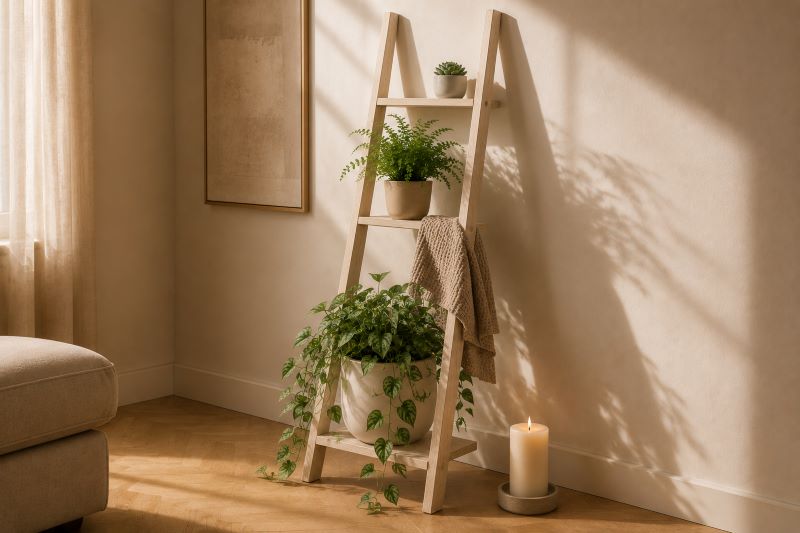
A wooden ladder stand is a practical choice when you want several plants without using a large amount of floor space. The staggered rungs naturally create different levels, allowing plants with different heights and shapes to be displayed together.
Trailing plants can hang over the upper rungs while smaller ceramic or terracotta pots sit lower down. A few books or a small decorative object can be included, but the greenery should remain the main focus.
Choose a ladder finish that works with the room’s existing wood tones. Natural oak, light wood, and softly weathered finishes can all complement a beige organic interior.
5. Linen Curtains Backdrop Plant Display
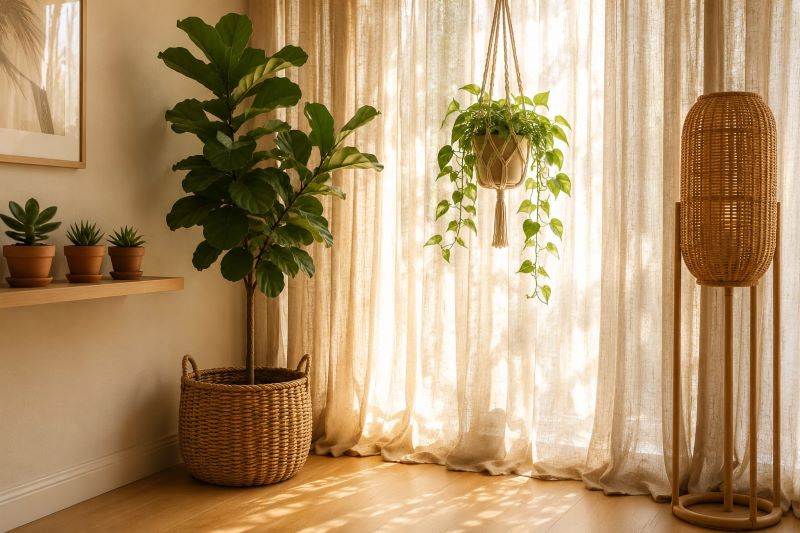
Linen curtains can create a soft backdrop behind a plant display while filtering harsh natural light. Their loose texture adds another layer to the room without introducing a strong pattern or color.
Place plants at different heights in front of the curtains so the foliage creates a natural silhouette. A tall floor plant can anchor one side while smaller pots fill the lower levels.
Choose a curtain fabric that allows the plants to receive the amount of light they need. Very dense curtains may look beautiful but can reduce the available daylight for plants positioned directly behind them.
If you love these indoor corner ideas , check out our Beige Curtain Ideas for more inspiration.
6. Terracotta Pots on Neutral Floating Shelves
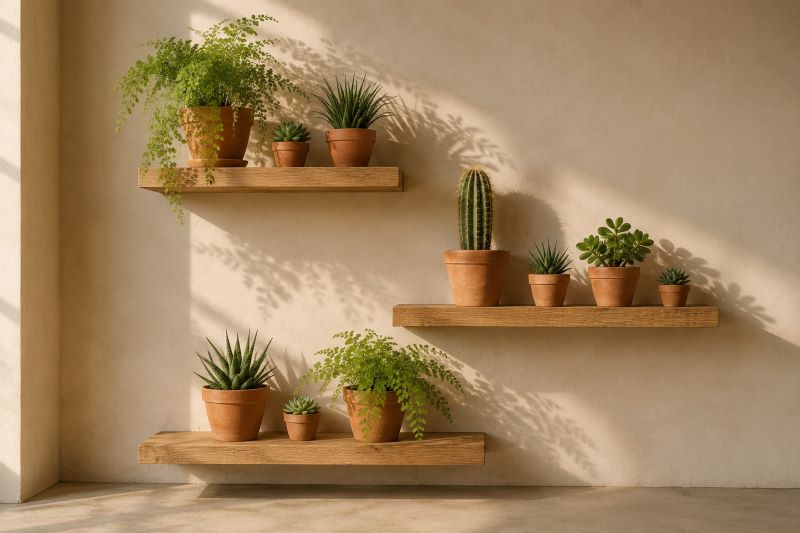
Floating shelves create a clean display against a beige wall, while terracotta pots introduce an earthy contrast. The warm orange-brown tone can keep an otherwise neutral plant corner from feeling too uniform.
Vary the pot sizes and plant shapes, but leave enough empty shelf space to prevent the arrangement from looking crowded. A small trailing plant can also break up the straight lines of the shelving.
What We Need To Create This Look
- Install shelves at varied heights
- Mix pot sizes for balance
- Combine different plant varieties
- Leave some empty shelf space
- Use natural or painted terracotta
Use shelves that are properly secured for the combined weight of the pots, soil, and plants. This is particularly important when larger ceramic or terracotta containers are involved.
7. Wicker Basket Plant Corner with Pampas Grass
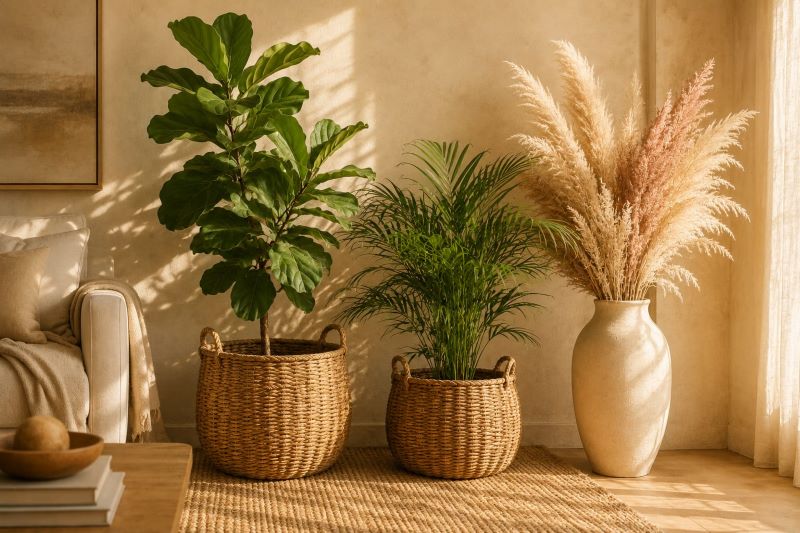
Wicker baskets and pampas grass create a warm, textural plant corner that feels relaxed rather than overly polished. The woven baskets can conceal ordinary nursery pots while adding natural texture around the base of larger plants.
Pampas grass works especially well when you want height without relying entirely on live greenery. Combine it with one or two leafy plants to keep the arrangement from becoming visually dry.
A small jute rug underneath can help define the corner, particularly when the display sits in a larger open room.
8. Floor-to-Ceiling Greenery Wall Corner
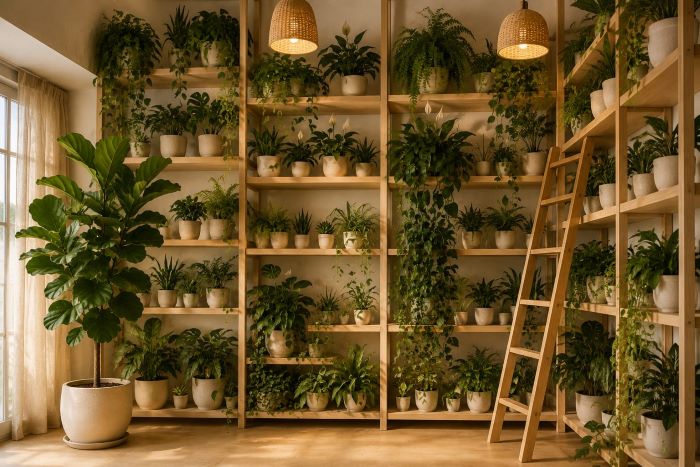
A floor-to-ceiling plant display creates a dramatic focal point and can transform a plain corner into a strong botanical feature. Tall shelving provides structure while allowing plants to be arranged across multiple levels.
Mix broad leaves, trailing vines, and more upright varieties so the display does not look repetitive. Matching or closely related pot colors can help keep a large collection visually connected.
If natural light is limited, discreet grow lighting may be useful depending on the plants you choose. The lighting should support plant health without turning the display into an overly bright feature at night.
9. Minimalist Japandi Plant Corner
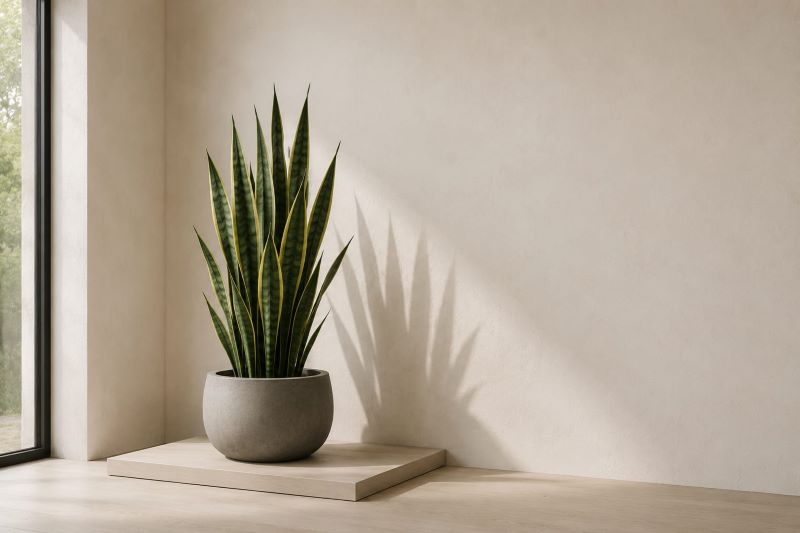
A Japandi-inspired plant corner works through restraint. Instead of collecting many plants, choose one or two that have strong shapes and allow plenty of empty space around them.
A low wooden pedestal, simple ceramic planter, and one natural decorative object may be enough to complete the corner. The beauty comes from the relationship between the plant, materials, and surrounding negative space.
Example: Minimalist Japandi Plant Corner
A tall snake plant in a warm stone-colored ceramic pot could sit on a low oak pedestal beside a beige plaster wall. A small woven basket placed nearby would add texture while leaving most of the corner intentionally empty.
This approach is especially effective in quiet interiors where too many accessories would take away from the calm atmosphere.
10. Beige Ceramic Pots on Marble Side Table
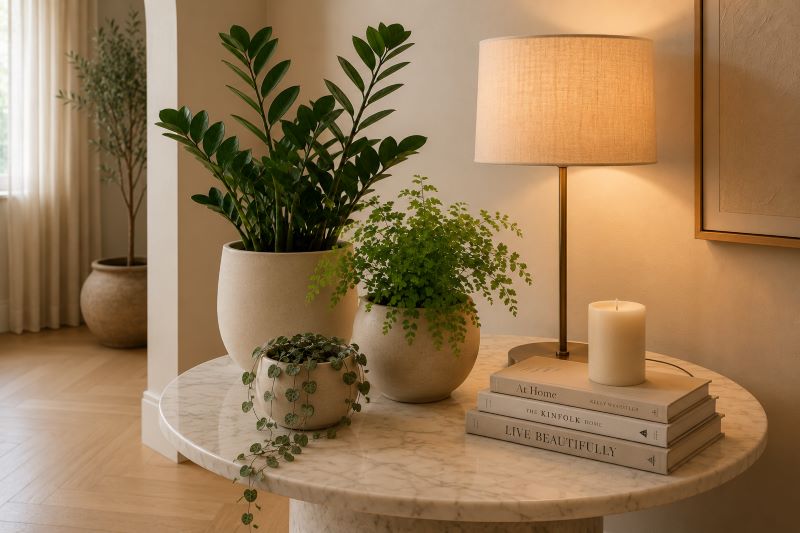
A marble side table can give a small plant display a more refined appearance. Pairing smooth stone with beige ceramic pots creates a subtle contrast in texture while keeping the color palette understated.
Use two or three plants with different leaf shapes instead of creating a collection of identical pots. A small linen-shaded lamp nearby can make the arrangement feel connected to the rest of the room.
Keep the table surface relatively open. Plants should remain the main feature rather than becoming part of a crowded decorative vignette.
11. Cozy Reading Nook with Indoor Plant Corner
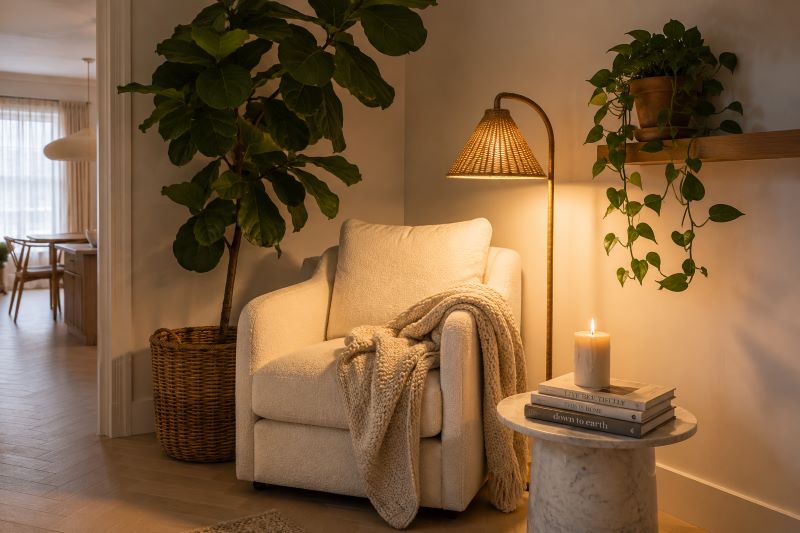
Combining plants with a reading nook creates a corner that feels both decorative and useful. A comfortable linen or boucle chair provides the seating, while plants around it add softness and a stronger connection to nature.
A floor plant beside the chair can create height, while smaller plants can sit on a nearby stool or side table. Add a soft throw, cushion, and reading light to make the space comfortable without filling every surface.
Choose plants according to the light available near the reading chair. This makes the corner easier to maintain and prevents the display from becoming purely decorative.
12. Vintage Wooden Crate Plant Display
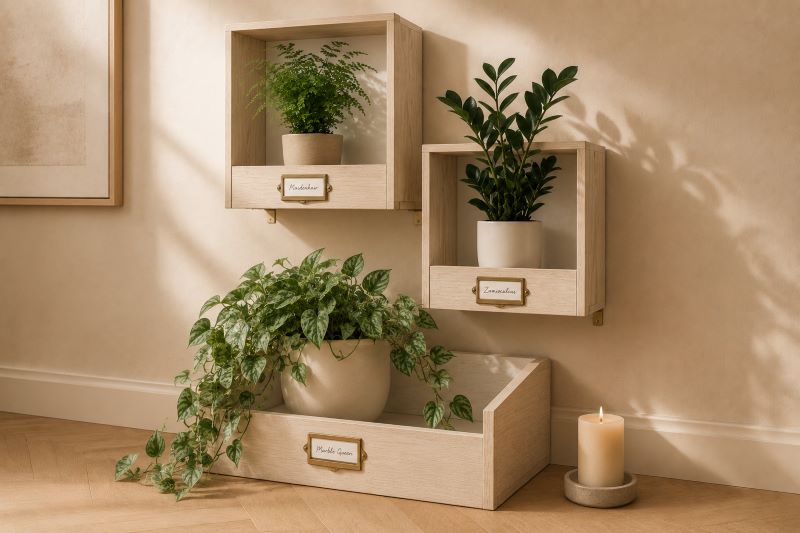
Wooden crates can create a casual plant display with a more collected and rustic character. Stacking them at different heights allows you to create levels without purchasing a dedicated shelving unit.
Whitewashed or pale wood works particularly well with beige interiors. Burlap, terracotta, and trailing greenery can reinforce the relaxed vintage feel.
Avoid placing heavy crates where they could become unstable. If several crates are stacked, secure them properly so the arrangement remains safe and practical.
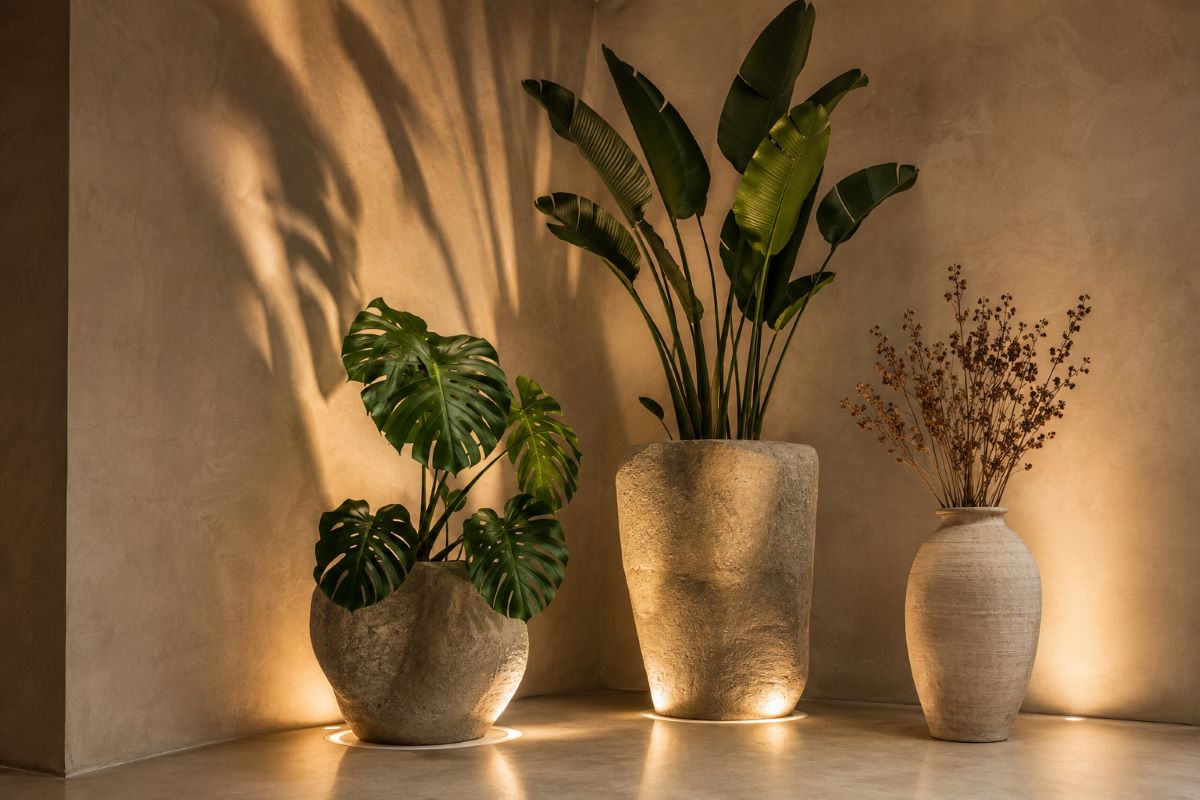
13. Sculptural Stone Plant Corner with Ambient Lighting
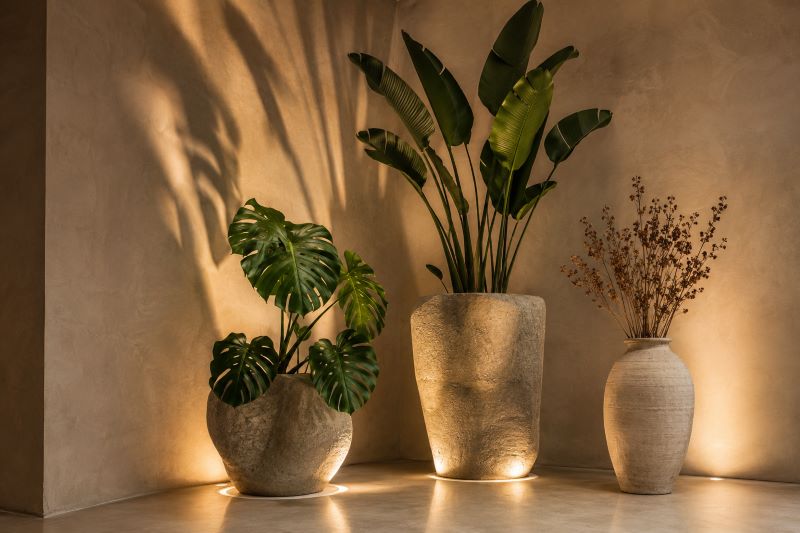
Stone and concrete planters give a plant corner a stronger architectural presence. Their weight and solid texture can balance large tropical foliage or sculptural plants beautifully.
Ambient uplighting can highlight the shape of both the plant and planter after dark. Keep the surrounding wall and accessories simple so the combination remains the focal point.
Pro Styling Tips For This Plant Corner
- Choose stone or concrete planters
- Add large statement plants
- Install subtle uplighting
- Keep surroundings minimal
- Style with one oversized vase
Choose the planter size according to the mature scale of the plant rather than only its current size. Large plants generally look more balanced when their containers have enough visual weight to support them.
14. Beige Windowsill Herb Garden Display
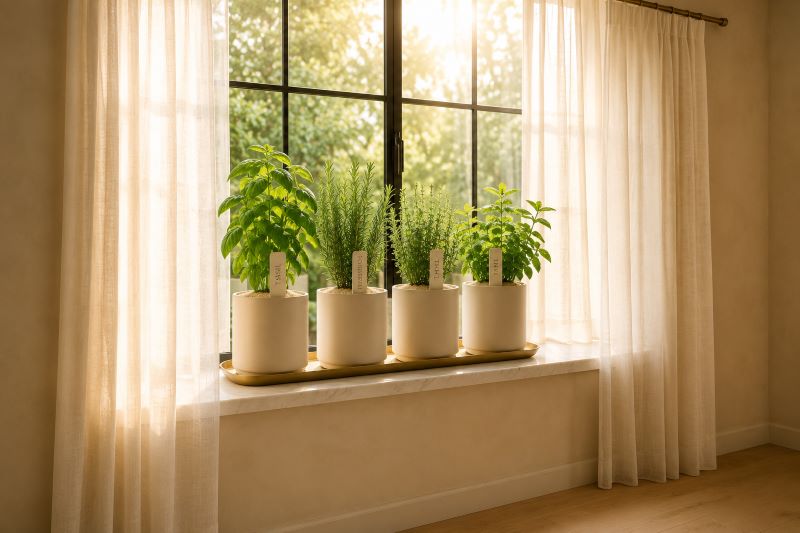
A sunny windowsill can become a practical plant corner when you combine decorative greenery with herbs. Basil, mint, rosemary, and other suitable herbs can add fragrance and provide something useful for everyday cooking.
Terracotta pots work naturally with this idea, while a wooden or oak tray can keep the arrangement visually organized. Small ceramic markers can identify the herbs without making the display feel cluttered.
Check the light requirements of each herb before placing them together. A beautiful windowsill arrangement will only remain successful if the plants receive suitable light and watering.
15. Tall Sculptural Fiddle Leaf Fig Indoor Plant
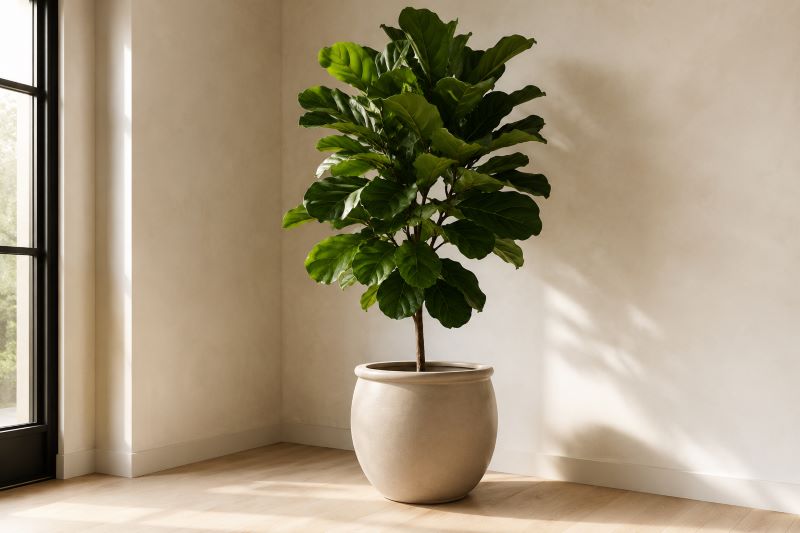
Sometimes one large plant has more impact than an entire collection of smaller ones. A fiddle leaf fig can bring height and a strong sculptural shape to an empty beige corner.
Place it where it can receive suitable bright, indirect light, and give the leaves enough space to grow naturally. An oversized ceramic planter can provide the visual weight needed for a tall plant.
Keep the surrounding decoration minimal. The large foliage already provides enough texture and movement to make the corner feel finished.
16. Beige Entryway Plant Corner with Mirror
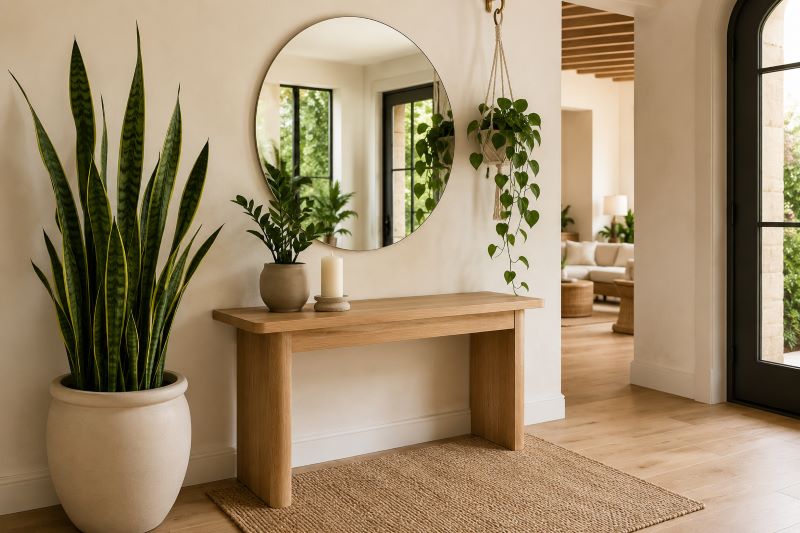
Combining greenery with a mirror can make an entryway feel brighter and more welcoming. The mirror reflects light and foliage, while the plant adds a natural element to an area that can otherwise feel purely functional.
A slim console can provide a practical surface for a small candle or decorative object, while a larger floor plant can anchor one side of the arrangement. A jute rug can help define the entryway without introducing a strong color.
Choose a mirror shape that works with the architecture. A round or softly arched design can complement the organic quality of the plants and beige palette.
17. Clustered Floor Plants in Varying Heights
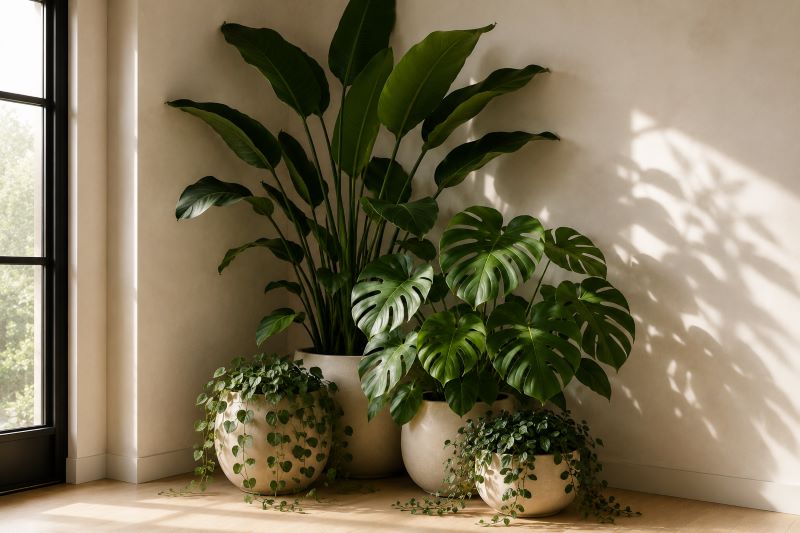
Grouping floor plants together creates a fuller indoor garden effect than scattering individual plants around the room. Different heights and leaf shapes give the arrangement depth while keeping the plants visually connected.
Start with one taller plant as the anchor, then add medium-sized and trailing varieties around it. Similar pot finishes can help the collection feel intentional even when the plants themselves are different.
Leave enough space around the group for watering and cleaning. A plant corner should be attractive, but it also needs to remain easy to maintain.
How to Choose the Right Indoor Plant Corner for Your Space
Check the Available Light
Light should be the first consideration when choosing plants. Observe whether the corner receives direct sunlight, bright indirect light, or very little natural light throughout the day, then select plants that can actually thrive in those conditions.
Match the Plants to the Space
A large fiddle leaf fig can overwhelm a narrow corner, while several tiny plants may disappear in a large room. Consider the mature size of the plants as well as their current appearance when planning the arrangement.
Choose Pots That Support the Style
Ceramic, terracotta, stone, rattan, and woven basket planters can all work beautifully with beige interiors. Use the pot material to add contrast and texture while keeping the colors connected to the rest of the room.
Vary the Heights
A plant display looks more natural when everything is not positioned at the same level. Combine floor plants, stands, shelves, hanging planters, and trailing varieties where the space allows.
Leave Enough Breathing Room
Avoid filling every empty corner with greenery. Open space around the plants makes the arrangement look more intentional and prevents the room from feeling crowded.
Consider Maintenance
Think honestly about how much care you can provide. If you travel frequently or prefer low-maintenance decor, choose resilient plants and arrangements that are easy to reach for watering, pruning, and cleaning.
Use Lighting Carefully
If a plant corner is visible in the evening, warm ambient lighting can highlight the foliage and make the area feel inviting. For plants that need additional light, use appropriate grow lighting rather than relying only on decorative illumination.
Frequently Asked Questions About Beige Indoor Plant Corner
Which indoor plants work best in low-light corners?
Snake plants, ZZ plants, pothos, peace lilies, and Chinese evergreens are commonly chosen for lower-light indoor areas. However, low light does not mean no light, so check the specific requirements of the plant before placing it in a dark corner.
How many plants should I use in a plant corner?
The right number depends on the size of the space and the plants you choose. A small corner may only need one statement plant or three to five smaller plants, while a larger display can support several layers of greenery.
What pots look best in a beige and organic modern home?
Ceramic, terracotta, stone, and woven basket planters work particularly well. Beige, cream, sand, white, and warm earthy tones can keep the display cohesive while still allowing differences in texture.
How can I make my plant corner look professionally styled?
Vary the height, leaf shape, and size of the plants instead of using identical arrangements. Combine natural materials such as wood, rattan, stone, and ceramic, and leave some open space so the display does not look overcrowded.
Can I create an indoor plant corner in a low-light room?
Yes, but the plant selection needs to match the available conditions. Low-light-tolerant plants can be a better choice, while grow lights may help when natural light is insufficient for the plants you want to grow.
A well-designed indoor plant corner can make a beige home feel noticeably more alive without taking away from its calm character. The most successful arrangements usually combine greenery with a few natural materials rather than relying on plants alone.
Rattan, wood, terracotta, stone, ceramic, and linen can all add texture while keeping the palette soft and cohesive. Before creating your display, pay attention to the light, available floor or wall space, and the amount of plant care you are comfortable providing.
From a single sculptural fiddle leaf fig to a layered floor-to-ceiling display, there is no single formula that works for every home. Choose plants that suit your space, give them room to grow, and let the greenery become a natural part of your beige interior.
Love these beige indoor plant corner ideas? You can also explore our Beige Floor Tiles Ideas and Beige Nursery Decor Ideas for baby room decorations.