19 Rug Placement Ideas That Will Transform Every Room in Your Home
A rug can change the character of a room without asking you to replace the furniture or take on a full decorating project. Its position can bring scattered pieces together, make a large room feel more organized, or give a small corner a clear purpose. Even in a neutral home, the right rug can introduce warmth and texture without taking attention away from the rest of the decor.
The best placement depends on the furniture, available floor space, and how the room is used every day. A rug should feel like part of the layout rather than something simply placed on an empty floor. These ideas cover different rooms and arrangements, helping you find practical ways to use rugs throughout a beige home.
Follow us on Pinterest for more beige home decor inspirations.
1. Living Room Rug Placement
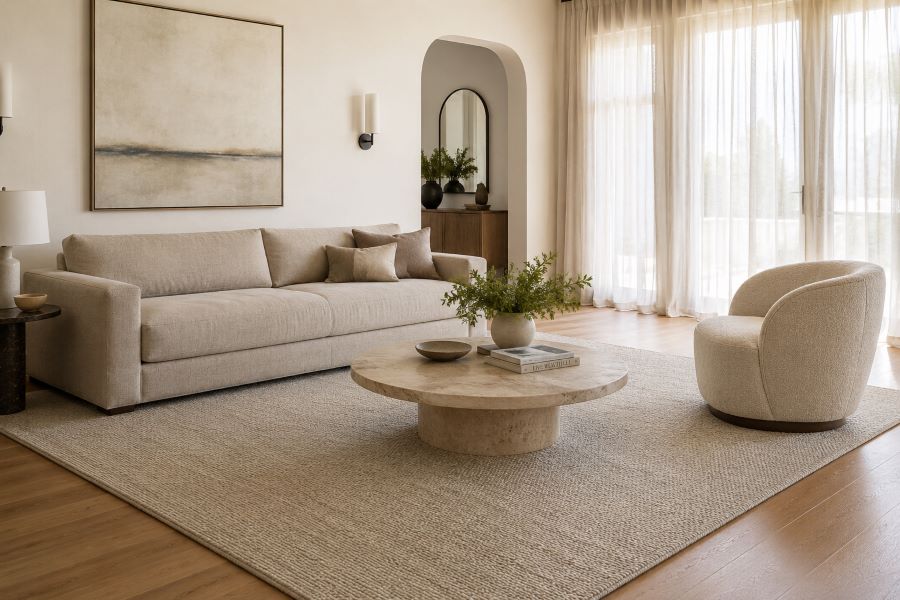
A living room rug should visually connect the seating rather than sit alone underneath the coffee table. In a larger room, a generous rug can extend beneath the sofa, chairs, and coffee table, making the entire seating arrangement feel like one comfortable zone.
If a large rug is not suitable for the room, place the front legs of the sofa and chairs over the rug. This smaller overlap is enough to establish a relationship between the furniture without covering most of the floor.
Leave a balanced amount of flooring around the outer edges. Too little space can make the room feel crowded, while a little visible flooring helps the rug and furniture sit comfortably within the room.
2. Bedroom Rug Placement
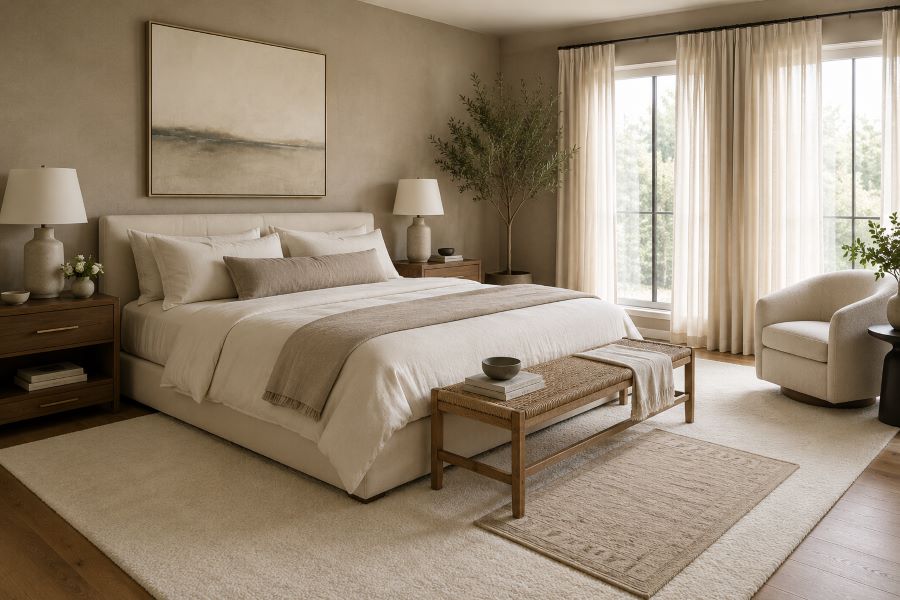
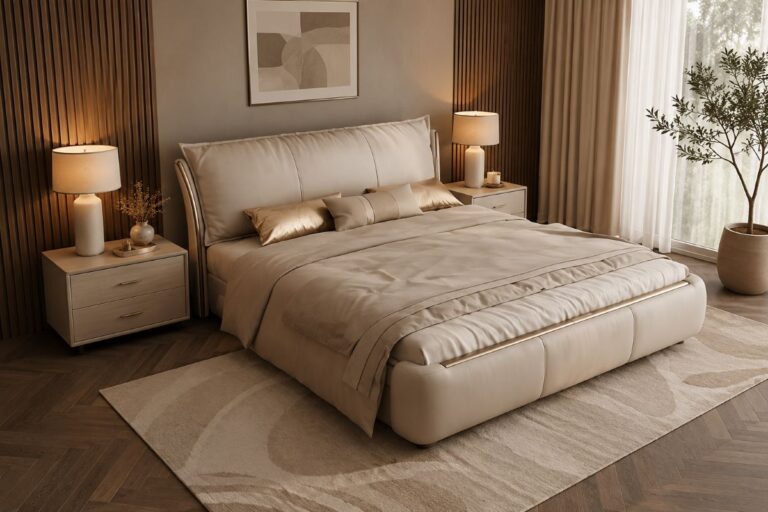
A bedroom rug can make getting out of bed feel warmer and can also give the sleeping area a stronger visual foundation. A large rug placed beneath the bed is one of the easiest arrangements because it extends beyond the sides and lower end of the bed.
For a smaller bedroom, two runners can be positioned along each side of the bed. This gives you a soft surface where you need it most without requiring a large rug that takes up too much floor space.
Keep the rug aligned with the bed whenever possible. A centered placement usually makes the room feel more settled and allows the rug to frame the bed naturally.
3. Kitchen Rug Placement
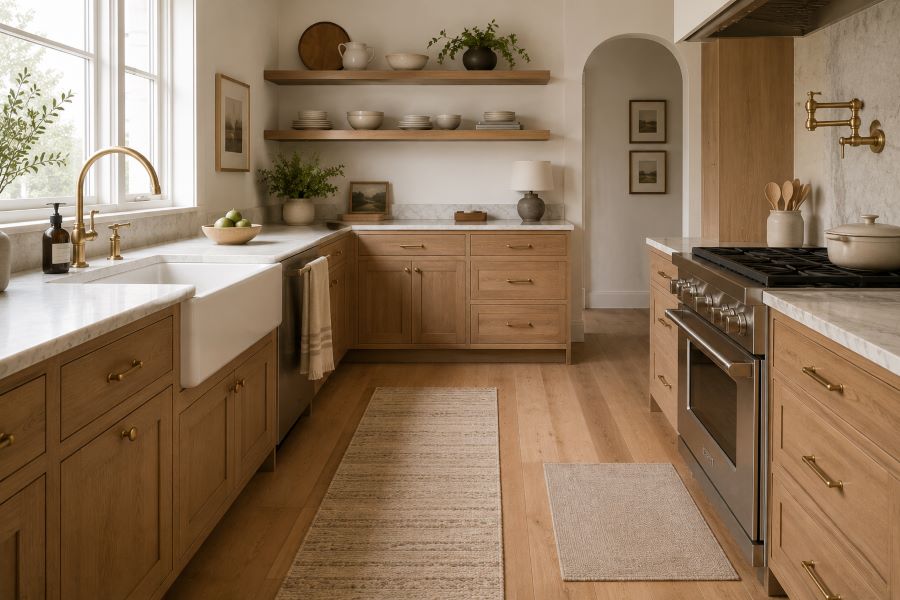
A kitchen runner is useful when you want to soften a long working area without covering the whole floor. Placing one along the sink or main counter creates a comfortable surface in an area where you spend considerable time standing.
The rug should not interfere with cabinet doors, drawers, or appliances. Measure the available floor space carefully so the runner remains useful rather than becoming something you have to work around.
For a beige kitchen, a subtle woven design or muted pattern can introduce texture while keeping the overall palette calm. Washable materials are especially practical because kitchens naturally deal with spills and crumbs.
4. Beige Bathroom with Rug Placement
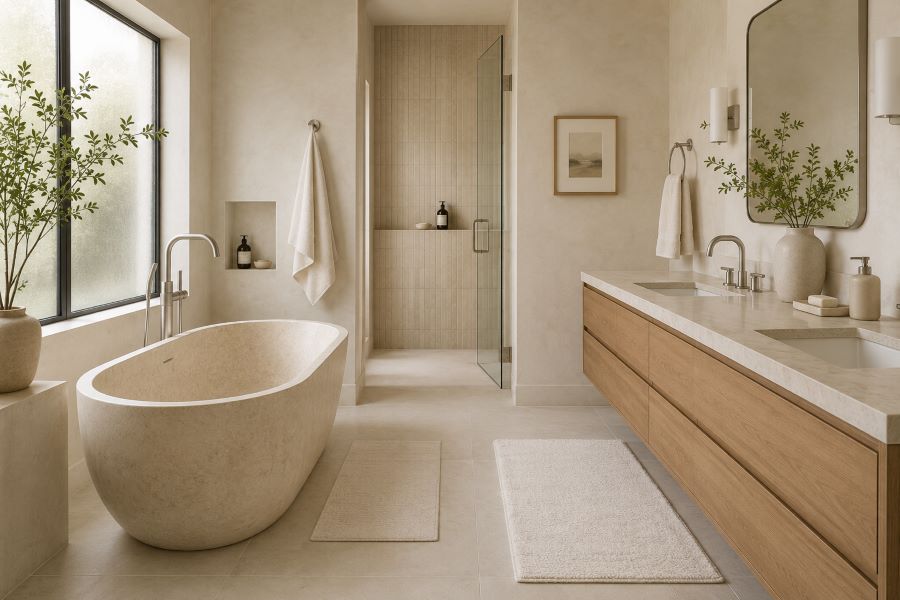
A bathroom can feel much softer with the addition of a well-positioned rug. Instead of filling the entire floor, place a smaller piece beside the vanity or near the shower where it provides both comfort and visual warmth.
In a beige bathroom, a rug with a natural texture can work beautifully alongside stone, wood, ceramic, and warm metal finishes. Keeping the color understated allows the other bathroom materials to remain visible.
Choose a material that can cope with moisture and dries reasonably quickly. It is also better to leave some flooring exposed around the rug so the bathroom retains its open appearance.
5. Dining Room Decor with Rug
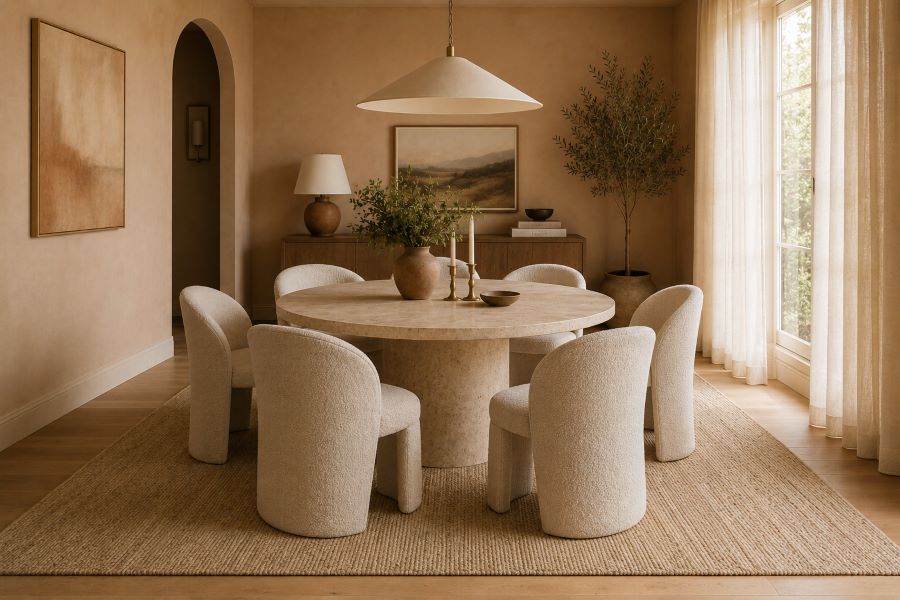
A dining rug needs to accommodate more than the table itself. The chairs should remain on the rug when they are pulled away from the table, otherwise their legs can catch on the edge and make everyday dining uncomfortable.
A low-profile rug is usually easier for moving chairs across. The shape can follow the dining table as well, creating a natural relationship between the rug and the furniture above it.
Example: A Beige Dining Room
Imagine a beige dining room with a six-seat rectangular wood table and upholstered cream chairs. A large neutral rectangular rug placed beneath the entire dining set would allow every chair to remain on the rug when pulled out. Leaving a small border of visible flooring around the rug would keep the arrangement from feeling too heavy.
6. Beige Entryway Decor with Rug
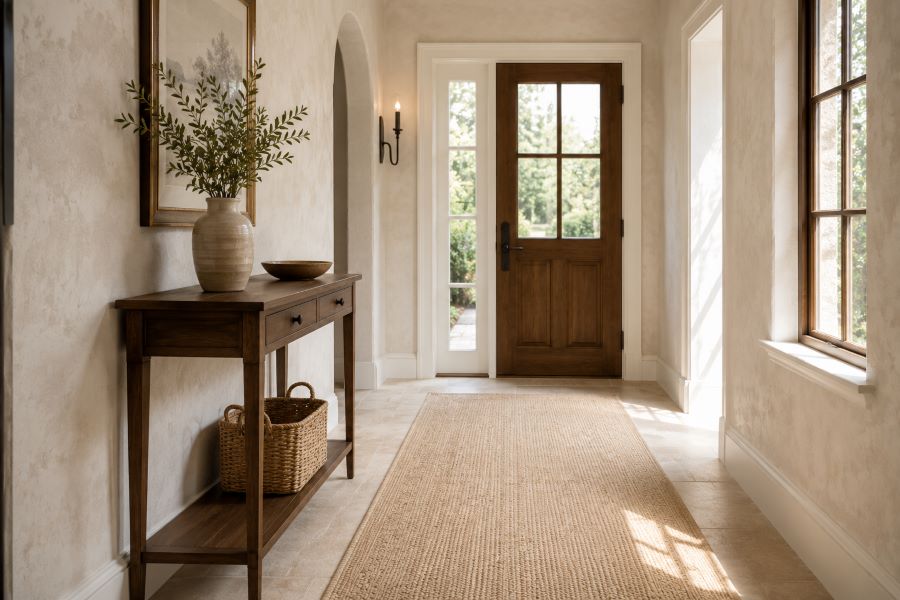
An entryway rug can make the entrance feel more welcoming while helping define the transition into the home. A narrow runner usually works better than a wide rug because it follows the direction of the passage and leaves some flooring visible along the sides.
Natural beige, taupe, and woven finishes can complement a wooden console, bench, baskets, or neutral wall color. The rug does not need a strong pattern to make the entryway feel finished.
Before placing it, check the front door clearance. The rug should stay flat and should not interfere with the door opening or create an awkward raised edge near the entrance.
7. Hallway Rug Placement
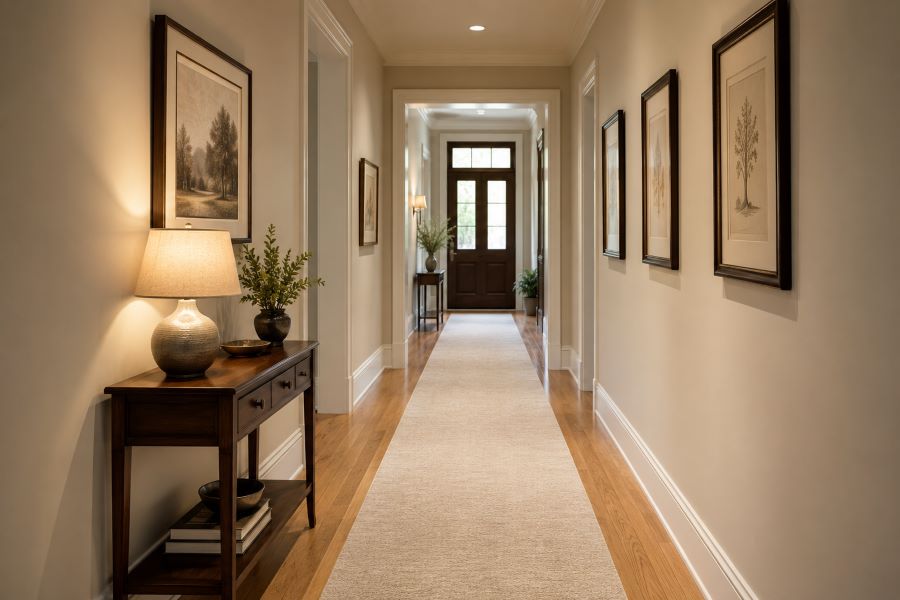
A hallway runner can break up a long stretch of plain flooring and give the passage a warmer appearance. Keep the runner slightly narrower than the hallway so a strip of flooring remains visible along both sides.
It can be tempting to fill the entire length, but leaving small gaps near doorways often creates a cleaner result. These breaks help the runner feel intentionally positioned instead of squeezed into every available inch.
For a neutral home, a subtle pattern or textured weave can provide interest without making the hallway feel narrow. Add a suitable non-slip pad underneath to keep the runner stable.
8. Staircase Rug Placement
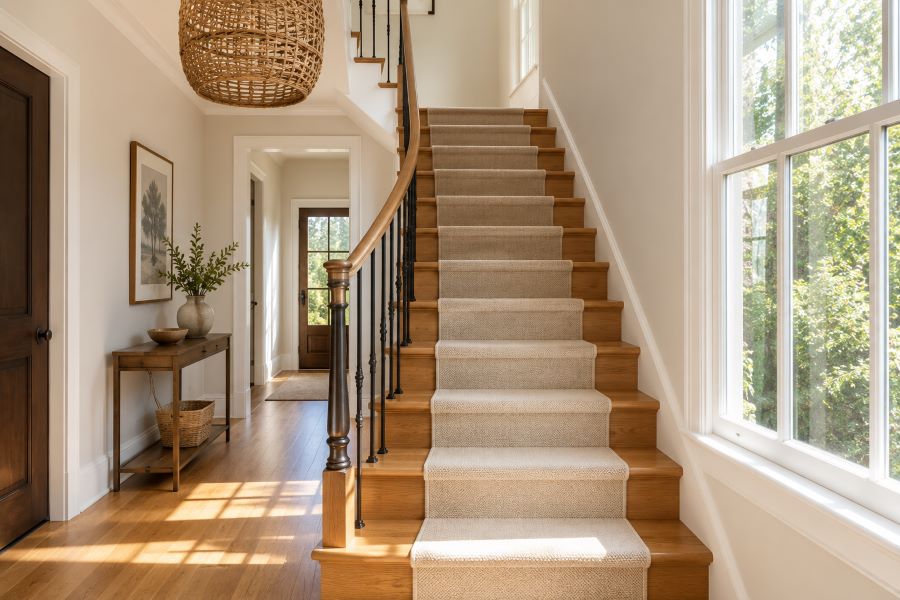
A staircase runner can add warmth while making a hard staircase feel more comfortable underfoot. The runner should follow the center of the stairs with relatively even amounts of exposed flooring on either side.
Consistency is particularly important here. If the runner shifts from side to side as it travels upward, the staircase can look untidy even if the rug itself is attractive.
Choose a durable material because stairs receive repeated daily use. Beige, cream, and natural tones can work especially well with wooden steps and neutral walls while keeping the staircase visually connected to the rest of the home.
9. Layering Rugs Decor Ideas
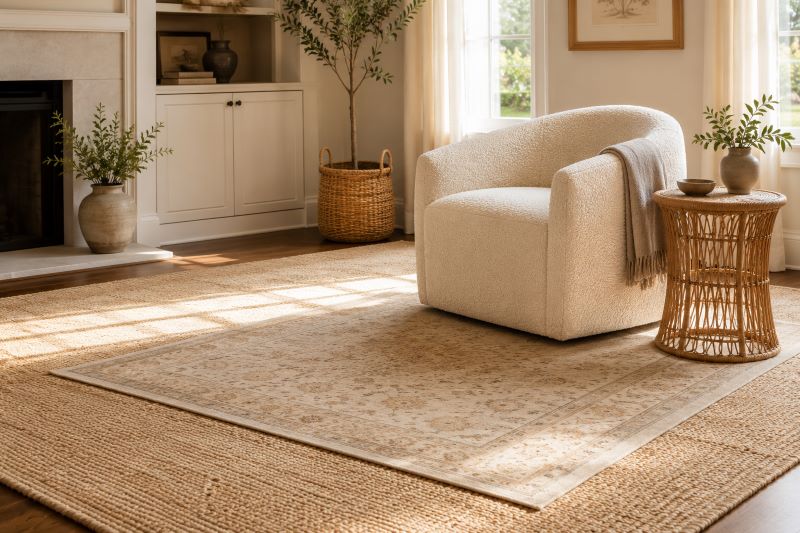
Layering rugs can add dimension to a room where the furniture and walls already share similar neutral tones. Start with a larger rug that provides the base, then place a smaller rug over it to introduce another texture or a restrained pattern.
The lower rug should remain visible around the upper one. This border is what makes the layered arrangement noticeable and prevents the smaller rug from looking as though it was simply placed on top by accident.
The two rugs do not have to match perfectly. Related shades, complementary textures, or similar undertones can be enough to make the combination feel intentional. Use rug pads where necessary to keep the layers from shifting.
10. Round Rug Decor Ideas
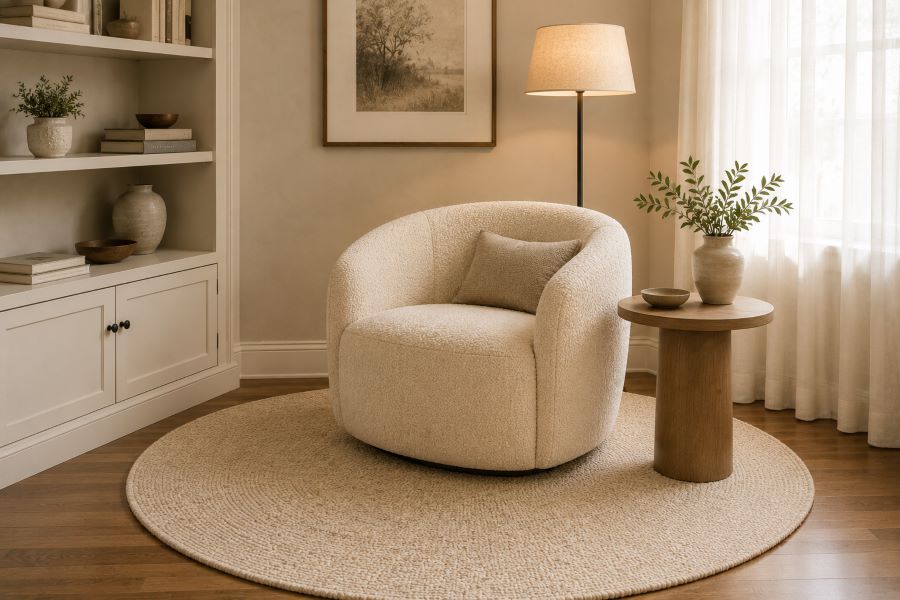
A round rug can soften the strong horizontal and vertical lines found in many homes. It can sit beneath a small round table, define a reading corner, or give a single accent chair a more noticeable place within a larger room.
Instead of centering it with the entire room, consider the furniture it is supporting. A round rug beneath a small table, for instance, should feel centered with the table rather than with the room’s walls.
In a beige interior, a round woven rug can introduce an organic quality without adding another strong color. It is especially useful in smaller corners where a rectangular rug may look too structured.
11. Cowhide Rug Accent Styling
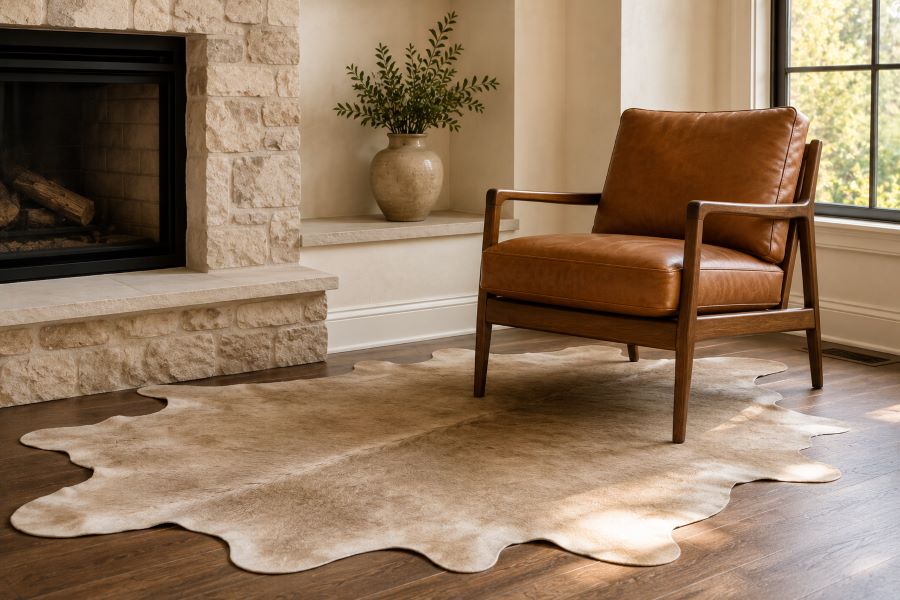
A cowhide rug brings an irregular outline that can break up a room filled with straight furniture. Its natural shape makes it useful as an accent beneath part of a seating arrangement rather than something that needs to cover an entire zone.
Try positioning it beside an accent chair, partly underneath a sofa, or near a fireplace. The uneven edges can create a softer transition between furniture and flooring.
Because the rug already has a noticeable silhouette, keep the surrounding accessories relatively restrained. Linen, wood, stone, ceramic, and woven materials can complement its organic appearance without making the room feel overloaded.
12. Under Coffee Table Decor with Rug
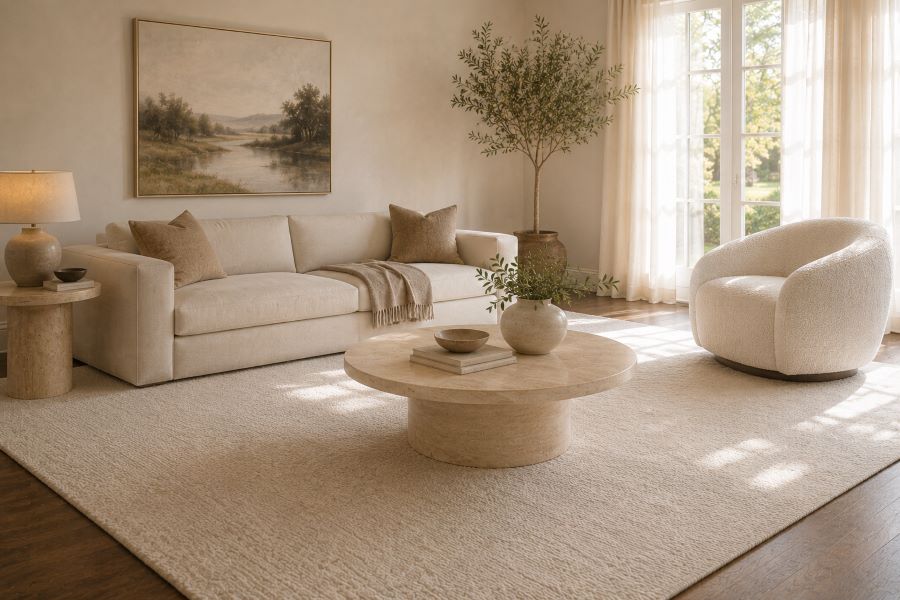
A rug under the coffee table can give the seating area a clear center. The important part is to consider the entire furniture arrangement rather than choosing a rug that only fits beneath the table.
A small rug that stops around the coffee table can make the table look disconnected from the sofa and chairs. A larger piece that reaches toward the surrounding seating usually creates a more unified result.
A Simple Coffee Table Rug Setup
- Choose a rug that reaches beyond the coffee table.
- Keep the table comfortably centered on the rug.
- Let nearby seating overlap its outer edge.
- Leave a clear walking path around the rug.
The right rug can make the coffee table feel like part of the seating arrangement rather than a separate piece. Once the base is right, simple coffee table decor can be layered on top without making the area feel crowded. For more ways to style your coffee table, our coffee table decor ideas are full of inspiration.
13. Nursery and Kids’ Room with Rug
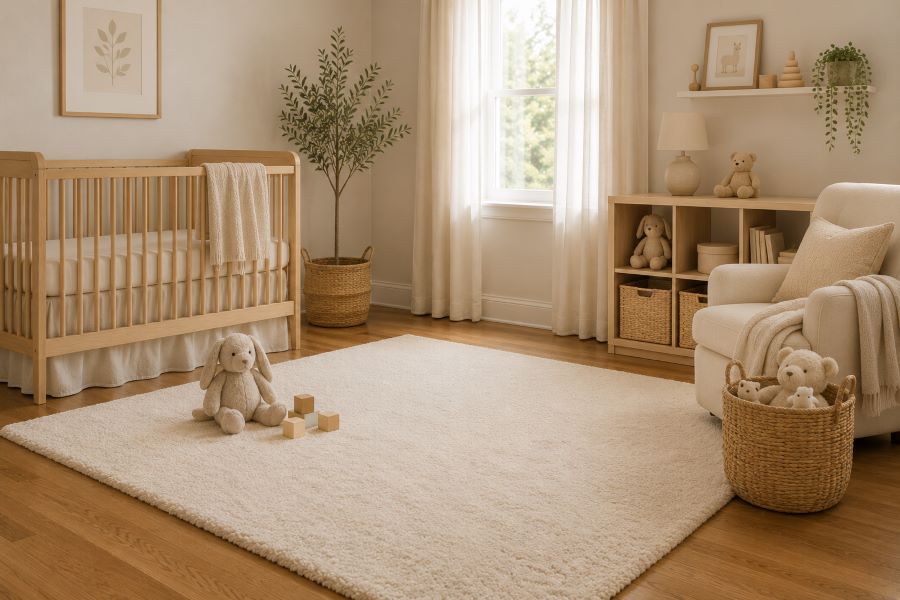
A rug can create a comfortable surface for play, reading, or floor activities in a nursery or child’s bedroom. Place it where the child will actually use it instead of hiding most of it beneath a large bed or storage unit.
In a nursery, a rug can soften the area around the crib and give the room a warmer appearance. In an older child’s room, it can help define a play or reading zone without needing another piece of furniture.
Choose a stable, easy-to-clean material for these spaces. A non-slip backing is particularly useful because children move quickly and frequently across the floor. You can also coordinate the rug with the ideas in our beige kids room decor content.
Setting up the nursery and kids room? Our nursery decor ideas and beige kids room ideas offer plenty more direction.
14. Home office Decor with Rug
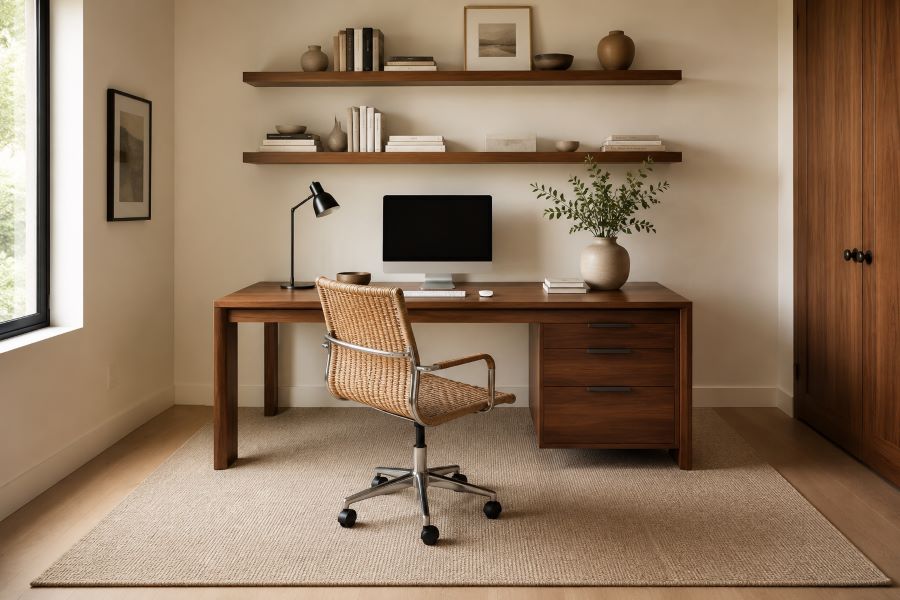
A rug can visually separate a home office from the rest of a shared room. Placing it beneath the desk and chair creates a clear workspace, which can be especially helpful when the office occupies part of a bedroom or living room.
Make sure the chair has enough room to roll backward and sideways. A low-profile or flat-weave rug is often easier to use than a thick pile that catches beneath the chair wheels.
For a beige office, a lightly textured rug can add warmth while keeping the workspace understated. A simple neutral pattern can also give the room some character without becoming distracting during work.
15. Balcony and Outdoor Rug Placement
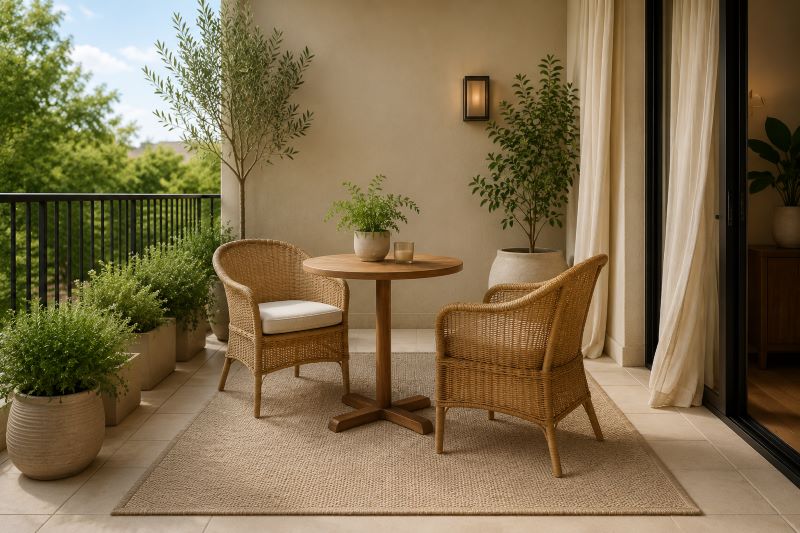
An outdoor rug can give a balcony or patio the feeling of a defined room. Place it underneath the main seating so chairs and a small table appear connected rather than scattered across the floor.
For a narrow balcony, a runner can work beneath a row of chairs or alongside a compact seating arrangement. On a larger patio, a wider rug can sit beneath the complete seating group.
Choose a rug made for outdoor conditions and secure it properly. Beige, sand, taupe, and natural shades can pair easily with wooden furniture, neutral cushions, and plants.
16. Rug Placement for Open Floor Plans
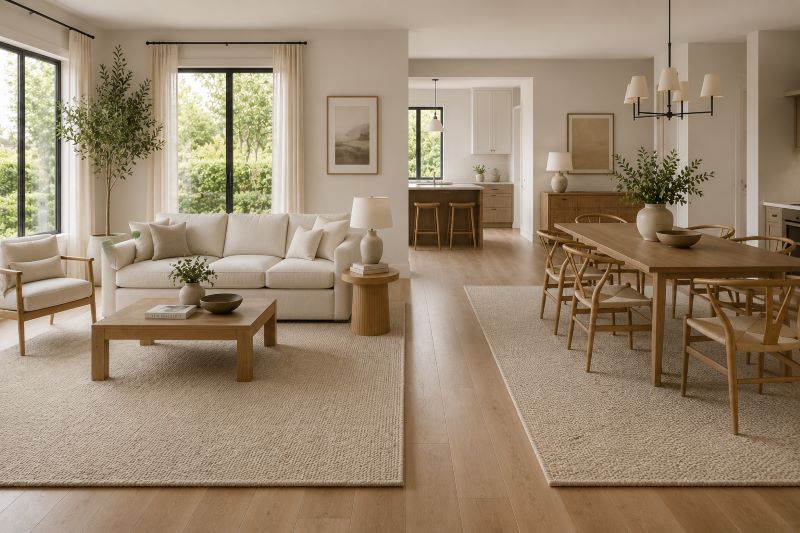
Open floor plans often contain several activities within one large space. Rugs can establish these areas without blocking the open layout. One rug can identify the living room while another gives the dining area its own visual boundary.
The rugs do not need to be identical. Using different textures or patterns within the same neutral color family can give each zone personality while keeping the larger room connected.
Avoid placing the rugs directly against one another. A visible section of flooring between the zones creates breathing room and makes the purpose of each area easier to understand.
17. Small Space Rug Placement
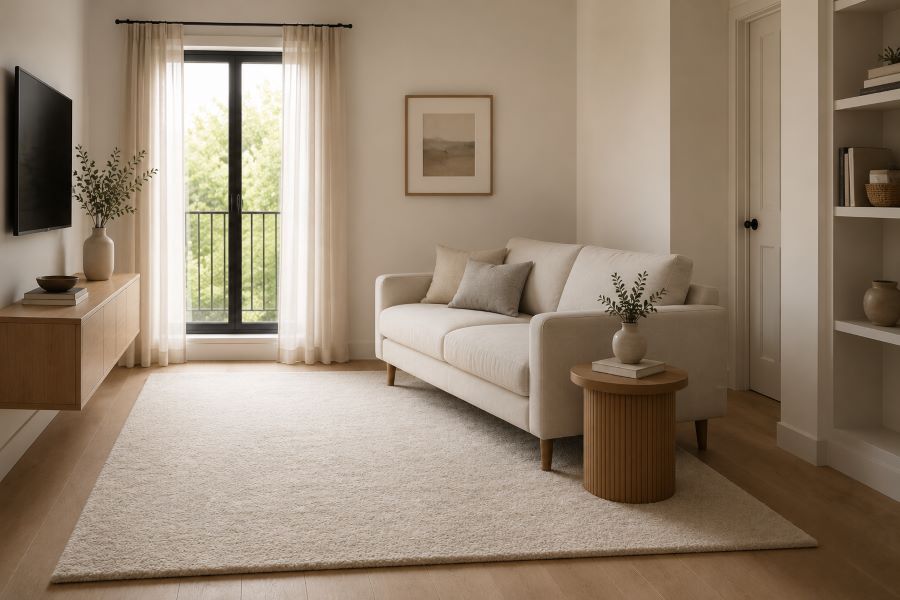
A small room does not automatically need a tiny rug. In many cases, a larger rug that connects the main furniture can make the room feel more unified than several small pieces spread across the floor.
Light beige, cream, and warm neutral rugs can keep a compact space visually open. If you want some pattern, choose something restrained rather than a design with very strong contrast.
Example: A Small Beige Living Room
Picture a compact beige living room with a two-seat sofa, one accent chair, and a small coffee table. Instead of using separate little rugs beneath each piece, one medium-to-large rug can sit underneath the seating group. The sofa and chair can overlap the rug slightly, while a clear strip of flooring remains around the arrangement.
This approach makes the furniture feel like one seating zone and avoids visually dividing the limited floor area. A simple texture can add depth without making the small room feel crowded.
18. TV Lounge Decor with Rug
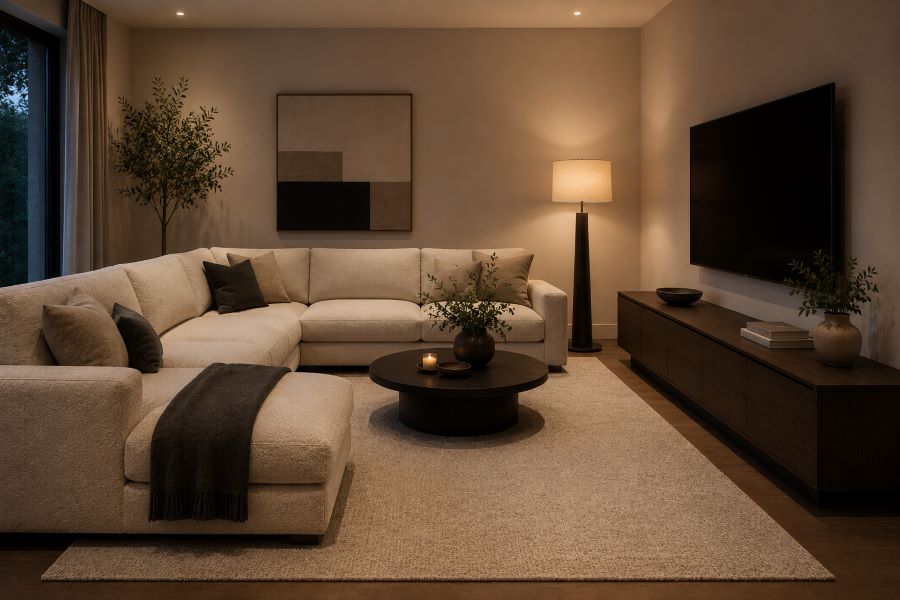
A TV lounge benefits from a rug that gathers the seating into one comfortable area. Position the sofa and chairs around the rug so they feel connected to one another rather than separately arranged around the television.
A larger room may allow the rug to sit beneath most of the seating. In a smaller lounge, placing only the front legs of the sofa and chairs over the rug can still establish a strong visual relationship.
A low-pile rug is practical for a frequently used lounge. Keeping the media console outside the main rug area can also create a cleaner distinction between the seating zone and television wall.
19. Reading Nook Decor with Rug
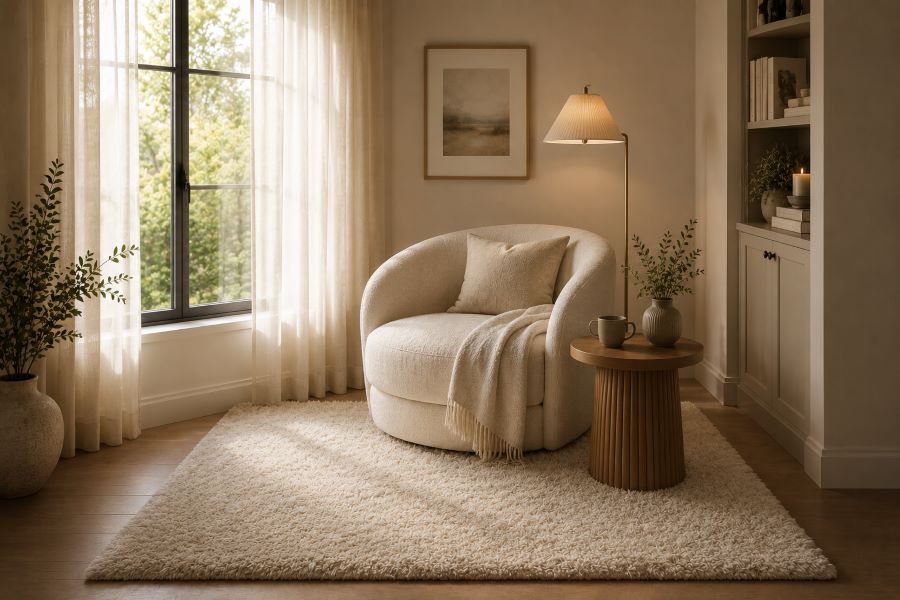
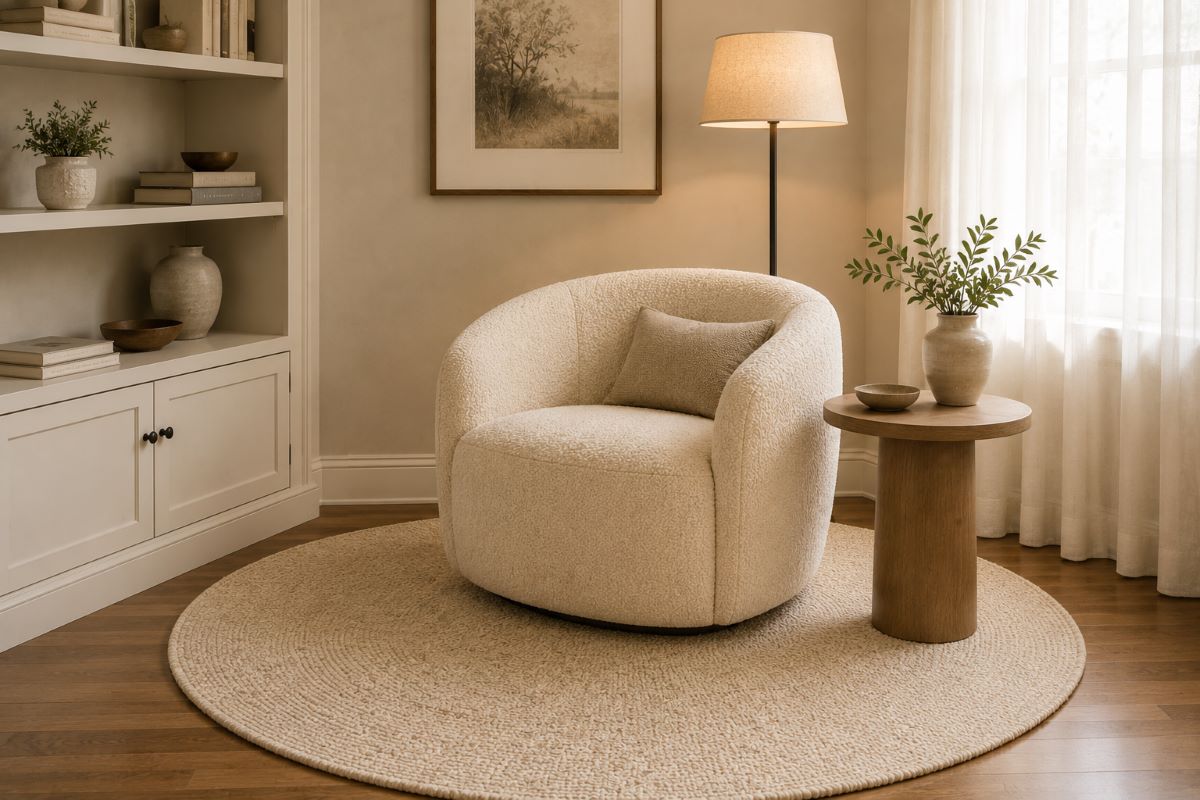
A reading nook can become more inviting when a rug gives the chair a defined place within the room. The rug can sit beneath the chair and extend outward enough to include a small side table or leave a comfortable border around the seating.
A floor lamp can complete the corner without requiring much additional decoration. If the space is small, choose a rug that supports the chair without filling the entire surrounding floor.
Soft woven textures work particularly well in beige reading corners. They add warmth and make an unused area feel like a deliberate little retreat rather than an empty piece of floor.
Things to Keep in Mind
- Measure the furniture before choosing your rug size.
- Leave enough room for doors and drawers to open.
- Check chair movement before placing dining room rugs.
- Use non-slip pads in busy areas.
- Choose washable materials for kitchens and kids’ rooms.
- Pick moisture-friendly rugs for bathrooms.
- Keep outdoor rugs suitable for exterior conditions.
- Secure layered rugs so they stay in position.
- Leave some flooring visible around the rug.
- Let the room’s furniture guide the final placement.
Frequently Asked Question About Beige Rug Placement Ideas
How do I choose the right rug size for a room?
Begin with the furniture arrangement rather than measuring the empty floor alone. Decide which pieces you want the rug to visually connect, then select a size that reaches far enough beneath those pieces. A rug that is slightly larger often creates a more unified appearance.
Should a rug go under all the furniture?
It does not always need to. In a living room, placing the front legs of the sofa and chairs on the rug can be enough. In a larger space, however, allowing more furniture to sit on the rug can make the seating arrangement feel more complete.
Can I layer rugs in the same room?
Yes. Layering works particularly well when you combine a larger neutral rug with a smaller textured or patterned piece. Leave enough of the bottom rug visible around the edges and make sure both rugs are secure.
Are rug pads really necessary?
A rug pad can help prevent slipping and keep the rug flatter against the floor. It can also provide extra cushioning and help protect the flooring beneath. They are particularly useful in busy areas such as hallways, living rooms, and dining rooms.
Can the right rug placement make a room look bigger?
It can change the way the room is visually perceived. A rug that connects the furniture can make the arrangement feel more unified, while several undersized rugs may divide the floor into disconnected sections. Balanced visible flooring around the rug can also help maintain an airy appearance.
A well-placed rug can quietly change the way an entire room comes together. It can anchor furniture, define separate areas, soften hard flooring, and introduce another layer of texture without requiring a major decorating change.
Before choosing the final position, look at how the furniture is arranged and how people move through the room. When the size and placement work together, a rug can make a beige interior feel warmer, more comfortable, and much more thoughtfully finished.