Floating Shelves Decor Ideas for Every Room in Your Home
Floating shelves can do much more than fill an empty wall. They give you a place to display the pieces you love while keeping useful items organized without taking up valuable floor space.
In a beige or neutral home, they are especially useful because natural wood, ceramics, books, plants, woven pieces, and soft textiles can all add warmth without making the room feel busy.
From a living room display to a practical kitchen shelf or a cozy bedroom arrangement, the right combination of objects can make even a simple shelf feel intentional and personal.
For more beige home inspiration, visit our Pinterest board.
1. Living Room Floating Shelves Decor

Floating shelves can give a living room an extra layer of personality without making the space feel crowded. Instead of filling them with random decorations, combine a few pieces that repeat the colors and textures already present in the room.
Natural wood shelves look especially warm against beige walls. Add ceramic vases, a small plant, a few books, and one sculptural object to create variation in height and shape.
A Balanced Living Room Display
- Use neutral ceramic pieces to complement the beige palette.
- Add a trailing plant for movement and natural texture.
- Stack a few books to create different visual heights.
- Include one woven or wooden accent for warmth.
- Leave open space so the arrangement feels relaxed.
The goal is not to fill every inch. A little empty space allows each item to stand out and keeps the shelves looking collected rather than cluttered.
2. Bedroom Floating Shelves Decor

Bedroom shelves should support the calm feeling of the space rather than compete with it. A few carefully selected pieces can provide decoration while keeping small essentials close at hand.
Try combining a small framed print with a ceramic vase, a candle, and a few favorite books. If the shelf is beside the bed, keep the display simple enough that it does not become visually distracting.
Soft beige, cream, warm white, and natural wood are easy to combine for a restful arrangement that feels connected to the rest of the bedroom.
3. Kitchen Floating Shelves Ideas

Kitchen floating shelves can make everyday items part of the decor. Instead of hiding everything inside cabinets, use open shelving for attractive dishes, glass jars, wooden boards, and other pieces you regularly use.
Keep the most frequently used items on the lower shelf where they are easy to reach. Less-used decorative pieces can sit higher up to create a more layered display.
Example: A Warm Beige Kitchen Shelf
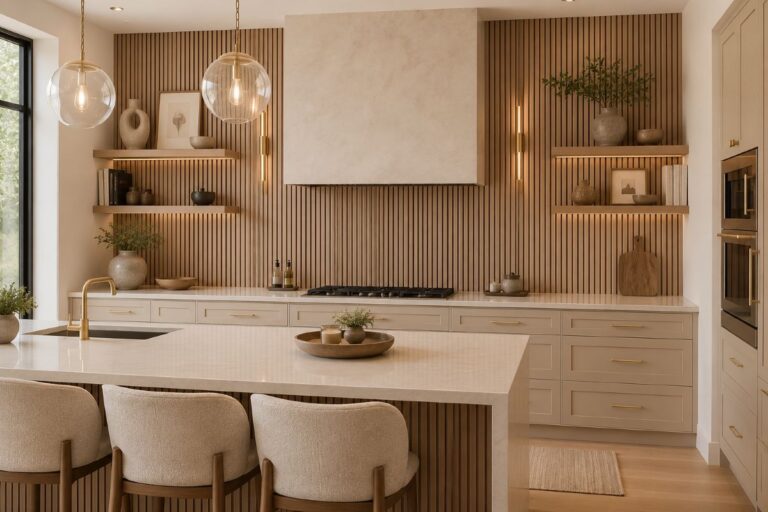
Imagine two light-oak shelves above a beige kitchen counter. The lower shelf holds everyday cream plates, stacked bowls, and a few glasses, while the upper shelf has glass storage jars, a wooden cutting board, and a small pot of herbs.
The arrangement feels useful rather than purely decorative, while the mix of wood, ceramic, and greenery keeps the kitchen warm and inviting.
4. Bathroom Floating Shelves Decor

Floating shelves can turn an otherwise unused bathroom wall into useful storage. They are particularly effective in beige bathrooms because wood, woven baskets, rolled towels, and natural accessories can reinforce a relaxed spa-like atmosphere.
Roll a few neutral towels and place them beside glass jars or small containers. A wooden tray can group smaller items together so the shelf stays organized.
Avoid overcrowding bathroom shelves. Moisture and limited space make a simpler display much easier to maintain.
5. Home Office Floating Shelves Decor

A home office can benefit from floating shelves because they move storage off the desk and onto the wall. This leaves more room for your computer, notebooks, and everyday work while still giving the room a decorative touch.
Use a combination of books, small storage boxes, framed artwork, and one or two plants. Keep frequently used items within easy reach and reserve the higher shelves for pieces that are mostly decorative.
A balanced shelf can make the workspace feel more finished without becoming another source of visual distraction. For more ideas, explore our full Beige Home Office Decor guide.
6. Entryway Floating Shelves Ideas

An entryway shelf can be both decorative and practical. A small tray gives keys a designated place, while a mirror, vase, candle, or dried stems can make the entrance feel more welcoming.
Choose pieces that are easy to move or clean because the entryway is naturally a high-traffic area. A simple arrangement often works better than a collection of small objects.
If your entryway is narrow, a slim floating shelf can provide useful storage without making the walkway feel cramped.
7. Hallway Floating Shelves Styling

Hallways often have empty walls that are difficult to decorate without making the passage feel crowded. Floating shelves offer a practical solution because they add visual interest while keeping the floor completely clear.
Use framed family photographs, small ceramics, books, or a compact plant to create a display that connects the hallway with nearby rooms.
A Personal Hallway Display
- Choose frames that repeat the room’s neutral tones.
- Add one or two ceramic pieces for texture.
- Use a small plant where natural light allows.
- Stack a few decorative books for added height.
- Keep the arrangement narrow enough for easy movement.
Because hallways are viewed while walking past, the display does not need to be elaborate. A few meaningful pieces can make the space feel much more considered.
8. Dining Room Floating Shelves Decor

Floating shelves can add warmth to a dining room while keeping attractive serving pieces within reach. They work especially well on a wall that otherwise feels empty behind a dining table.
Display neutral plates, glassware, serving bowls, candles, or linen napkins. Natural wood shelves can soften a dining area filled with stone, marble, or other hard surfaces.
Try repeating one or two finishes from the dining table or chairs so the shelves feel like part of the room rather than a separate display.
9. Nursery Floating Shelves Decor

Floating shelves can provide useful storage in a nursery without taking up precious floor space. They can hold a few favorite children’s books, soft toys, framed artwork, or decorative pieces that complement the room.
Keep the display light and uncluttered. Soft beige, cream, pale wood, and woven textures work naturally with a neutral nursery palette.
For a nursery, installation and safety should come before styling. Shelves should be securely mounted, and heavier or breakable objects should not be placed where they could become a hazard. For more ideas, read our full Beige Nursery post.
10. Kids Room Floating Shelves

Kids room shelves should be attractive but also practical enough for everyday use. Open shelving can make favorite books and toys easy to see, while baskets can hide smaller items that would otherwise make the room look messy.
Choose objects that reflect your child’s interests rather than trying to make every piece match. A few wooden toys, picture books, keepsakes, or framed drawings can make the display feel personal.
As your child grows, the shelves can change with them. Toys can eventually be replaced with books, collections, photographs, or school-related items.
11. Corner Floating Shelves Ideas

Corner shelves are a smart way to use awkward areas that might otherwise remain empty. A few narrow shelves can turn a forgotten corner into a small decorative feature without requiring a large piece of furniture.
Trailing plants work particularly well in corners because their leaves soften the vertical lines of the wall. You can also add a ceramic sculpture, small vase, framed print, or woven basket.
Keep the number of objects limited. The smaller the corner, the more important it is to leave enough breathing room between pieces.
12. Above the Bed Floating Shelves Decor

Shelves above the bed can create a strong focal point without using floor space. They work particularly well in minimalist bedrooms where the wall above the headboard might otherwise look empty.
Use lightweight decorative pieces such as framed artwork, a small vase, or carefully selected books. A trailing plant can add softness if the location and plant type are suitable.
Because the shelves are positioned above a sleeping area, secure installation is especially important. Avoid heavy, sharp, or fragile objects that could create a safety concern.
13. Above the Desk Floating Shelves Decor

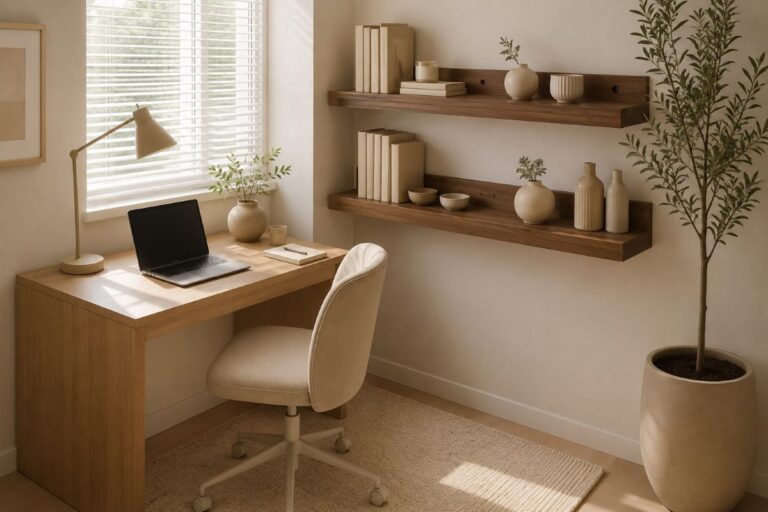
Shelves above a desk can help keep a workspace organized while making the wall more interesting. They provide room for books, small storage containers, artwork, and a few decorative pieces without taking over the desktop.
Keep the lower shelf more functional and use the upper shelf for decoration. This makes frequently used supplies easier to reach while keeping the workspace visually balanced.
Choose a consistent color palette so the shelves support concentration rather than creating a distracting collection of unrelated objects.
14. Floating Shelves Decor with plants

Plants can completely change the look of floating shelves by adding movement, color, and natural texture. In a beige room, greenery provides a subtle contrast without disturbing the neutral foundation.
Combine different shapes rather than using several identical plants. A trailing pothos can soften the edge of a shelf, while a compact upright plant can provide height on another level.
Choose pots in ceramic, stone, terracotta, or other muted finishes so the greenery remains the main feature. Make sure the plants receive suitable light and can be watered without damaging the shelf surface.
Discover more indoor plants decor inspirations in our Beige Indoor Plants Ideas post.
15. Floating Shelves with Books and Decor

Books are one of the easiest ways to make floating shelves feel lived-in. They add height and structure while also giving you a chance to display objects that have personal meaning.
Stack some books horizontally and place others vertically. A small sculpture, vase, framed photograph, or decorative bowl can then fill the spaces between them.
Avoid arranging every book in exactly the same direction. A more relaxed mix usually feels warmer and more natural in a beige or organic modern interior.
16. Floating Shelves with Candles and Vases

Candles and vases make an easy combination for a soft, decorative shelf display. Their different shapes can create visual variety while staying within a simple neutral palette.
Try grouping two or three candles of different heights beside a small vase rather than spreading individual pieces across the entire shelf.
Seasonal branches or dried stems can also be switched throughout the year. This gives the display a fresh appearance without requiring a complete restyle.
17. Minimalist Floating Shelves Styling

Minimalist shelf styling is less about having fewer decorations and more about choosing the right ones. One statement vase, a small stack of books, or a single framed print can be enough when each piece has room around it.
Choose objects with interesting shapes or textures so the display still has character. Natural wood, stone, ceramic, and linen details work particularly well with beige interiors.
Example: A Quiet Minimal Shelf
Picture one long beige or light-oak shelf with a sculptural cream vase at one end, two neutral books stacked beneath a small ceramic object, and a single trailing plant at the other side.
The empty space between each group keeps the arrangement airy and gives the shelf a refined appearance without making it feel bare.
18. Japandi Floating Shelves Decor

Japandi styling combines the warmth of natural materials with the simplicity of minimal design. Floating shelves are a natural fit for this look because they provide a clean surface for a small selection of meaningful objects.
Use handmade ceramics, pale wood, linen, natural branches, or a simple bonsai-inspired plant. Keep the shapes organic and avoid adding too many decorative pieces.
The beauty of this style comes from restraint. Every item should feel intentional, while the empty space around it helps maintain the calm atmosphere.
19. Layered Floating Shelves Ideas

Using several floating shelves on one wall can create a more substantial feature without adding bulky furniture. The key is to give each shelf a slightly different arrangement while maintaining a connection between them.
Place larger or heavier-looking pieces on the lower levels and lighter decorative objects higher up. Books, plants, ceramics, and framed pieces can be repeated across the shelves to create continuity.
Step back regularly while styling. Looking at the arrangement from across the room will help you notice whether one area feels too heavy or another feels too empty.
20. Seasonal Floating Shelves Decor

Floating shelves are easy to refresh throughout the year because you only need to replace a few decorative pieces. You can introduce subtle seasonal changes without changing the main furniture or color palette.
In autumn, try small pumpkins, dried stems, and warm-toned ceramics. During winter, candles and textured pieces can make the display feel cozy. Spring flowers and lighter greenery can brighten the shelves, while summer can bring in simple coastal or natural accents.
Keep the permanent foundation neutral and rotate only a few accessories. This keeps seasonal decorating affordable and prevents the shelves from becoming overcrowded.
How to Style Floating Shelves Without Making Them Look Cluttered
Start With a Clear Purpose
Decide whether the shelf is mainly for storage, decoration, or a combination of both. When every item has a reason for being there, the arrangement becomes easier to organize and much less likely to feel random.
Mix Heights and Shapes
Avoid placing objects of the same size next to each other. Combine tall vases, shorter bowls, stacked books, and smaller decorative pieces to create a display with natural variation.
Repeat a Few Materials
Choose two or three materials that already appear in the room, such as wood, ceramic, linen, or rattan. Repeating these finishes helps different objects feel connected even when they are not part of the same set.
Leave Some Empty Space
Empty space is an important part of good shelf styling. It gives individual objects room to stand out and prevents the display from becoming visually heavy.
Keep Practical Items Accessible
If the shelf is being used for everyday storage, place frequently used items where they are easiest to reach. Decorative pieces can occupy the less accessible areas so the shelf remains practical as well as attractive.
Style From Large to Small
Start with the largest object or group of objects, then add smaller pieces around it. This makes it easier to establish balance before adding the finishing details.
Consider the Whole Room
A shelf should not be styled in isolation. Look at the colors, furniture, lighting, and textures already present in the room and choose pieces that support those elements rather than competing with them.
Edit Before You Finish
Once everything is in place, remove one or two items and look at the result again. A slightly simpler arrangement often feels more polished and gives the shelves a more relaxed, intentional appearance.
Frequently Asked Questions About Beige Floating Shelves Ideas
How do I style floating shelves without making them look cluttered?
Start with a small number of pieces and vary their height, shape, and texture. Leave some open space between groups instead of filling the entire shelf. This gives the arrangement room to breathe and makes each decorative item easier to notice.
What should I put on floating shelves in a neutral home?
Books, ceramic vases, framed artwork, plants, candles, woven pieces, natural wood accents, and meaningful personal objects all work well. Choose items that repeat the room’s existing colors and materials for a cohesive result.
How many items should I place on one floating shelf?
There is no exact number because shelf length and object size both matter. Start with three to five pieces, then adjust based on the available space. Different heights and groupings usually look better than many similarly sized objects.
Are floating shelves suitable for small rooms or small space?
Yes. Floating shelves are particularly useful in small rooms because they provide display and storage without taking up floor space. They can make use of otherwise empty walls while keeping the room visually open.
What is the best material for floating shelves?
The right material depends on the room and the amount of weight the shelves need to support. Solid wood offers warmth and durability, while engineered materials can provide a more affordable option. Light oak, walnut, and other natural wood finishes pair especially well with beige interiors.
Floating shelves can be one of the simplest ways to make a room feel more finished without adding bulky furniture. The best displays combine useful storage with a few carefully chosen decorative pieces, whether that means books and ceramics in the living room, everyday dishes in the kitchen, or plants and artwork in a bedroom.
For a beige home, natural wood, woven textures, greenery, and warm neutral accessories create an especially timeless combination.
Start with what you genuinely need, leave some breathing room, and let the shelves evolve with your home rather than trying to fill them all at once.