9 Beige Home Office Decor Ideas
A home office should do more than look beautiful in photos. It needs to give you enough room to work comfortably, keep everyday essentials organized, and create an atmosphere where you can actually concentrate. Beige is a useful starting point because it can feel warm and polished without becoming distracting.
The shade also works naturally with oak, walnut, linen, boucle, brass, stone, and greenery, giving you plenty of ways to add character without introducing a busy color palette.
From a compact work corner to a dedicated office, these beige home office ideas focus on practical layouts, thoughtful materials, comfortable furniture, and details that make the space feel personal.
If you love these beige home office decor ideas you can also explore Beige Wardrobe Storage Ideas and Beige Makeup Vanity Ideas.
1. Luxury Beige Home Office with Gold Accents

A luxury beige office can feel refined without covering every surface in decorative pieces. Start with a warm beige desk or built-in workstation, then introduce gold through smaller details such as drawer pulls, a desk lamp, a mirror frame, or cabinet hardware. This keeps the metallic finish intentional instead of allowing it to overpower the softer color palette.
Materials also make a major difference in this type of office. A textured upholstered chair, stone-look desktop, natural wood flooring, and softly woven window treatments can give the room depth. Keep the larger furniture pieces comfortable and understated so the gold accents have room to stand out.
Luxury Beige Home Office Essentials
- Choose refined brass or gold hardware for furniture
- Pair beige upholstery with warm natural wood
- Use one statement light instead of several decorative fixtures
- Keep desktop accessories coordinated and visually simple
- Add texture through rugs, curtains, or upholstered seating
The finished office should feel considered rather than excessively decorated. A few well-chosen details can create the impression of luxury while the beige foundation keeps the room comfortable enough for everyday work.
2. Small Beige Home Office Corner Organization

A small home office corner needs a layout that protects your available floor space. A narrow desk, floating workstation, or wall-mounted shelf can provide the essentials without making the area feel like a second piece of bulky furniture. If the desk has drawers, use them for cables, stationery, and smaller items that can quickly make a compact workspace look messy.
Think vertically when storage is limited. Shelves above the desk can hold books and a few decorative objects, while a slim cabinet beside the workstation can hide paperwork and equipment. Keeping the larger surfaces beige or cream helps the workspace blend naturally into a bedroom, living room, or hallway.
Lighting should also be planned around the size of the corner. Place the desk where daylight is useful, then add a compact task lamp that does not take up much working space. The result can be small without feeling cramped.
3. Scandinavian Beige Workspace Design

Scandinavian styling pairs naturally with beige because both rely on simplicity, warmth, and useful design. A pale wood desk against a soft beige wall can form the foundation, while a cream chair and open shelving keep the room light. Instead of adding lots of decorative color, let the grain of the wood and the texture of fabrics provide visual interest.
Storage should remain easy to access and easy to maintain. Open shelves can hold books and a small number of accessories, while closed drawers keep less attractive office supplies out of sight. A woven basket underneath the desk can also provide quick storage for notebooks or cables.
Keep the decoration relaxed rather than perfectly matched. One leafy plant, a simple ceramic piece, or framed artwork can make the office feel lived-in while preserving the clean Scandinavian character.
4. Modern Office with Statement Mirror

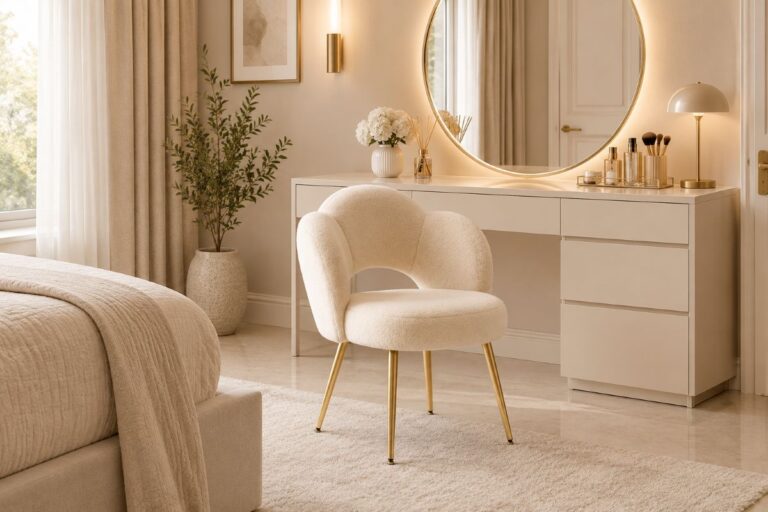
A large statement mirror can give a contemporary beige office a clear focal point while helping reflect natural or artificial light. Rounded or softly curved mirrors work particularly well when the rest of the room contains straight-lined furniture because they introduce a different shape without requiring another decorative object.
Position the mirror where it can actually contribute to the room rather than placing it randomly above the desk. It can work on the wall opposite a window, beside a workstation, or above a slim console depending on the layout. A warm backlight can make the mirror especially effective in the evening.
Example: Modern Beige Office with a Backlit Mirror
Imagine a warm beige office with a curved desk positioned beneath a large rounded mirror with subtle backlighting. A cream upholstered chair sits at the workstation, while a slim beige storage cabinet keeps office supplies hidden. One ceramic vase and a small stack of books provide just enough decoration.
During the day, the mirror helps bounce natural light through the room; after dark, its soft glow creates a calm focal point without acting as the main task light.
5. Cozy Home Office with Plants

Plants can prevent a beige office from feeling too uniform while adding a natural source of color. Instead of placing small plants on every shelf, use different sizes intentionally. A taller plant can fill an unused corner, a medium plant can sit beside the desk, and one smaller variety can add life to an otherwise empty shelf.
Choose planters that support the room’s existing materials. Terracotta, stone, ceramic, woven, or muted beige planters can connect the greenery to the rest of the decor. If the office receives limited daylight, choose plants suited to those conditions rather than selecting them purely for appearance.
Natural wood furniture works particularly well with this approach. Add a textured rug or linen curtain if the room needs more softness, but leave enough open space around the desk to keep the work area practical.
6. Professional Beige Home Office Setup

A professional home office needs to support concentration as much as it supports video calls and meetings. Begin with a desk that provides enough depth for your monitor, keyboard, notebook, and other frequently used items without forcing everything to the edge. If you use multiple screens, plan the cable management before finalizing the furniture placement.
Choose storage according to what needs to remain visible. Closed cabinetry is useful for paperwork and equipment, while a small amount of open shelving can display books or personal objects. Keeping the background relatively uncluttered also gives the room a more polished appearance during video meetings.
Beige can make a professional workspace feel less corporate when combined with natural materials. A wood desktop, textured chair, warm lamp, and simple artwork can soften the room without making it look casual or unfinished.
7. Beige Home Office Idea with Built-In Storage

Built-in storage is especially useful when you want the office to feel like part of the architecture rather than a collection of separate furniture pieces. Floor-to-ceiling cabinetry can use an otherwise overlooked wall, while a central desk area creates a dedicated place to work. Mixing closed cabinets with a few open shelves prevents the entire wall from looking visually heavy.
Plan the storage according to frequency of use. Keep notebooks, chargers, stationery, and other daily essentials near the desk. Larger equipment and rarely used documents can go into lower or upper cabinets where they do not compete for attention.
Strategic Storage Solutions
- Reserve easy-access drawers for everyday office supplies
- Use closed cabinets for paperwork and larger equipment
- Leave selected shelves open for books and personal pieces
- Add internal organizers to prevent small items becoming cluttered
- Include task lighting near the main working surface
A well-designed storage wall can make the office easier to maintain because everything has a logical place. The beige finish also allows substantial cabinetry to blend into the room instead of becoming its dominant feature.
8. Elegant Office with Vintage Touches

Vintage details can bring personality to a beige office, especially when the room otherwise has a simple modern foundation. An aged wooden desk, traditional framed artwork, brass lamp, vintage-inspired chair, or antique accessory can introduce warmth and history without requiring a fully traditional interior.
The most interesting result often comes from mixing periods rather than matching everything. Pair a vintage-looking desk with contemporary shelving, or use a classic table lamp beside a clean-lined workstation. This contrast keeps the room from feeling like a themed space.
Choose vintage pieces with everyday use in mind. A beautiful desk that has limited legroom or an uncomfortable chair may look appealing but will quickly become frustrating during a long workday.
Example: Beige Home Office with Vintage Brass Details
Picture a beige office with a warm wooden writing desk featuring aged brass hardware. A comfortable cream chair sits beneath a simple contemporary pendant, while framed botanical artwork and a small vintage clock add character to the shelving. The walls and larger furniture stay soft and neutral, allowing the older pieces to provide visual interest without making the entire office feel traditionally styled.
9. Contemporary Minimalist Beige Home Office

A contemporary minimalist office works best when every major piece has a clear reason for being there. A streamlined beige desk, supportive chair, task light, and practical storage can provide everything needed without filling the room with unnecessary furniture.
Rather than using several shades of beige that look almost identical, create subtle contrast through materials. A matte wall can sit behind a slightly textured chair, natural wood can warm up the desk area, and a woven rug can soften the floor. These differences keep the neutral palette from appearing flat.
Personal touches should be selective. One piece of artwork, a sculptural accessory, or a single plant can give the room character while leaving enough empty space for the minimalist design to breathe.
How to Create a Functional Beige Home Office
Start With the Right Desk Layout
Measure the available area before buying the desk and leave enough clearance for the chair to move comfortably. If you work near a window, position the screen so direct sunlight does not create distracting glare. A corner or wall-facing arrangement can also help reduce visual distractions.
Build Storage Around Your Routine
Think about what you reach for repeatedly during a normal workday. Keep those items within easy reach and place less frequently used supplies farther away. This simple approach prevents the desk from becoming the default storage area for everything.
Layer Your Office Lighting
Use daylight as your first layer whenever possible, then add focused task lighting where you read or work. A separate ambient light source can make the office more comfortable later in the day. Avoid relying on one ceiling fixture to handle every lighting need.
Keep Beige From Feeling Flat
The easiest way to add depth without abandoning the beige palette is through texture. Combine smooth painted walls with natural wood, linen, boucle, woven materials, ceramics, or a softly patterned rug. Small differences in texture can be more effective than adding several new colors.
Choose Comfort as Carefully as Style
The desk and chair should suit the amount of time you actually spend working. Make sure your chair provides proper support and that the desk allows your monitor and keyboard to sit comfortably. Decorative appeal should never come at the expense of everyday usability.
Leave Some Visual Breathing Room
Not every shelf or empty corner needs decoration. Leaving portions of the room intentionally open makes the office easier to maintain and allows the furniture and architectural features to remain visible. It also gives future decor changes somewhere to go without creating clutter.
Love these office ideas? Follow us on Pinterest for everyday beige home inspiration and workspace styling ideas.
Frequently Asked Questions
Q: How do I organize a small home office space?
Start by maximizing vertical storage with floating shelves and wall-mounted solutions. Keep your desktop clear with only essentials. Use drawer dividers for supplies, implement a filing system, and add plants for freshness. If you want natural light then position your desk near a window for natural light. Small spaces actually encourage better organization habits because every inch counts.
Q: What’s the best lighting for a home office?
Warm white LED lighting (3000K-4000K) works perfectly for home offices. Layer task lighting with ambient lighting for flexibility. Position task lights to reduce glare on your screen and shadows on your desk. You can use both natural and artificial light when possible. Proper lighting reduces eye strain and genuinely improves productivity throughout your workday.
Q: Can I make a beige office look professional and stylish?
Absolutely! Choose quality furniture with clean lines, maintain pristine organization, and incorporate one or two statement pieces. Beige naturally reads as professional and sophisticated. Add minimal decor that serves purpose rather than clutters space. Professional doesn’t mean boring—it means intentional and functional.
Q: How can I add personality to a minimalist workspace?
Include plants for natural beauty and air quality improvement. Display a few curated vintage pieces or meaningful artwork. Choose one statement lighting fixture or mirror. Add natural textures through rugs or wooden furniture. Plants, lighting, and one signature piece can personalize minimalist spaces beautifully without creating clutter.
A successful beige home office is not simply a room filled with neutral furniture. It is a workspace where the layout makes sense, storage supports your routine, lighting changes with the time of day, and the materials give the neutral palette enough depth. Beige provides a calm foundation, but the details are what make the room feel finished.
Whether you prefer gold accents, Scandinavian simplicity, built-in storage, greenery, vintage character, or contemporary minimalism, start with how you need the office to function. Then layer in texture, comfort, and personality gradually so the final space feels intentional rather than overstyled.